The AI Customer Journey Blueprint: From Predictive Mapping to Omnichannel Mastery
AI Summary
The AI Customer Journey Blueprint explores transforming traditional static maps into dynamic, predictive, and personalized customer experiences with AI.
Bottom line:
Implementing AI-driven customer journey mapping enables marketers to deliver real-time, omnichannel personalization that accelerates sales and increases revenue while building lasting loyalty.
What you'll learn:
- Key AI capabilities to predict behaviors and personalize interactions across channels
- Criteria for selecting scalable AI solutions with strong integration and ethical governance
- Practical steps to unify data and pilot AI-driven marketing for measurable impact
Best for:
Marketing leaders and professionals evaluating AI tools to modernize customer experience and drive growth through personalized journey orchestration.
You’ve seen the traditional customer journey maps. They’re static, linear, and often outdated the moment they’re finished. While they were a good starting point, they fail to capture the complex, unpredictable reality of today's customer. Two-thirds of customer experience teams are predicted to abandon these outdated methods precisely because they can no longer keep up. Marketing leaders now face a critical evaluation challenge: how to move from a static picture to a living, breathing model of the customer journey.
The answer lies in artificial intelligence, but the market is crowded with solutions promising transformation. Your goal isn't just to adopt AI. It's to implement a system that delivers predictive insights, orchestrates truly personal experiences across every channel, and proves its value on the bottom line. This guide provides the comprehensive framework you need to evaluate, select, and deploy AI solutions that create seamless, highly relevant customer experiences from first touch to lifelong loyalty.
Beyond the Static Map: Redefining the Customer Journey with AI
AI-powered customer journey mapping is not an incremental improvement. It is a fundamental shift from assumption to prediction. Instead of manually plotting potential paths, AI analyzes vast datasets in real time to understand, predict, and influence customer behavior. This dynamic approach is built on four powerful pillars:
- Predictive Analytics: AI moves beyond historical data to forecast future actions. It can identify customers at risk of churn, pinpoint high-value prospects, and recommend the next best action to guide a user toward conversion.
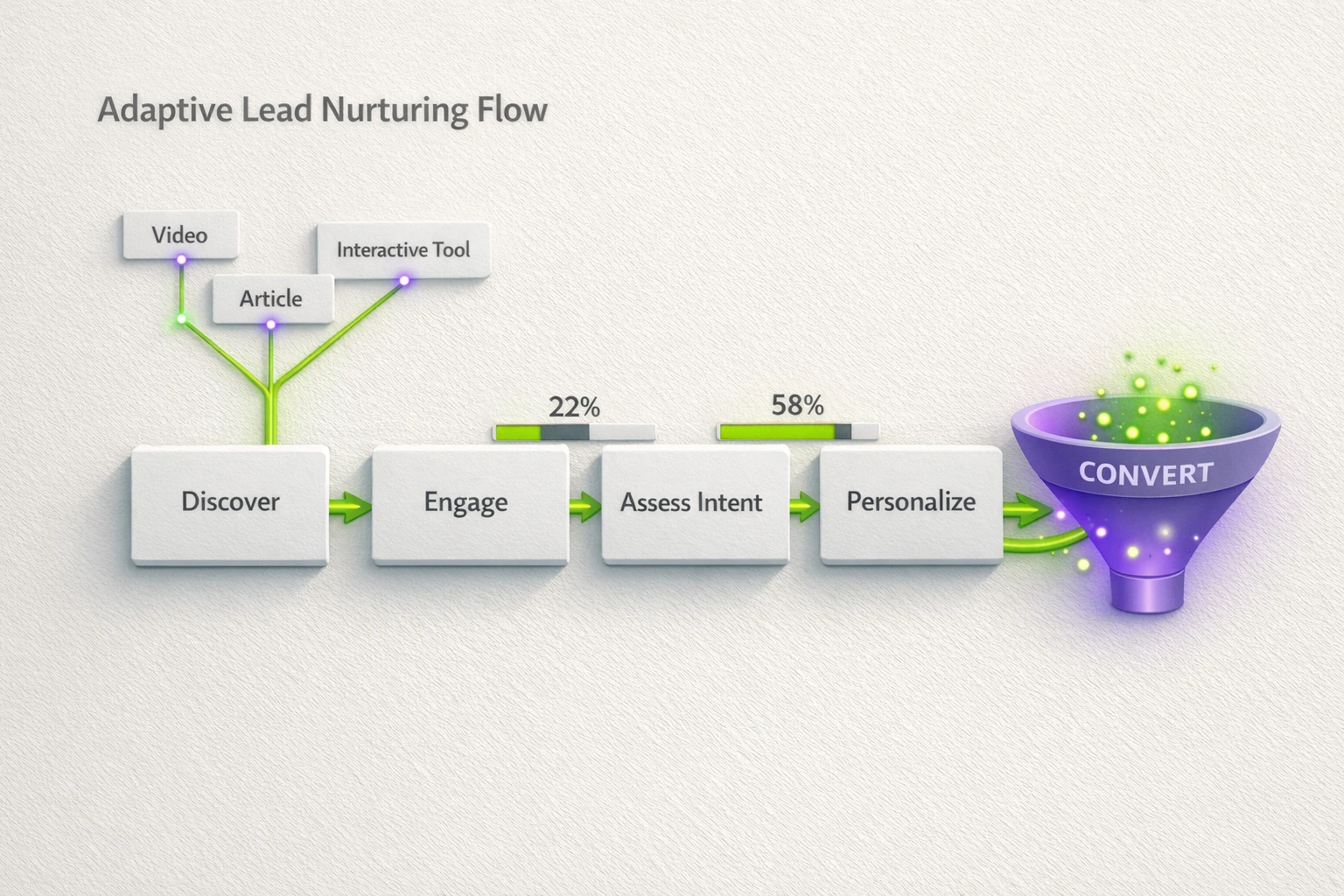
- AI-Driven Lead Nurturing: Forget one-size-fits-all email sequences. AI creates adaptive nurturing flows that change based on a user's real-time interactions, content consumption, and demonstrated intent.
- Dynamic Content Delivery: The system automatically serves the most relevant content format, whether it’s a blog post, a video, or an interactive tool, to the right person on the right channel at the perfect moment.
- Omnichannel Orchestration: AI acts as the central intelligence layer, ensuring a consistent and personalized experience as customers move between your website, mobile app, email, social media, and even physical locations.
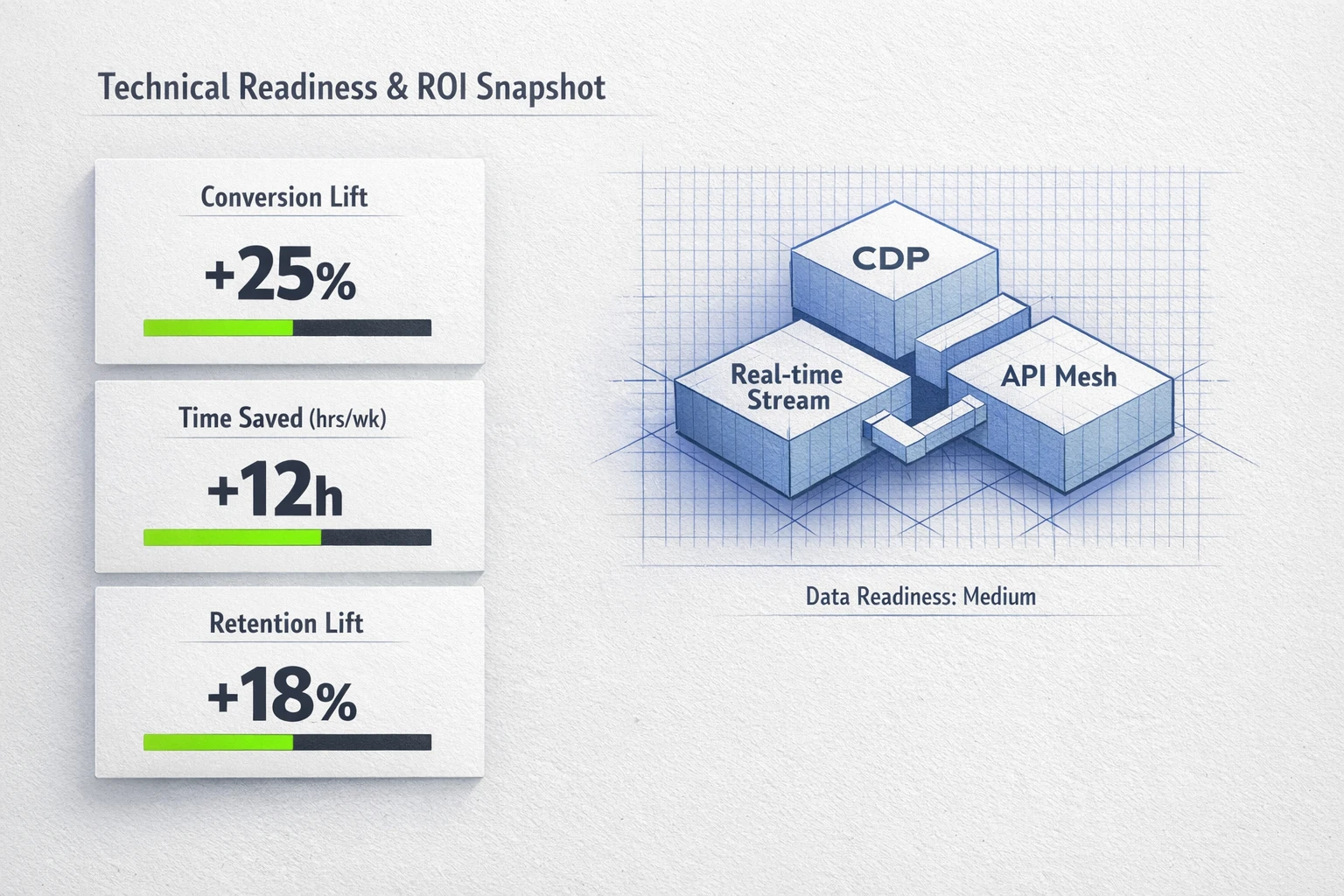
Companies that master this approach see significant results. They report up to 30% faster sales cycles and 15-25% higher conversions, with many achieving revenue increases of 15-35% within the first year.
Evaluating AI Solutions: A Framework for Marketing Leaders
Choosing the right AI partner is the most critical step in your journey. As you move from initial research to creating a shortlist, your evaluation criteria must go beyond surface-level features. You need a solution that integrates deeply, scales effortlessly, and provides transparent governance.
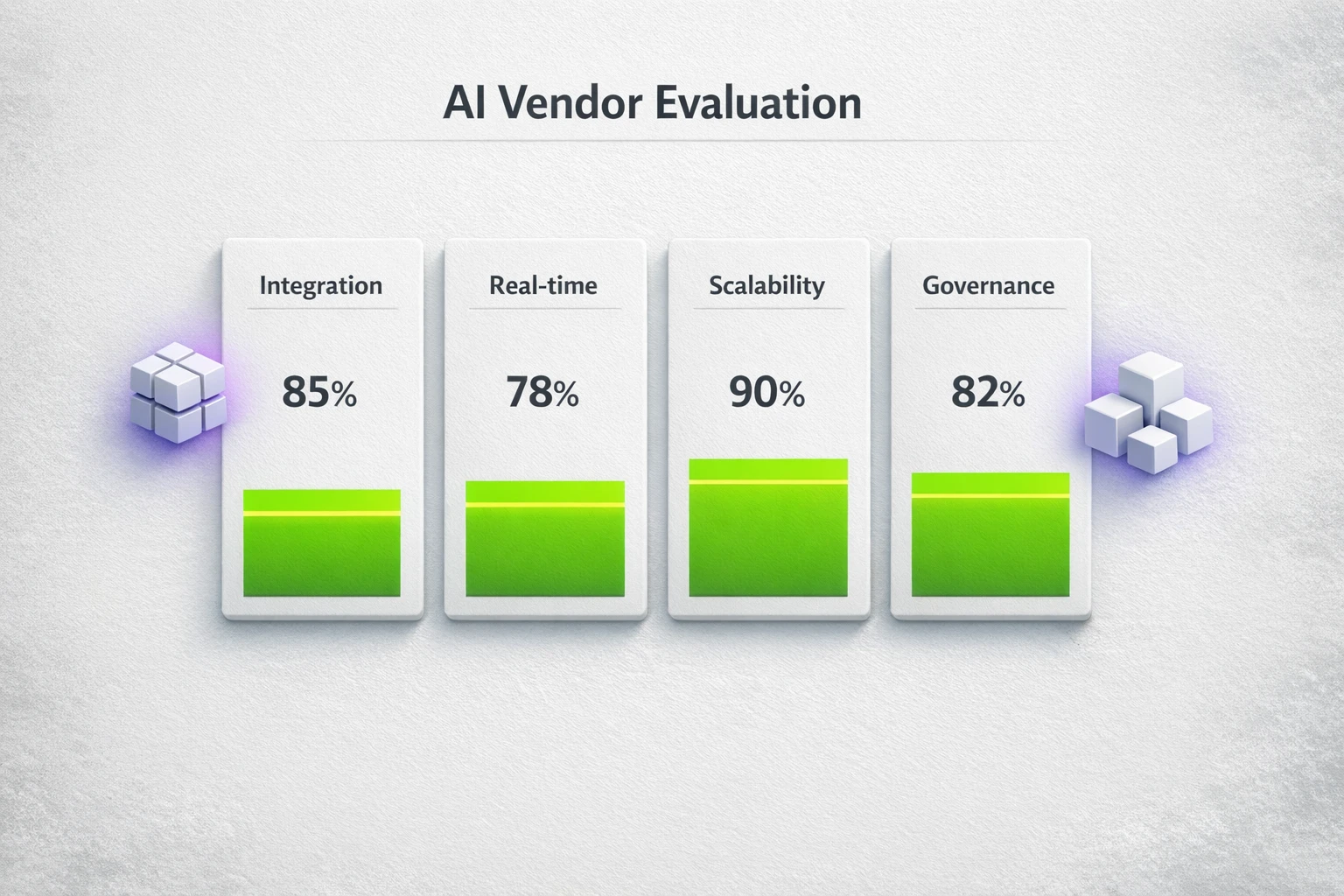
Focus your comparison on these core decision factors:
- Integration Capabilities: How well does the tool connect with your existing tech stack, such as your CRM, marketing automation platform, and customer data platform (CDP)? Siloed data is the primary reason personalization initiatives fail.
- Real-Time Processing: Can the system ingest and act on customer data in real time? Latency can mean the difference between a relevant offer and a missed opportunity.
- Scalability and Performance: Will the solution grow with your business? Assess its ability to handle increasing volumes of data and user interactions without a drop in performance.
- Data Governance and Ethics: The platform must provide clear controls for data privacy and offer transparency into how its algorithms make decisions. This is crucial for building and maintaining customer trust.
The Foundation of Intelligence: Building Your AI-Ready Data Architecture
An AI system is only as powerful as the data it runs on. Many organizations struggle with an "AI-ready data gap," where poor data quality or siloed systems prevent them from unlocking the full potential of their investment. Before you can achieve hyper-personalization, you must build an intelligent data foundation.
This involves unifying customer data from all touchpoints into a single, accessible source. Key components of a modern data architecture include:
- Customer Data Platforms (CDPs): CDPs are designed to collect and unify first-party customer data from multiple sources to create a single, coherent view of each customer.
- Real-Time Data Streams: This infrastructure ensures that behavioral data from your website, app, and other channels is captured and made available for AI analysis instantly.
- Robust Data Governance: Establish clear policies for data quality, privacy, and security. This not only ensures compliance but also builds the trust necessary for customers to share their information.
Addressing this data foundation is not just a technical prerequisite. It's a strategic imperative for any company serious about becoming a leader in customer experience.
From Prediction to Personalization: AI in Lifecycle Marketing
With a solid data foundation, AI can transform every stage of the customer lifecycle. This is where you move from broad segments to true one-to-one personalization, particularly in how you nurture leads.
AI-driven lead nurturing sequences are dynamic and multi-faceted. Imagine a system that automatically adjusts its strategy based on intent signals:
- Awareness: A user reads two blog posts about a specific challenge. The AI identifies this pattern and adds them to a "problem-aware" segment.
- Consideration: The next email they receive is not a generic newsletter. It’s a case study showcasing how a similar company solved that exact challenge.
- Decision: The user clicks the case study and visits your pricing page. The AI detects this high-intent behavior and triggers a real-time alert for your sales team while simultaneously showing them a personalized pop-up with an offer for a demo.
This level of adaptive nurturing is impossible to manage manually at scale. AI makes it possible by continuously analyzing behavior and predicting the next best action for each individual customer.
The Art of Orchestration: Mastering Omnichannel Experiences with AI
True personalization requires consistency across all channels. A customer's experience should feel seamless whether they are on their laptop, their phone, or speaking to a support agent. AI serves as the conductor of this omnichannel orchestra.
Effective orchestration relies on a technical architecture that allows disparate systems to communicate in real time. Through APIs and webhooks, an AI decisioning engine can:
- Personalize website content based on a user's recent activity in the mobile app.
- Suppress a social media ad for a product the customer just purchased online.
- Equip a call center agent with the customer's entire interaction history the moment a call begins.
This cohesive experience is what customers now expect. In fact, 80% are more likely to make a purchase from brands that offer personalized experiences. Success requires more than just good marketing. It demands an integrated technology strategy where AI ensures the right message is delivered on the right channel, every single time. As you evaluate solutions, it is wise to consider what tools analyze how expert content is contributing to AI perception of brand authority, as this provides a fuller picture of marketing impact.
Engineering Loyalty: AI-Driven Retention and Post-Purchase Journeys
Acquiring a new customer is important, but retaining them is where sustainable growth happens. AI is a powerful ally in building long-term loyalty and maximizing customer lifetime value (CLV).
Post-purchase, AI can power a variety of retention strategies:
- Proactive Churn Prevention: By analyzing usage patterns, support ticket frequency, and sentiment, AI can predict which customers are at risk of leaving and trigger proactive outreach to resolve issues before they escalate.
- Personalized Onboarding and Support: AI can guide new customers through onboarding with tailored tips and content, ensuring they get value from your product quickly.
- Intelligent Upsell and Cross-sell: Based on a customer's usage and business goals, AI can identify the perfect moment to recommend a relevant upgrade or complementary product.
By focusing on the post-purchase journey, AI helps you transform satisfied customers into vocal advocates for your brand, creating a powerful growth loop.
The Next Frontier: Generative AI, Agentic Systems, and Ethical Governance
The field of AI is evolving rapidly. Looking ahead, generative AI and unified agentic assistants are set to further revolutionize the customer journey by creating personalized content, summaries, and recommendations on the fly. As these capabilities become more widespread, the need for ethical governance becomes paramount.
Building trust is no longer optional. A robust ethical AI framework includes:
- Transparency: Be clear with customers about how you are using their data to personalize their experience.
- Fairness: Regularly audit your AI models to ensure they are free from biases that could lead to unfair outcomes for certain customer segments.
- Accountability: Maintain human oversight to ensure the AI system operates as intended and to intervene when necessary.
Embedding these principles into your AI strategy is not just about compliance. It is a competitive differentiator that shows customers you value their trust above all else.
Your AI Implementation Playbook: A Practical Roadmap
Adopting AI is a journey, not a single event. To ensure success and secure stakeholder buy-in, start with a clear, phased approach.
- Conduct a Data Audit: Begin by assessing the quality and accessibility of your customer data. Identify gaps and create a plan to unify your data sources.
- Start with a Pilot Project: Choose a specific, high-impact pain point to address first. This could be reducing shopping cart abandonment or improving new user onboarding conversion. A successful pilot provides the evidence needed for broader investment.
- Select Your Tools and Partners: Use the evaluation framework to choose a solution that aligns with your technical needs and long-term strategic goals.
- Train Your Team: Equip your marketing team with the skills to work alongside AI. The goal is human-AI collaboration, where technology handles the data processing, and your team focuses on strategy and creativity.
By demonstrating early wins and a clear technical path forward, you can build the momentum needed to create a truly scalable, adaptive, and AI-driven customer experience ecosystem.
Your Journey to a Predictive, Personalized Future
The era of static, one-dimensional customer journey maps is over. The future of customer experience is personalized, predictive, and perfectly orchestrated across every channel. By leveraging AI to understand and anticipate customer needs, you can move beyond simply reacting to your audience and begin actively shaping their journey. This strategic shift not only delights customers but also delivers measurable business growth, giving you a decisive competitive advantage in a crowded marketplace.
Frequently Asked Questions
How long does it take to implement an AI-driven customer journey solution?
With a clear strategy and a pre-existing clean data source, initial systems like our SEO Strategist can be operational within 14 days. More complex, multi-channel orchestrations depend on the complexity of your tech stack, but pilot projects can often show value within the first quarter.
What kind of ROI can we expect from investing in AI for personalization?
Businesses typically see significant returns. Data shows companies can achieve 15-35% revenue increases in the first year, alongside up to 30% faster sales cycles and a 15-25% lift in conversion rates. Personalization can also increase customer satisfaction by up to 20%.
Is our company big enough for this kind of technology?
AI-driven solutions are no longer just for large enterprises. Modern platforms are designed to be scalable and cost-effective for small to medium-sized businesses. The key requirement is having repeatable processes and a willingness to leverage data to drive decisions, which is common in businesses with annual revenues over €100k.
How do we handle data privacy and ethical concerns with AI personalization?
This is a critical consideration. Choose a partner that prioritizes transparent data governance. Your AI solution should give you clear controls over how data is used and provide visibility into algorithmic decision-making. Always be transparent with your customers about how their data enhances their experience.
Sources:
- HubSpot Blog - Data on the decline of traditional customer journey mapping.
- Concord USA - Insights on data silos as a failure point for personalization.
- McKinsey - Statistics on consumer preference for personalized experiences.
- M1 Project - Data on sales cycle acceleration and conversion rate improvements from AI.
- CMSWire - Framework for discussing challenges and ethical considerations in AI deployment.
- Gartner & Forrester via SuperAGI - Projections on AI-managed customer interactions and increased customer satisfaction.
- pageBody - Information on rapid deployment, pricing models, and ideal customer profiles for AI solutions.