Strategic Blueprinting for AI-Driven Topical Authority
AI Summary
Strategic Blueprinting for AI-Driven Topical Authority explains how to create a structured approach that transforms AI content creation into trusted, authoritative market presence.
Bottom Line: Following this blueprint helps you avoid generic content floods and build lasting topical authority that search engines and audiences trust.
What You'll Learn:
- How to benchmark competitor authority using AI semantic analysis
- Methods to define and measure E-E-A-T for reliable AI content
- Setting optimal content velocity aligned with resources to scale effectively
Best For: Marketers and content strategists looking to leverage AI thoughtfully to establish leadership and credibility in competitive niches.
Everyone is racing to adopt AI for content creation. With content generation now the number one use case for AI in marketing, the pressure to produce more, faster, is immense. But this rush to implement tools overlooks a critical, foundational step. Without a strategic blueprint, AI-driven content becomes a high-speed path to creating generic, unauthoritative noise that gets lost in the digital crowd. The real challenge isn't just using AI; it's architecting a system where AI builds genuine topical authority that search engines and customers trust.
This guide provides that blueprint. It moves beyond tool reviews and basic tips to give you the foundational framework for planning, benchmarking, and resourcing an AI-driven content strategy that establishes market leadership. We will walk through the essential pillars that turn AI from a simple content generator into a strategic engine for building sustainable authority.
Phase 0: The Critical Foundations Before You Press 'Generate'
The conversation around AI in content often jumps straight to tools. This is a mistake. The tool is not the strategy. With an anticipated flood of AI-generated articles creating a "discoverability crisis," your strategy is the only thing that will set you apart. An effective blueprint is what separates tactical AI use from a transformational AI-powered authority engine.
Consider that 42% of firms are still in the process of developing their AI strategies. This presents a significant opportunity to build a solid foundation while competitors focus on short-term production gains. A blueprint forces you to define what success looks like, how you'll measure it, and what resources are required before you invest a single dollar in a new tool. It’s the difference between building on bedrock and building on sand.
Pillar 1: AI-Enhanced Competitor Topical Authority Benchmarking
To dominate a topic, you first need to map the existing landscape with precision. Traditional competitor analysis often scratches the surface, looking at keywords and backlinks. An AI-enhanced approach goes deeper, dissecting the very structure of your competitors' authority.
This involves using AI models to perform semantic analysis on their entire content ecosystem. The goal is to reverse-engineer their strategy, identifying not just what they rank for, but why. You can analyze the depth of their content clusters, the sophistication of their internal linking, and the E-E-A-T signals they project. This process reveals their strengths, but more importantly, it illuminates their weaknesses. You can pinpoint the "dark spots" in their coverage, areas where their expertise is thin or their content fails to answer nuanced user questions. This is where you can make your mark and begin to build true semantic authority from a position of strategic advantage.
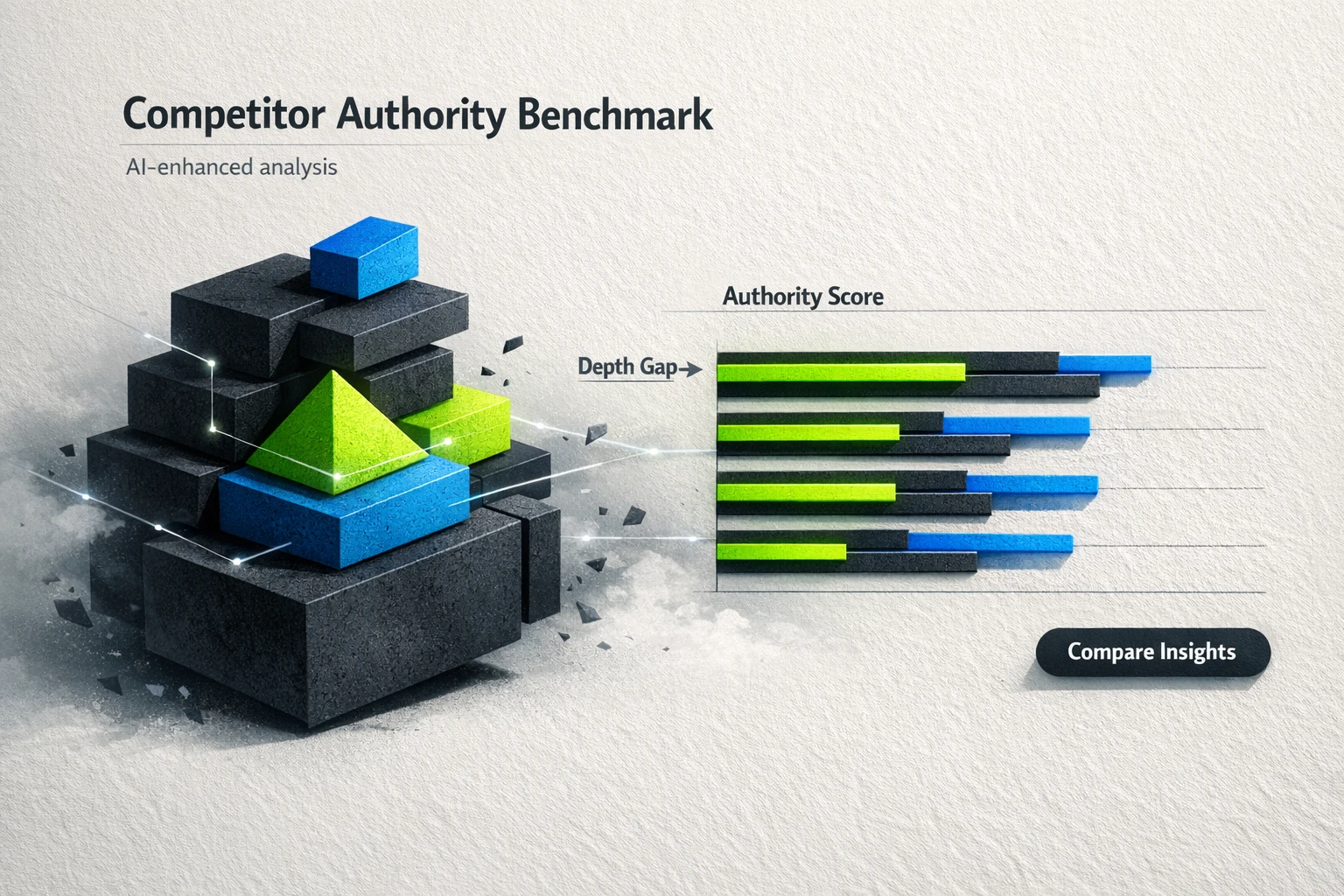
This AI-driven analysis gives you a clear, data-backed map of the competitive terrain, allowing you to focus your resources on the opportunities with the highest potential for impact.
Pillar 2: Defining and Measuring E-E-A-T for AI-Driven Content
In an environment saturated with AI content, Experience, Expertise, Authoritativeness, and Trust (E-E-A-T) become the ultimate differentiators. Search engines are getting better at identifying content that lacks genuine human insight. Competitors offer vague advice on this topic, but a true blueprint requires translating E-E-A-T from an abstract concept into a set of measurable metrics.
For an AI-driven strategy, this means defining clear standards. How will you systematically inject firsthand experience into AI-generated drafts? What is your process for having qualified experts review and enhance content? You need to establish KPIs for these qualitative inputs. For example, you could track the percentage of articles that include unique data, expert quotes, or case studies. The key is building trust and credibility into your production workflow, making it a non-negotiable step.
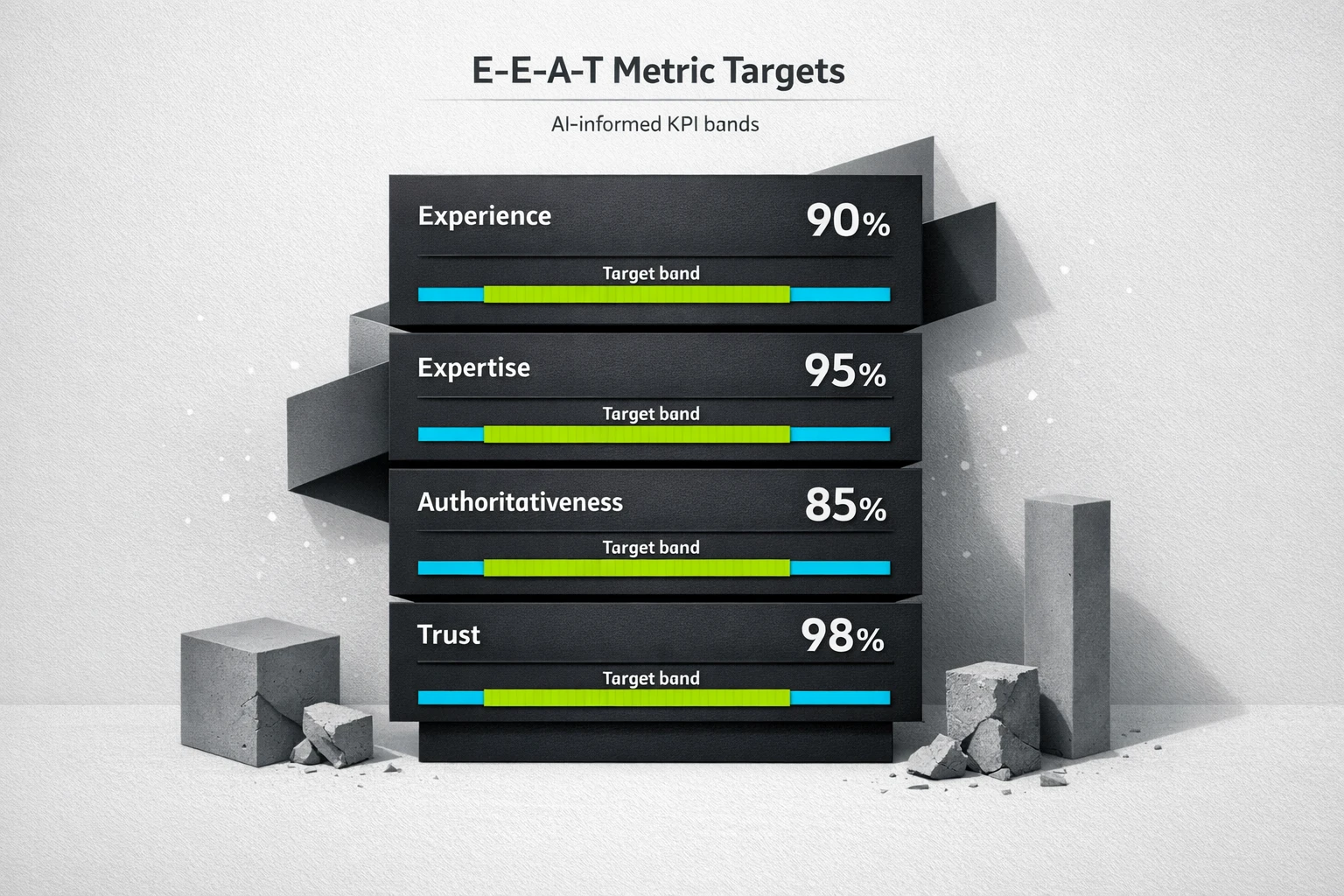
By defining these metrics, you create a system of accountability that ensures your AI-assisted content consistently meets the high standards required for genuine authority. Understanding E-E-A-T in the AI era is not just an SEO tactic; it's a core business strategy for long-term relevance.
Pillar 3: Setting AI-Optimized Content Velocity and Resource Plans
One of AI's most powerful capabilities is its ability to increase content velocity. However, speed without direction is just a faster way to get lost. Your blueprint must connect production speed to market opportunity and available resources.
AI can analyze market saturation to help you find the "content velocity sweet spot." In a less competitive niche, a steady, moderate pace might be enough to build authority. In a highly competitive space, you may need a more aggressive launch velocity to gain initial traction. The data should guide your decision. This data-driven approach ensures you are allocating resources effectively, whether that means investing in more advanced AI tools or expanding your team of expert reviewers. Businesses that get this right see tangible results, achieving an average of 24% more organic traffic by using AI for SEO tasks.
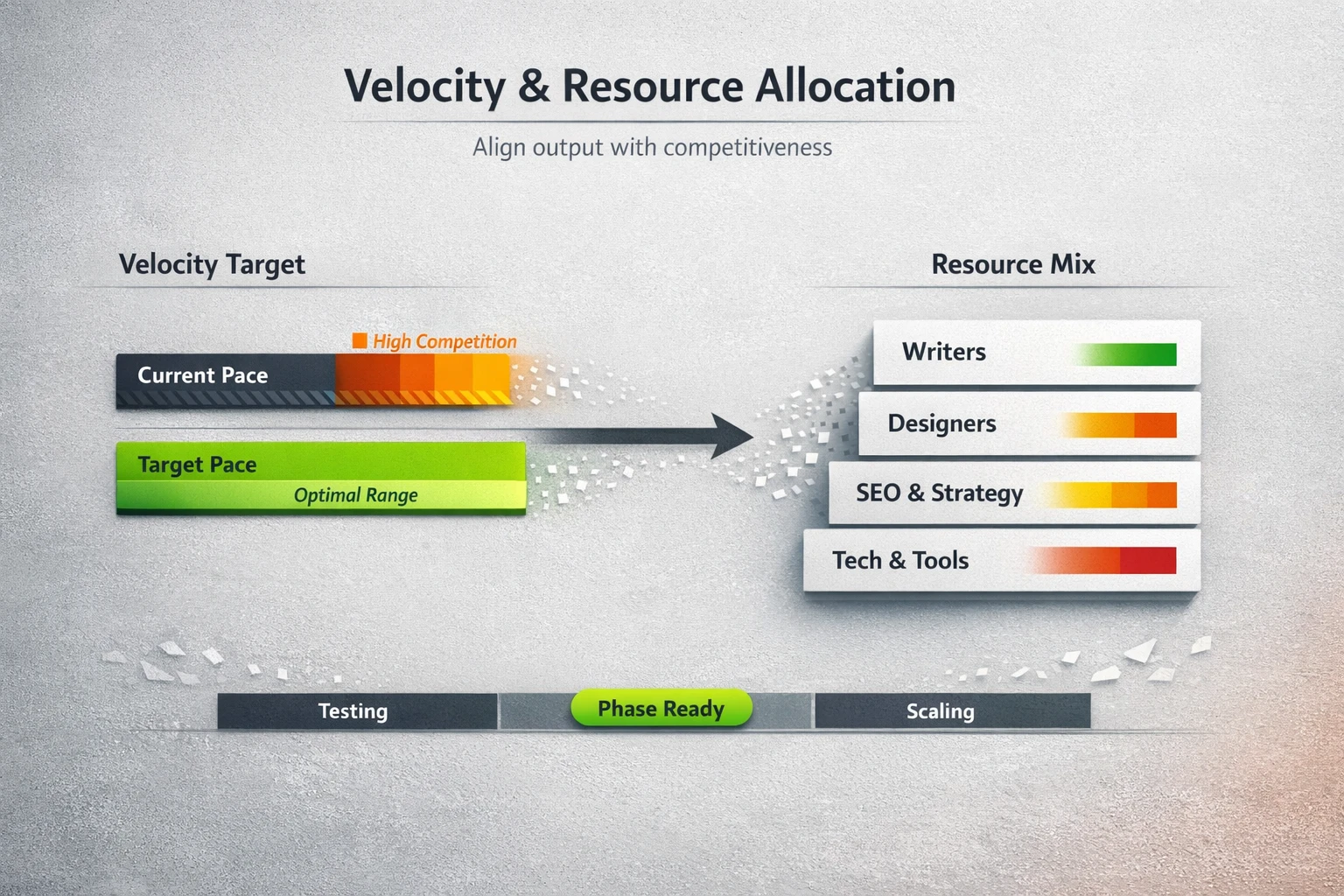
This pillar also involves designing the right human-AI collaboration model. Who is responsible for strategy, who handles AI-driven drafting, and who provides the final layer of human expertise and review? Defining these roles clearly prevents bottlenecks and ensures that quality scales alongside quantity.
Pillar 4: Your Phased Roadmap for AI-Powered Authority
Building topical authority is a marathon, not a sprint. A comprehensive blueprint includes a phased roadmap for AI adoption that manages risk and builds momentum over time. Instead of attempting a massive, company-wide overhaul, you can implement a more controlled, iterative process.
- Phase 1: Pilot Program. Select one specific content cluster or topic area to serve as your testing ground. Deploy your AI-enhanced workflow, measure the performance against your predefined E-E-A-T and authority metrics, and gather learnings.
- Phase 2: Scale and Expand. Using the insights from the pilot, refine your process and begin rolling it out to other strategic topic areas. This is where you scale your investment in tools and talent based on proven results.
- Phase 3: Continuous Optimization. The AI landscape is constantly evolving. This final phase is a continuous loop of testing new AI capabilities, refining workflows, and monitoring performance to stay ahead of the curve. Success here is not just about ranking; it's about understanding which brand narratives resonate and are retained by AI engines.
This phased approach allows your organization to build confidence, demonstrate early wins, and adapt your strategy as you learn what works best for your specific market.
The Human Strategist: Your Irreplaceable Role in the AI Era
This entire blueprint underscores a fundamental truth: AI is a powerful co-pilot, but a human must remain the strategist. AI can analyze data, generate drafts, and optimize content at a scale never before possible. But it cannot replicate genuine human experience, create a novel strategic vision, or make nuanced judgments about brand voice and market positioning.
Your role as a strategist becomes more critical than ever. You are the architect of the system, the guardian of quality, and the final arbiter of what truly represents your brand's expertise. The future of content isn't about replacing humans with AI; it's about empowering the sharpest human minds with the most powerful tools.
Frequently Asked Questions about AI Topical Authority Strategy
How can AI-generated content possibly build genuine E-E-A-T?
AI on its own cannot create genuine E-E-A-T. The strategy lies in using AI as an accelerator for research and drafting, which is then layered with human oversight. A successful blueprint mandates that all content passes through an expert review process where unique experiences, original insights, and authoritative perspectives are added. AI handles the 80% of foundational work, freeing up human experts to provide the critical 20% that builds real trust and credibility.
This seems complex. Can't I just buy a good AI tool and start creating content?
You can, but you'll likely end up contributing to the sea of generic content. Without a blueprint, you are working without a map. You won't know which topics offer the best opportunity, how to differentiate from competitors, or how to measure if your efforts are actually building authority. The upfront investment in strategy prevents wasted time and resources on content that never ranks or resonates.
How do I justify the investment in a strategic blueprint before seeing tangible results?
The blueprint itself is a risk mitigation tool. By starting with AI-enhanced competitor analysis and market mapping, you are making data-driven decisions from day one. This allows you to build a business case based on clear market opportunities rather than speculation. The phased roadmap, starting with a small pilot program, further de-risks the investment by allowing you to prove the ROI on a smaller scale before committing to a full rollout.
From Blueprint to Dominance: Your Next Step
You now have the framework to think beyond simple AI content generation and start architecting a true topical authority engine. This blueprint is your guide to navigating the complexities of the AI era with purpose and precision.
Building this foundation correctly is the single most important factor for success. If you're ready to move from tactical implementation to strategic dominance, let's discuss how pageBody can help you build and execute a blueprint tailored to your unique business goals.