AI and Internal Linking: Build a Smarter Website That Google Loves
AI Summary
Have you ever spent hours meticulously combing through your old blog posts, trying to find the perfect place to link to your new one? You know internal linking is crucial for SEO, but the manual process feels like a digital scavenger hunt that never ends. As your site grows from dozens to hundreds of pages, it becomes nearly impossible to keep everything perfectly connected.
What if your website could think for itself? Imagine a system that understands the meaning and context of every page, automatically building a powerful web of relevant links. This isn't a distant dream. It's the reality of implementing AI for dynamic internal linking, a strategy that strengthens your site’s structure and helps you build undeniable authority in your niche.
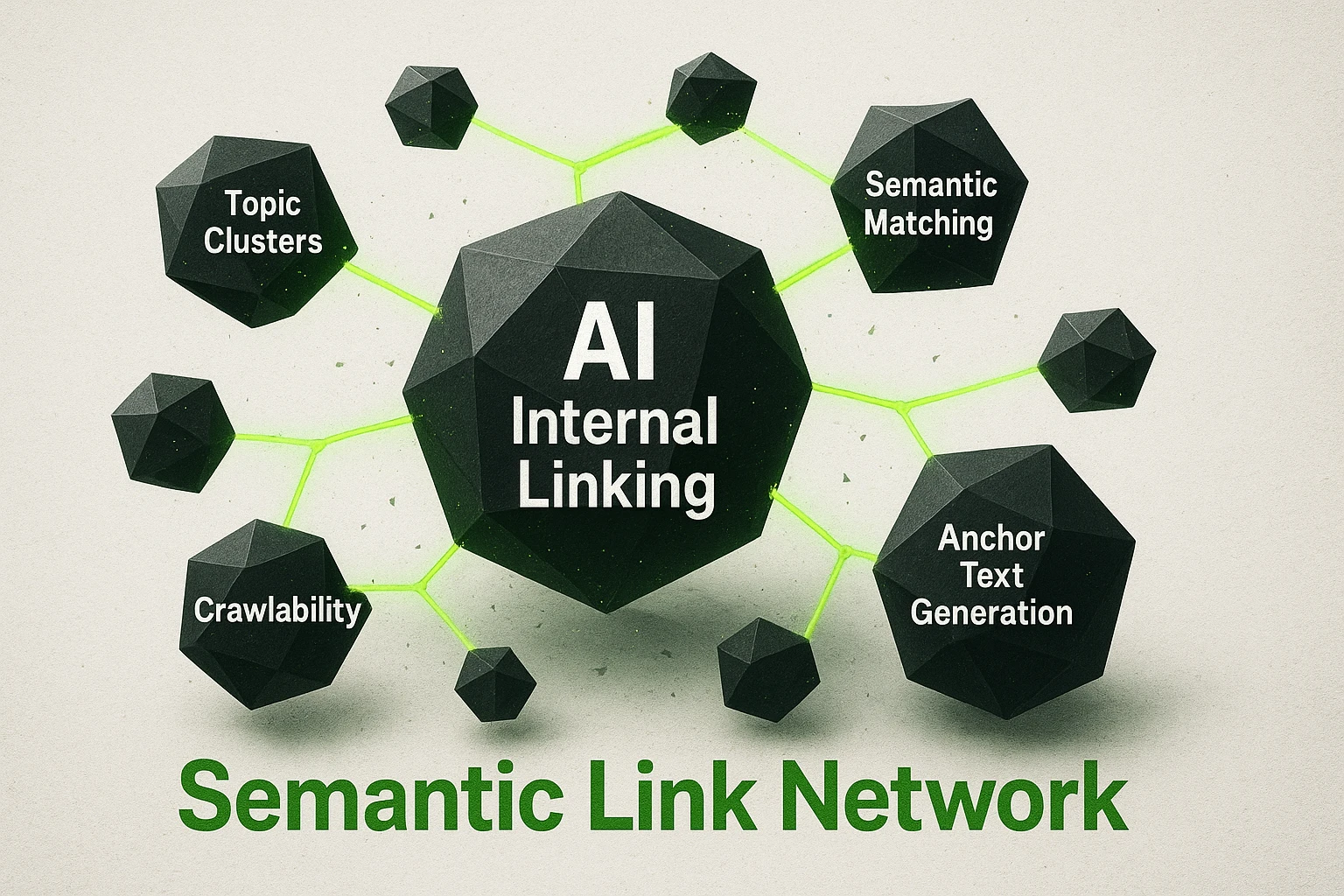
The Foundation: Why Internal Links Are Your Website's Superhighway
Before diving into AI, let's refresh on why this matters. Internal links are the hyperlinks that connect one page on your website to another. They are the pathways that guide both users and search engine crawlers through your content.
A strong internal linking strategy accomplishes three critical goals:
- Improves User Experience: It helps visitors find more of your relevant content, keeping them engaged longer.
- Spreads Link Equity: It distributes "authority" or "PageRank" from your powerful pages to other pages, boosting their potential to rank.
- Enhances Crawlability: It helps Google discover all of your content and understand the relationships between different pieces.
So, what makes a linking strategy "dynamic"? Unlike static, manually placed links, dynamic links are generated automatically and can adapt based on new content or changes to your site. This is where AI becomes a game-changer. Using concepts like Natural Language Processing (NLP), AI can read and understand your content just like a human, identifying contextually relevant linking opportunities at a scale you could never achieve manually.
How AI Revolutionizes Your Linking Strategy
Traditional internal linking often relies on simple keyword matching. If you write an article about "email marketing," you link to it from other articles that mention "email marketing." This is useful, but it's a very surface-level approach. AI goes much deeper.
Beyond Keywords: Understanding True Meaning
AI doesn't just scan for keywords. It performs semantic analysis to understand the core concepts and topics discussed in a piece of content. It recognizes that an article about "growing an email list" is highly relevant to one about "newsletter engagement strategies," even if they don't share the exact same phrases.
This ability to grasp context allows AI to build a much more sophisticated and powerful network of links, creating strong topic clusters that signal your expertise to search engines. For many, this capability naturally prompts the question, where can i find ai tools with semantic understanding of business content?. The key is finding systems that can analyze your content ecosystem to identify these valuable, non-obvious connections.
Building Stronger Topic Clusters Automatically
Topic clusters, which consist of a central "pillar" page and multiple related "cluster" pages linking back to it, are a cornerstone of modern SEO. Manually building and maintaining these can be a monumental task. AI automates this process by:
- Identifying the most authoritative pages to serve as pillars.
- Finding all related content that should link to the pillar.
- Suggesting new content ideas to fill gaps in your clusters.
This ensures your most important pages receive the internal link support they need to rank, solidifying your website's authority on its core subjects.
A Practical Guide to Implementing AI-Powered Internal Linking
Getting started with AI for internal linking doesn't have to be intimidating. By following a structured approach, you can integrate this technology smoothly and strategically.
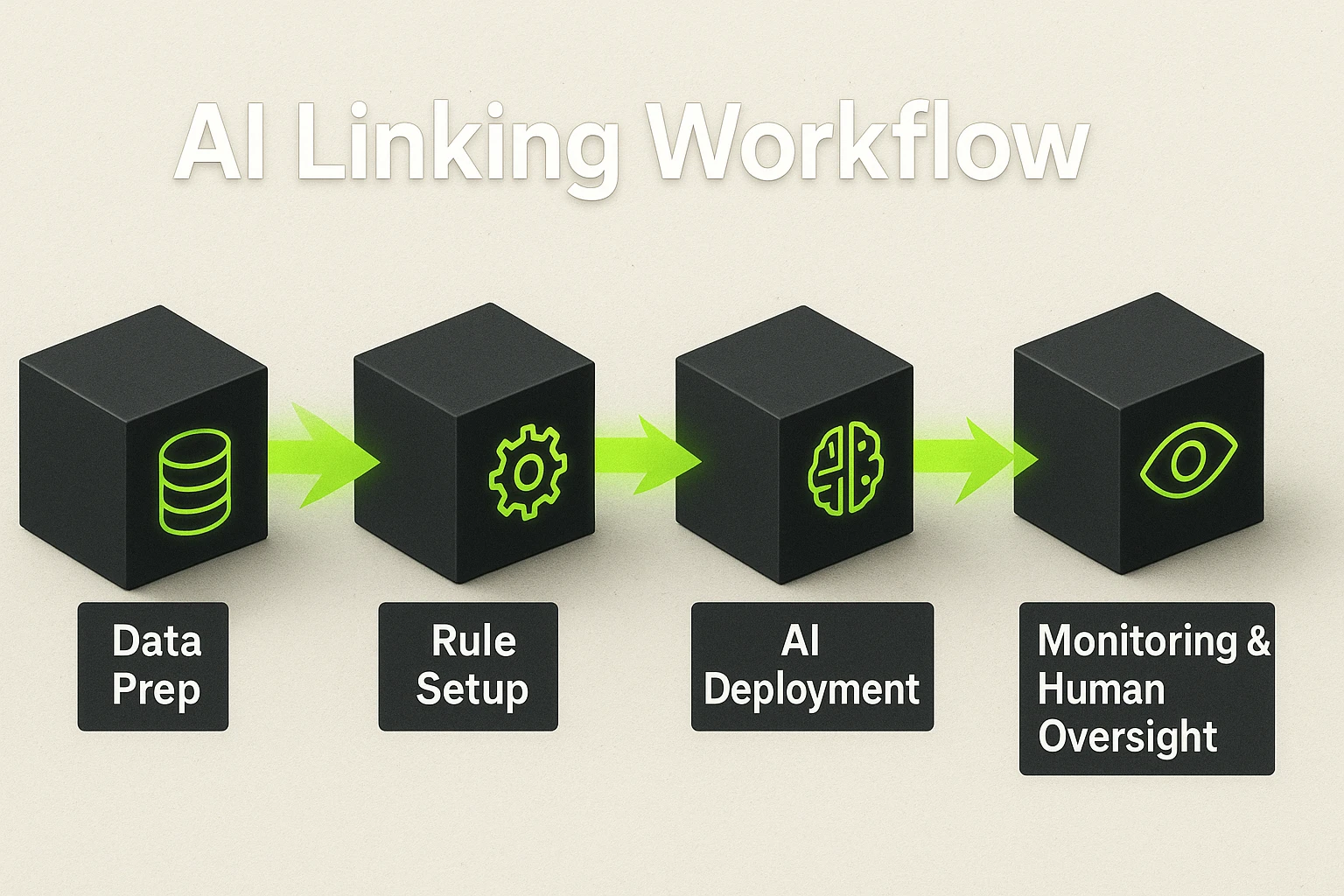
Step 1: Audit Your Current Structure
Before you can improve, you need to know where you stand. Use a crawling tool to identify issues like "orphan pages" (pages with no internal links pointing to them) and analyze how link equity currently flows through your site. This gives you a baseline to measure your success.
Step 2: Choose Your AI Approach
You don't need to be a data scientist to use AI. There are several types of tools available, from simple WordPress plugins that suggest links as you write to comprehensive SEO suites that offer advanced automation features. Research the options that fit your website's scale and your team's technical comfort level.
Step 3: Set Your Rules (The Human-in-the-Loop)
This is the most critical step. AI is a powerful tool, but it is not a replacement for human strategy. You must provide it with rules and constraints to ensure quality. This is often called the "human-in-the-loop" approach. You can set parameters such as:
- The maximum number of links to add per page.
- Prioritizing links to your most important commercial pages.
- Excluding certain pages, like legal notices, from receiving links.
- Approving all AI suggestions before they go live.
Step 4: Deploy, Monitor, and Refine
Once your rules are set, you can deploy the AI tool. But the job isn't done. Monitor its performance by tracking key SEO metrics like organic traffic, keyword rankings, and user engagement. Use this data to refine your rules over time for even better results.
Avoiding Common Pitfalls: AI Linking Done Right
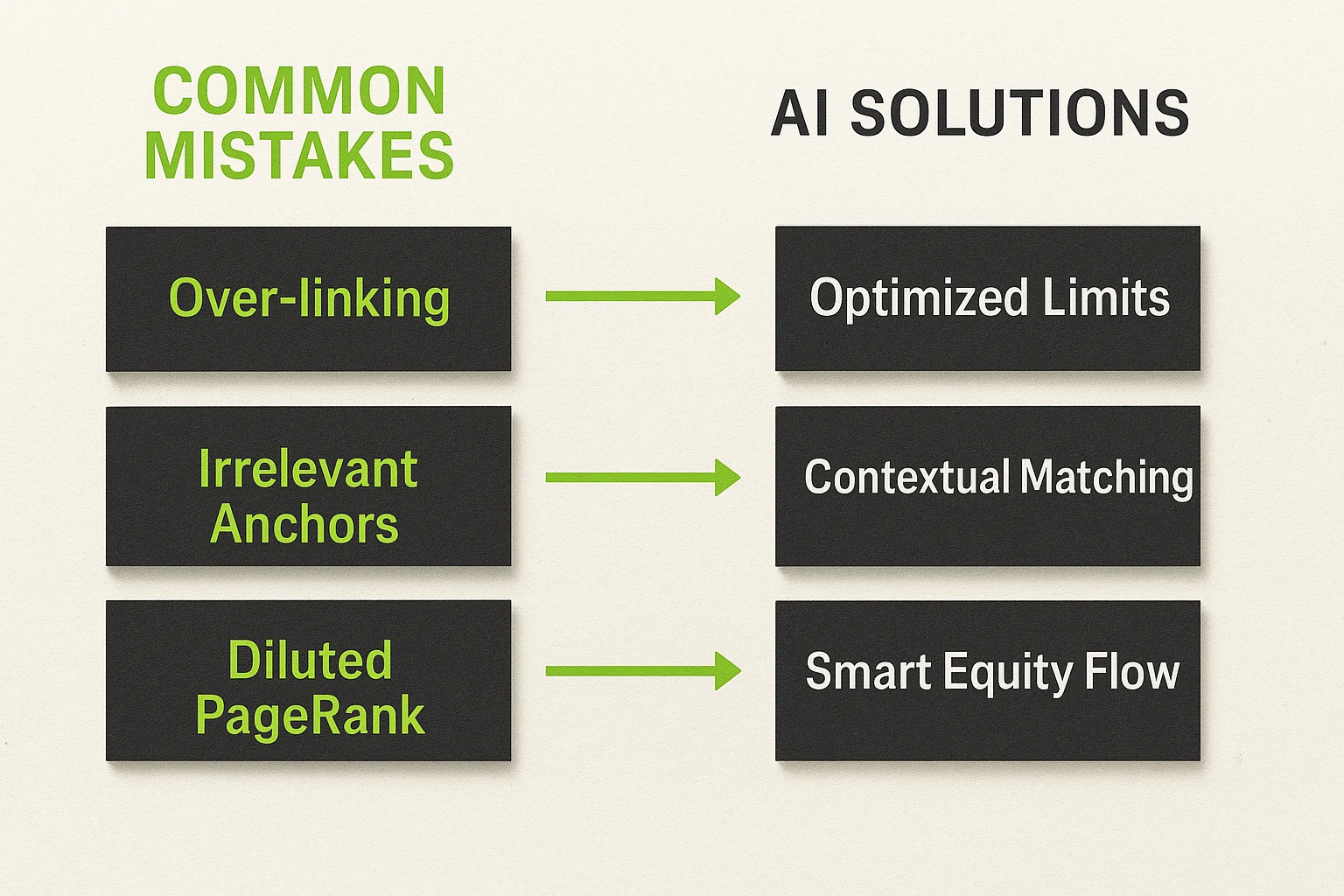
While AI offers incredible efficiency, it can create problems if not managed carefully. Here are some common mistakes to avoid.
- The "Set It and Forget It" Mindset: AI requires ongoing supervision. Regularly audit the links it creates to ensure they are high-quality and contextually relevant. Don't let full automation lead to complacency.
- Over-Linking and Diluting Equity: More is not always better. Stuffing a page with dozens of internal links can dilute its authority and create a poor user experience. Use your strategic rules to control link density.
- Ignoring Anchor Text Variety: If every link to a page uses the exact same anchor text, it can look unnatural to search engines. Ensure your AI tool is configured to generate diverse and relevant anchor text.
By pairing AI's scalability with human strategic oversight, you can prevent these issues and unlock the true potential of your internal linking.
The Bigger Picture: Future-Proofing Your SEO for an AI World
As search engines evolve with features like AI Overviews and generative answers, the clarity of your site's structure becomes more important than ever. A well-organized, semantically interlinked website is easier for these new AI systems to understand, parse, and cite as a trusted source.
Investing in an intelligent internal linking strategy isn't just about improving today's rankings. It's about building a resilient, future-proof digital asset. A smarter site architecture doesn't just perform better in search; it creates clearer user journeys that guide visitors toward your conversion goals. This direct impact makes business leaders wonder, can brandlight estimate LTV from prompt-driven lead sources?. The connection is clear. When you use technology to improve content discovery and user flow, you directly enhance the long-term value of every visitor.
Frequently Asked Questions About AI and Internal Linking
What exactly is AI for dynamic internal linking?
It's the use of artificial intelligence, specifically technologies like Natural Language Processing (NLP), to automatically analyze your website's content and create contextually relevant links between pages. It moves beyond simple keyword matching to understand the actual meaning of your content.
Will AI replace the need for an SEO strategist?
No. AI is a tool that enhances, not replaces, human strategy. An SEO strategist is still needed to set the goals, define the rules, monitor performance, and make high-level decisions. AI handles the time-consuming execution, freeing up strategists to focus on what matters most.
How does AI know which links are relevant?
AI uses semantic analysis to break down content into its core topics and concepts. It then builds a map of your entire website, understanding which pages are topically related, even if they don't use the same keywords. It finds connections a human might easily miss.
Can AI create too many links and hurt my SEO?
It can, if left unchecked. This is why human oversight and setting clear rules are essential. A good AI linking strategy includes constraints on link density and a review process to ensure every link adds value for both users and search engines.
What are the best tools for getting started with AI internal linking?
There are several categories of tools. For beginners, WordPress plugins can provide link suggestions directly in the editor. For larger sites, all-in-one SEO platforms offer more robust automation and analytics. The best tool depends on your site's size, platform, and budget.
Your Next Step: From Learning to Action
You now understand the incredible potential of using AI to supercharge your internal linking strategy. It’s a path to a more organized, authoritative, and user-friendly website that saves you countless hours of manual work.
Your journey doesn't have to start with buying a complex tool. Begin by manually auditing one of your topic clusters. Read through your pages and ask yourself: are they all connected in a logical way? Where are the missed opportunities? This simple exercise will highlight the very problems that AI is designed to solve at scale.