The Manual SEO Audit Is Obsolete. Welcome to the AI-Powered Performance Loop.
AI Summary
AI for technical SEO audits and performance enhancement matters because the real advantage is not faster checklists, but turning audits into a continuous optimization loop that directly drives search visibility and revenue. Instead of wrestling with static reports, you get a living system that constantly discovers, prioritizes, and validates changes against real business impact.
- See how the four-phase AI loop — Discover, Prioritize, Implement, Monitor — replaces one-off audits with ongoing technical SEO performance.
- Learn the evaluation framework that filters out fake "AI SEO" tools using data depth, prioritization logic, integration, and human oversight.
- Understand the glass box human-in-the-loop model that delivers 95% faster recommendations without trusting a black box with critical site changes.
For teams stuck running annual audits and drowning in issue lists, this is a practical blueprint to pick AI solutions that actually move rankings and traffic.
Technical SEO has always been a bottleneck. It is the single biggest lever for durable search rankings, yet most teams treat it like a trip to the dentist. It is a painful, project-based audit that happens once or twice a year, producing a dense report that quickly goes out of date.
That entire model is broken. It is slow, expensive, and fails to capture the dynamic nature of search engine algorithms and your own website.
The problem is not the audit itself. The problem is the process. A static checklist cannot keep up with a live ecosystem. AI changes this. Not by simply running the checklist faster, but by transforming the audit from a one-time event into a continuous performance loop. It is time to stop thinking about audits and start thinking about a system for constant technical optimization.
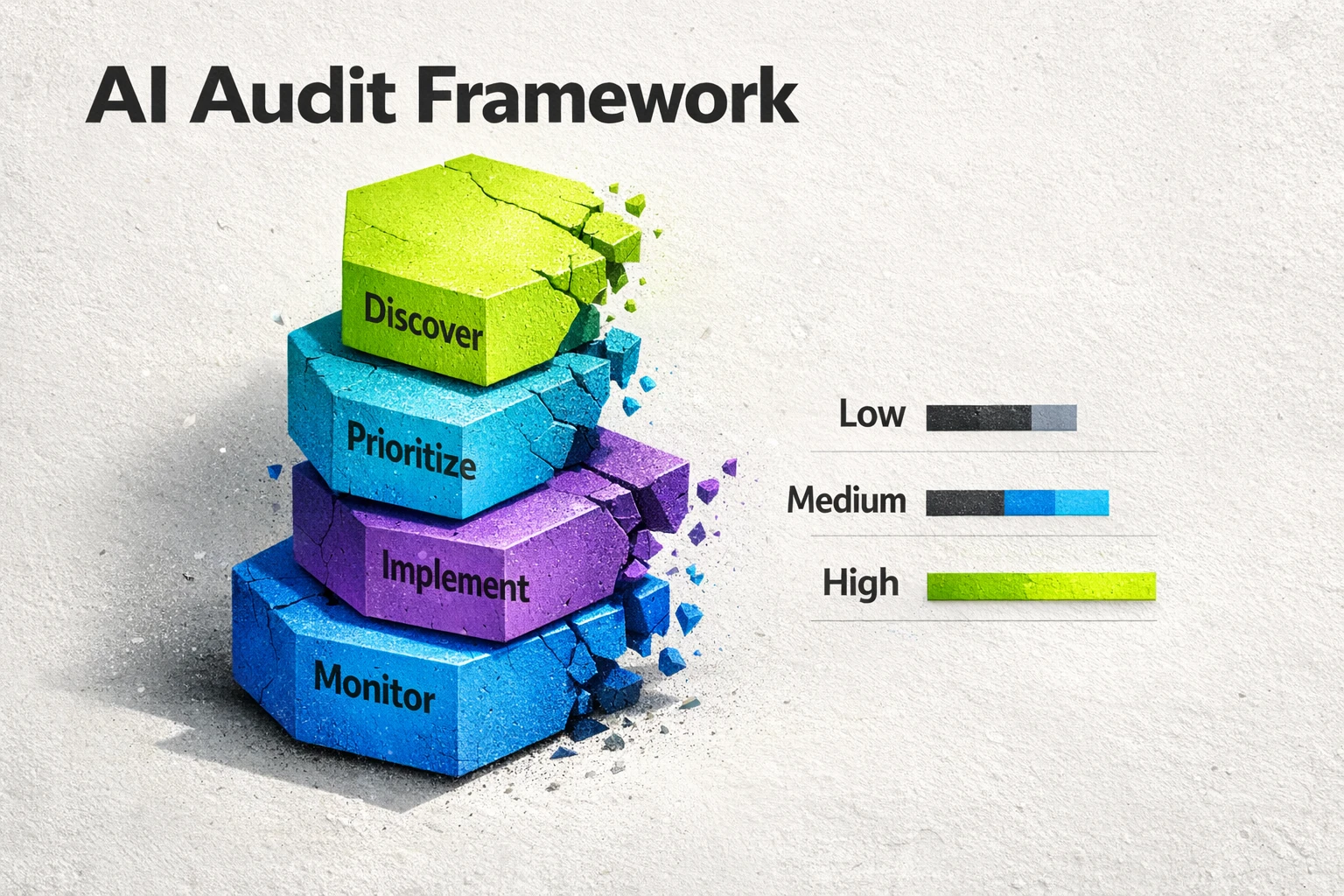
From Checklist to Loop: A Modern Framework
Most technical audits are exercises in finding problems. They generate long lists of "errors" that overwhelm development queues and rarely get fixed. A modern, AI-powered approach focuses on a different goal: impact. It operates in a tight, continuous loop that makes technical SEO manageable and connects it directly to business outcomes.
This is not about replacing human expertise. It is about augmenting it with machine-scale discovery and analysis. The loop has four simple phases.
- Discover: AI systems crawl your site constantly, just like Google. They go beyond surface-level checks to analyze log files, render JavaScript, and map out the real user and bot experience. This surfaces deep issues with indexability, crawl budget, and performance that manual checks often miss.
- Prioritize: This is where most audits fail. An AI-driven system does not just give you a list of 1,000 errors. It scores them based on potential impact. It answers the question, "Of all the things we could fix, what are the three things that will actually move the needle this month?"
- Implement: With a clear, prioritized list, your team can focus on high-impact fixes. For some issues, like generating schema markup or optimizing internal links, AI can even produce the solution directly, cutting implementation time dramatically.
- Monitor: The loop never stops. After a fix is deployed, the system monitors its impact on crawling, indexing, and rankings. It validates that the change had the intended effect and immediately starts the discovery process again, looking for the next optimization opportunity.
Discovery at Scale: Finding What Actually Matters
A human can check a robots.txt file. A human cannot analyze ten million log file lines to see exactly how Googlebot is spending its crawl budget on your website. This is the difference between a checklist and true discovery.
AI-driven systems excel at finding patterns in massive datasets. They can pinpoint the exact scripts slowing down your Core Web Vitals, identify orphaned pages that are wasting crawl budget, or detect creeping index bloat before it becomes a crisis. These are not just "errors" on a report. They are strategic insights into how search engines perceive your site's quality and authority.
Instead of a generic list of technical SEO tasks, you get a prioritized action plan tailored to your site's specific weaknesses and opportunities.
![A grid showing four key areas of AI-powered technical SEO: Crawl Budget, Schema Markup, Site Speed, and Mobile SEO, with a quick evaluation of their impact and implementation difficulty.]](https://cdn.prod.website-files.com/6842dcf6d774403e83138de3/6a4f4dc474c76f147375a0ab_image%20(3).jpeg)
Evaluating Your Options: A Framework for Choosing AI SEO Solutions
The market is crowded with tools claiming to offer "AI SEO." Most are just wrappers on old technology. When you evaluate solutions, do not look at feature lists. Look at the underlying process they enable. A great tool does not just find problems. It helps you fix them in the right order.
Your evaluation should be a simple checklist focused on outcomes, not features.
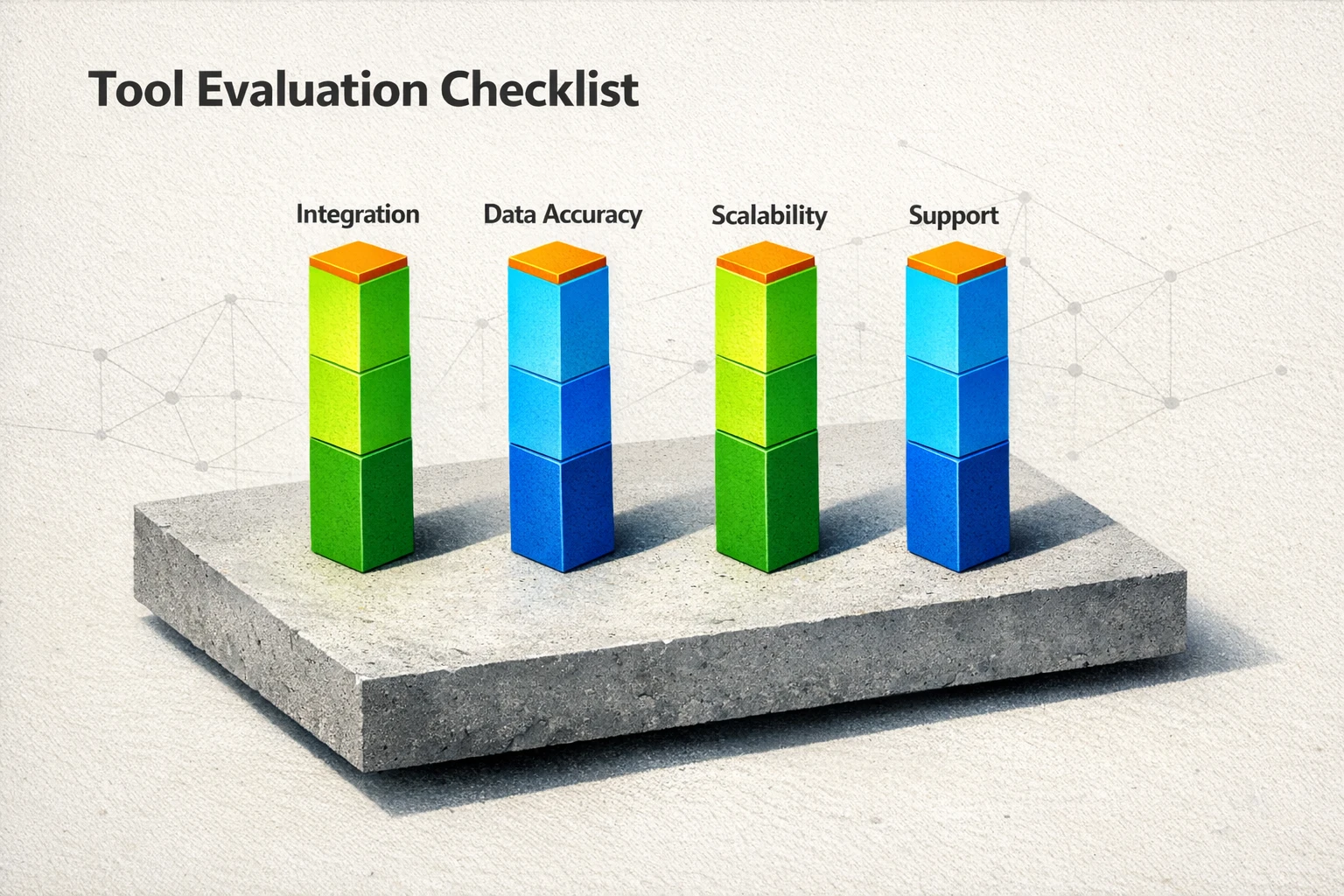
Here are the right questions to ask:
- How does it prioritize? Ask potential partners to explain their logic. Is it just based on arbitrary "severity" scores, or does it connect technical issues to traffic, conversions, and business goals? If they cannot explain the "why" behind their prioritization, walk away.
- What data does it use? A real AI system integrates multiple data sources: your analytics, Google Search Console, server log files, and live crawl data. A simple site crawler is not an AI platform.
- Does it help implement or just identify? Look for solutions that generate actionable outputs. Can it write the JSON-LD for your schema? Can it provide a prioritized list of internal linking opportunities? Identification is easy. Actionable intelligence is rare.
- What is the role of human expertise? The best systems are partnerships between human and machine. The AI handles the scale, and the human expert handles the strategy. Be wary of any "fully automated" solution that removes human judgment entirely.
Building Trust in the Machine
Delegating technical SEO to an AI can feel risky. What if it makes a mistake? This is a valid concern, and it is why a human-in-the-loop process is non-negotiable.
AI is incredibly powerful for discovery and analysis, but strategic decisions still require human oversight. An AI can tell you that 5,000 pages are thin content and should be noindexed. A human strategist needs to confirm that those pages are not part of a critical user journey or have seasonal value before taking action.
The goal is to use AI to get to a high-quality recommendation 95% faster. The final 5% is a human validation step. This partnership model is how you get the speed and scale of AI without sacrificing the critical thinking and business context that only a human can provide.
Your technical SEO process should not be a black box. It should be a glass box where you can see the data, understand the reasoning, and make the final strategic call.
Frequently Asked Questions
Can AI replace my technical SEO expert?
No. It empowers them. AI handles the data processing and pattern recognition at a scale no human can match. This frees up your expert to focus on high-level strategy, competitive analysis, and making the final call on complex issues.
How is this different from the site audit tool in my current SEO platform?
Most platform tools are static checklists. They run a crawl, give you a list of issues, and then they are done. An AI-powered system is a continuous loop. It monitors your site 24/7, reprioritizes issues as new data comes in, and helps you track the impact of your fixes over time. It is a process, not a report.
What is the risk of an AI making a mistake that hurts my site?
The risk is real if you rely on a "fully automated" black box system. That is why a human-in-the-loop approach is essential. AI should generate recommendations, but a human expert must provide the final approval before any significant changes are made to your site.
How quickly can you see results from an AI-driven technical SEO process?
You can discover critical issues within the first 24 hours. The speed of results then depends on your implementation resources. Because the AI prioritizes the highest-impact fixes first, you often see measurable improvements in crawling, indexing, and traffic far more quickly than with a traditional, non-prioritized audit.