Stop Pitching, Start Guiding: The Secret to B2B Storytelling on LinkedIn
AI Summary
Effective B2B storytelling on LinkedIn reveals how focusing on the customer as the hero creates trust and connection instead of sounding like a sales pitch. This piece explains why using the 15% storytelling rule keeps your brand as the guide, not the star, helping readers understand the hero's journey framework for marketing narratives.
- The 15% storytelling guideline balances your experience as the background to client challenges.
- Avoid three sales pitch mistakes: making your brand the hero, using jargon, and removing tension.
- Apply a three-part story structure: situation, struggle, and solution to teach rather than sell.
This is for marketers and professionals looking to share B2B stories that educate and engage without alienating audiences with self-promotion.
You have a story to tell. A client win, a hard-earned lesson, a moment of insight. You open LinkedIn, ready to share it, and then you stop. The fear hits you. Will this sound like a sales pitch? Will my network tune me out? Am I just adding to the noise?
This hesitation is universal because most B2B content on LinkedIn fails. It fails because it makes the brand the hero. It lists features, boasts about results, and talks at the audience. The core argument of this guide is simple: To connect with B2B buyers, you must stop telling your story and start telling theirs. Your customer is the hero. You are the guide. That is the entire game.
The 15% Rule: Your Story Is the Spice, Not the Meal
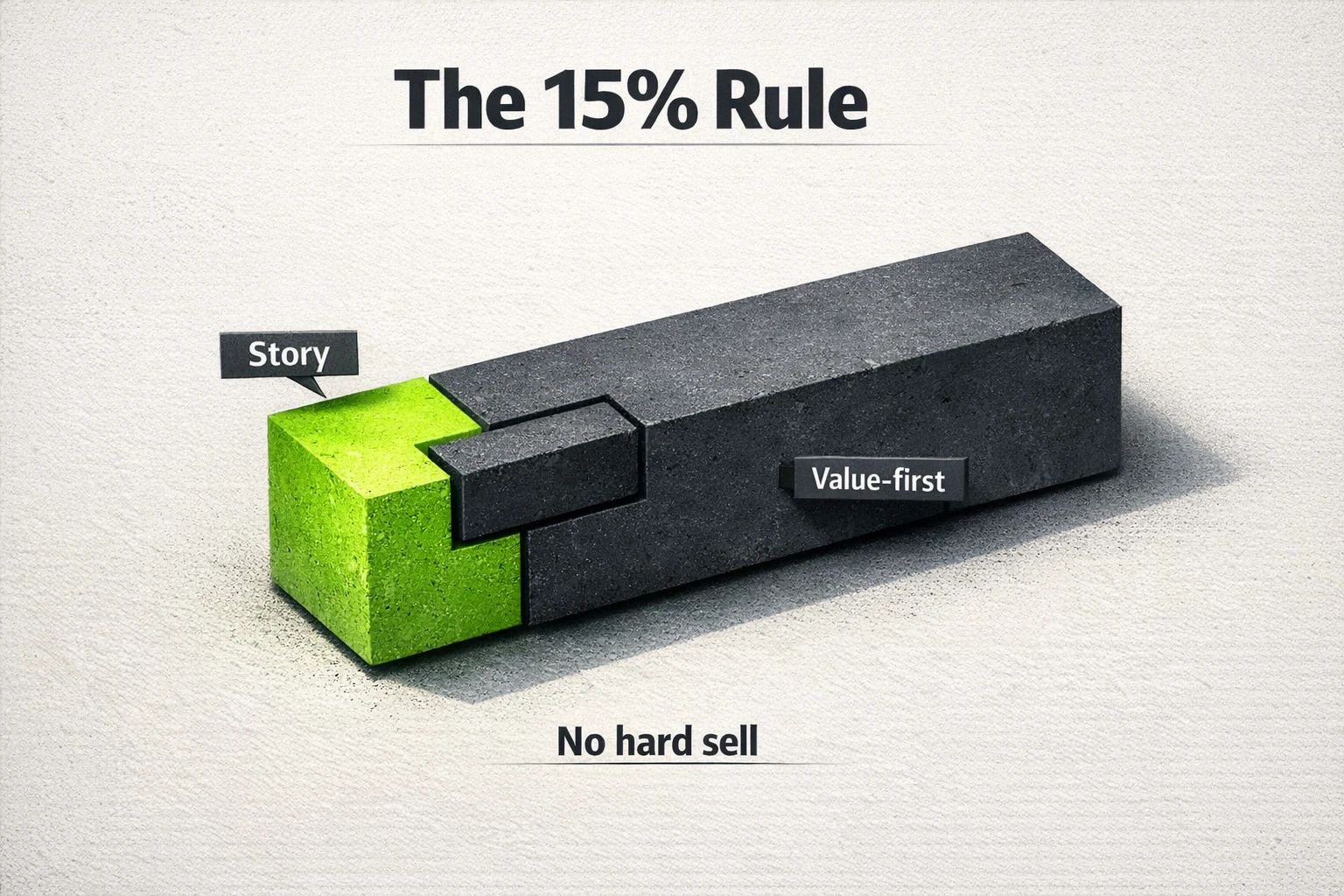
The best way to think about this is the "15% storytelling guideline." This isn't a strict word count. It's a mindset. It means that in any given post, the part that is explicitly about your experience or your company's actions should be a small, focused element that supports a much larger point of value for your reader. The other 85% is dedicated to the client’s problem, the industry’s challenge, and the universal lesson that others can apply.
This approach is rooted in a classic narrative structure known as The Hero's Journey, which can be adapted for B2B marketing by positioning the customer as the hero on a quest and your brand as their wise mentor [1]. Your role is not to slay the dragon for them. It is to give them the map and the sword.
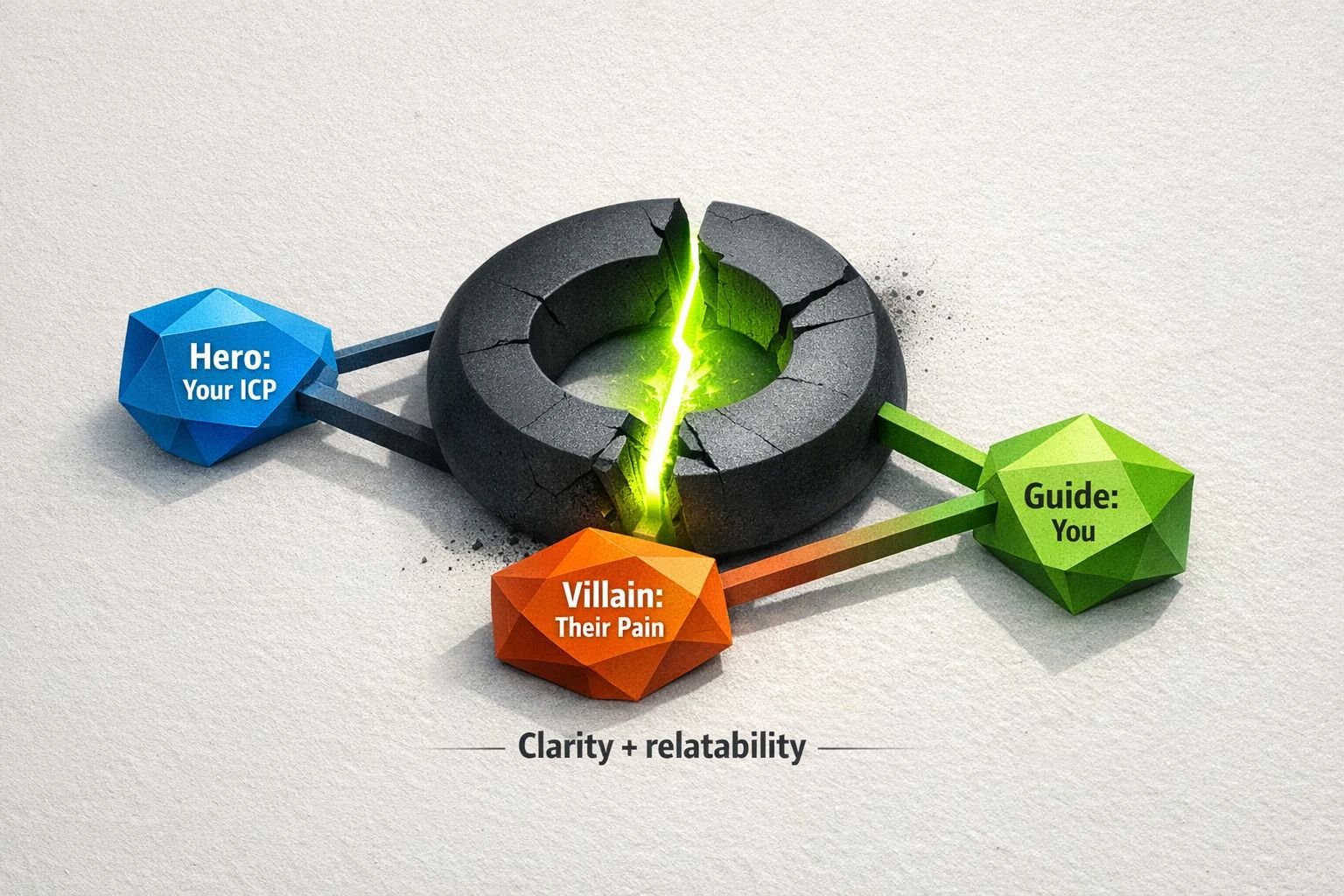
The formula is devastatingly effective: the hero is your ideal customer, the villain is their specific pain point, and you are the guide who provides the plan and the tools to win [2]. When you frame your content this way, selling becomes obsolete. You are not pitching a service. You are teaching a method. You are sharing a blueprint. This builds trust, establishes authority, and draws in qualified prospects who see you as the one who understands their problem best.
The Three Mistakes That Scream "Sales Pitch"
Shifting your mindset is the first step. The next is avoiding the common traps that instantly mark a post as self-promotional. If your content feels salesy, it is likely you are making one of these three mistakes.
The core reason B2B storytelling fails is that it focuses on the wrong character. One of the most common rookie mistakes is making your brand the hero of the story [2]. Instead of exploring the client's struggle, the post talks about "our innovative solution" or "our dedicated team." Another misstep is using internal jargon instead of the actual words your customers use to describe their problems. The final error is skipping the tension. A story without a villain is just an announcement. Without a clear and painful problem, there is no victory for the hero.
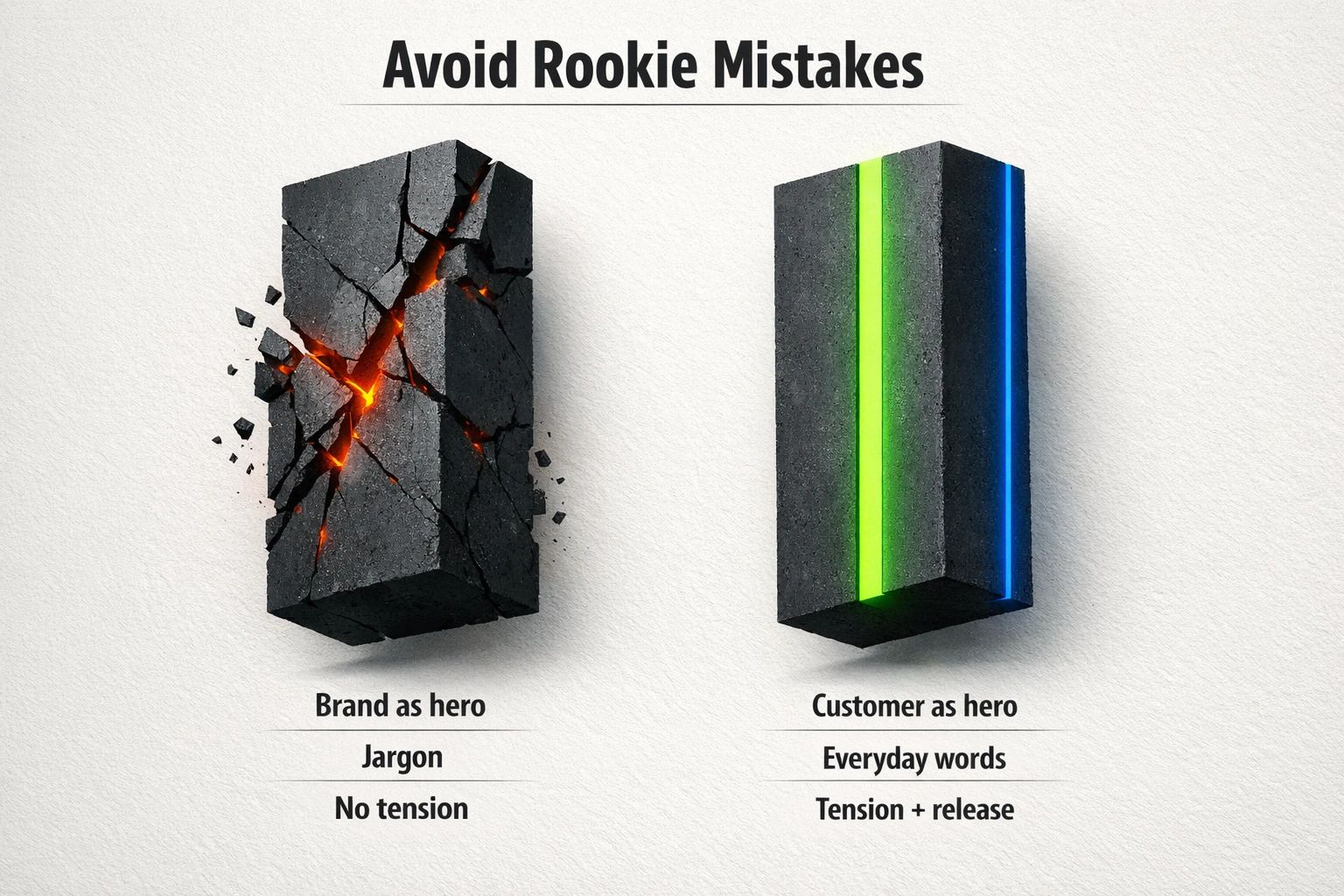
Effective B2B storytelling on LinkedIn has a different purpose. It’s about being clear and relatable so that others can connect with the lessons from your client experiences and apply them to their own work [3]. It works because it simplifies complexity with a human narrative, builds credibility with real examples, and creates an emotional connection with decision makers [3]. It is not about you. It is about what you can teach.
A Practical Blueprint for Non-Promotional Stories
Let's make this concrete. How do you turn a client win or a lesson learned into a compelling, non-promotional LinkedIn post? You use a simple narrative structure that keeps the focus where it belongs: on the hero and their journey.

Follow this three-part framework for any case study or insight:
- The Situation: Start by describing the world from the customer’s point of view. What was the common, frustrating reality they faced? Use language they would use. For example, "Every month, our client spent 40 hours manually reconciling invoices. It was slow, prone to error, and the one task everyone on the finance team dreaded."
- The Struggle (The Villain): Clearly define the villain. What was the specific pain? What was at stake? This creates the tension. "The real problem wasn't just the time suck. It was the risk. A single decimal error could cascade into a major compliance issue, and the fear of that happening created constant stress."
- The Solution & The Lesson: Explain the shift. This is your 15%. Keep it brief and focused on the "how," not just your product. Then, pivot immediately to the universal lesson. "We helped them build a simple automation that validated and cross-referenced the data in seconds. The lesson here is not about a specific tool. It's that the most painful processes are often the most brittle, and fixing them unlocks not just efficiency, but confidence."
This structure works because it gives away the strategy for free. You are not hiding the solution behind a demo call. You are teaching your audience how to think about their problem differently, establishing yourself as the guide they can trust when they are ready to act. Your next step is to find one client story. Do not write the post yet. Just identify their villain. That is where every great story starts.
Frequently Asked Questions
How long should a B2B story on LinkedIn be?
Focus on clarity over length. A concise story that makes a single, powerful point is more effective than a long, rambling post. Aim for a structure that is easy to read and digest quickly, typically under 300 words. The goal is to deliver value without demanding too much time from your reader.
Is it okay to mention my product or service at all?
Yes, but only in the context of being the "tool" the hero used to win. Frame it as the final part of the solution, not the starting point of the story. The mention should be brief and serve to complete the narrative, like "they used our platform to..." after you have already detailed the problem and the strategic shift. The focus should remain on the customer's achievement.
What if my client results aren't dramatic enough for a big story?
You do not need a "saved the company" moment to tell a good story. Small, relatable struggles are often more powerful. A story about saving a team five hours a week, reducing a specific daily frustration, or simplifying a confusing report can be incredibly effective because it is real and tangible to a wider audience. The key is the insight, not the scale of the outcome.
How do I find these stories within my company?
Talk to your customer success, sales, and support teams. Ask them two simple questions: "What is the most common problem you hear from customers?" and "Can you share a recent example of a client who overcame a specific challenge?" These conversations are goldmines for authentic, relatable stories that are already happening every day.
Sources:
- LinkedIn Business - An official resource explaining how to adapt classic narrative structures for B2B marketing campaigns.
- Nathan Hirsch - A LinkedIn post offering a concise and effective framework for customer-centric B2B storytelling.
- Disha Shukla - A LinkedIn Pulse article defining the core principles of effective B2B storytelling for building trust and connection.