3 Stages of a Competitor Research Analysis
AI Summary
A structured analysis of competitor research reveals more than rival keywords — it exposes the content architecture and authority signals your pages need to rank. AI turns hours of manual review into a focused workflow for finding actionable opportunities.
- How automated evaluation reverse-engineers headings, entities, and the information hierarchy behind winning pages.
- How publishing cadences, parent topics, and sub-clusters reveal a competitor’s broader topical roadmap.
- How Ranking Asset Packages and AI citation-gap testing turn competitive insights into targeted visibility gains.
For marketing teams publishing consistently but still invisible in search, this framework replaces guesswork with an operational path to stronger authority.
Producing content without a ranking strategy often leads to invisible pages. Writing more articles does not fix a visibility problem. Visibility requires authority, and authority requires structure. Executing a thorough analysis of competitor research exposes the exact structural advantages your rivals hold. This approach shifts your marketing team from guessing about search intent to establishing real operational leverage.
Evaluating Rival Content Strategies Using AI
Too many marketing teams treat evaluation as a quick glance at a search results page. True evaluation requires measuring exactly how winning content is constructed. You need to understand the hierarchy of information that search algorithms and artificial intelligence models prioritize. Deep competitive intelligence allows you to reverse-engineer search results efficiently. By leveraging machine learning tools to conduct this review, you shift from publishing raw text to engineering targeted signals.
The manual approach to evaluating content is unsustainable for lean operations. Reading through dozens of pages to chart headings and entity relationships wastes valuable publishing time. Automation changes this dynamic completely. Teams move from 15 to 25 hours of fragmented work to a focused 45 to 75 minute workflow [1].
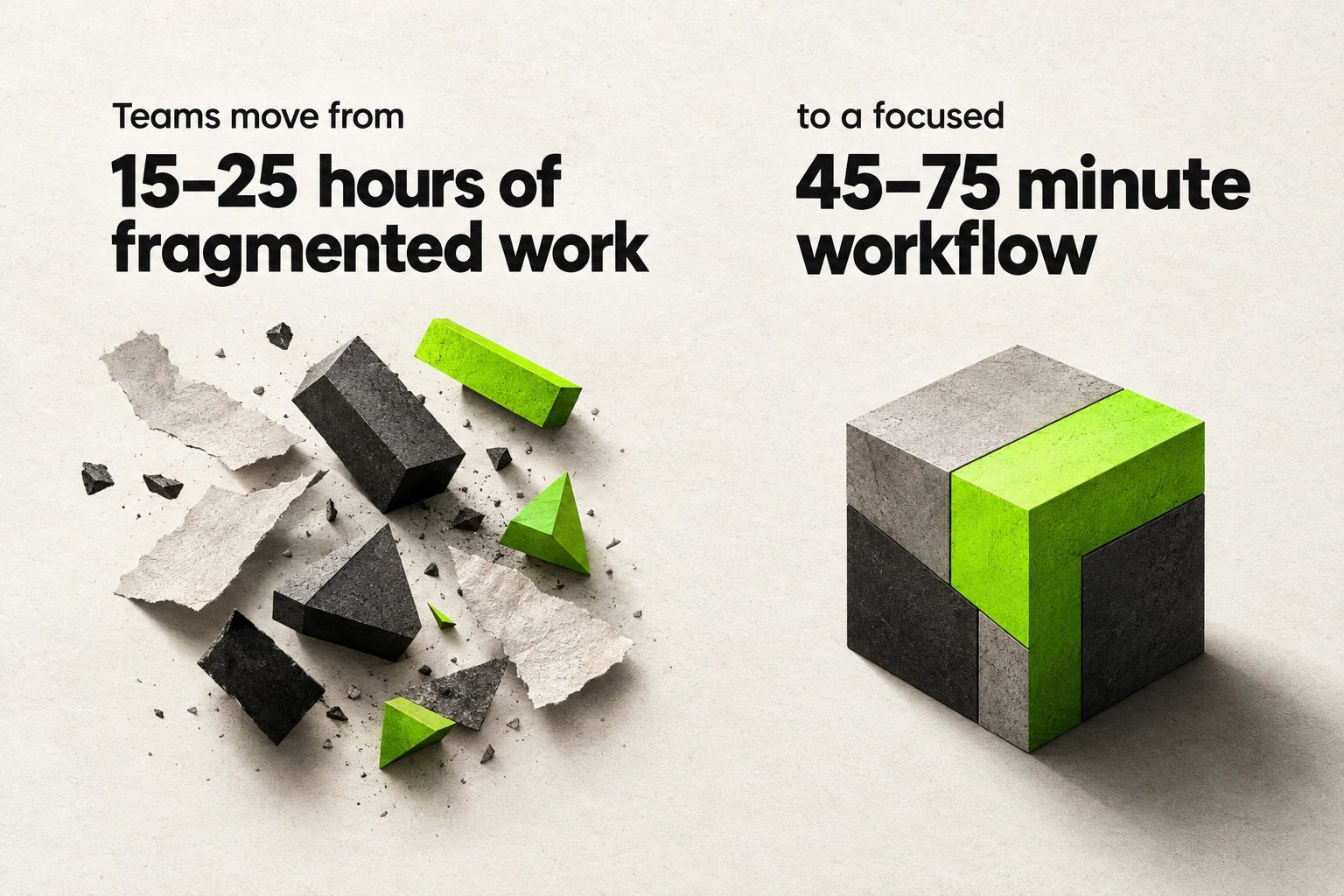
Teams move from 15-25 hours of fragmented work to a focused 45-75 minute workflow. The contrast helps you assess the workflow time described for AI-supported competitor research.
Uncovering Publishing Cadences and Content Themes
Themes matter significantly more than isolated keywords. A single article cannot build topical authority, no matter how well written it is. Winning pages are supported by a rigorous content strategy that prioritizes comprehensive coverage across an entire domain. Uncovering the themes your competitors cover allows you to build a connected web of assets that search engines easily recognize.
Discovering the underlying structure of a rival domain reveals their exact topical roadmap. You can clearly see which subjects they prioritize and how frequently they publish to maintain their relevance. Modern AI platforms parse full site crawls to reconstruct a rival’s entire content map, extracting the most frequently mentioned entities and grouping them into hierarchical parent and sub-clusters [2]. Understanding this hierarchy gives you the blueprint to build a more authoritative cluster.
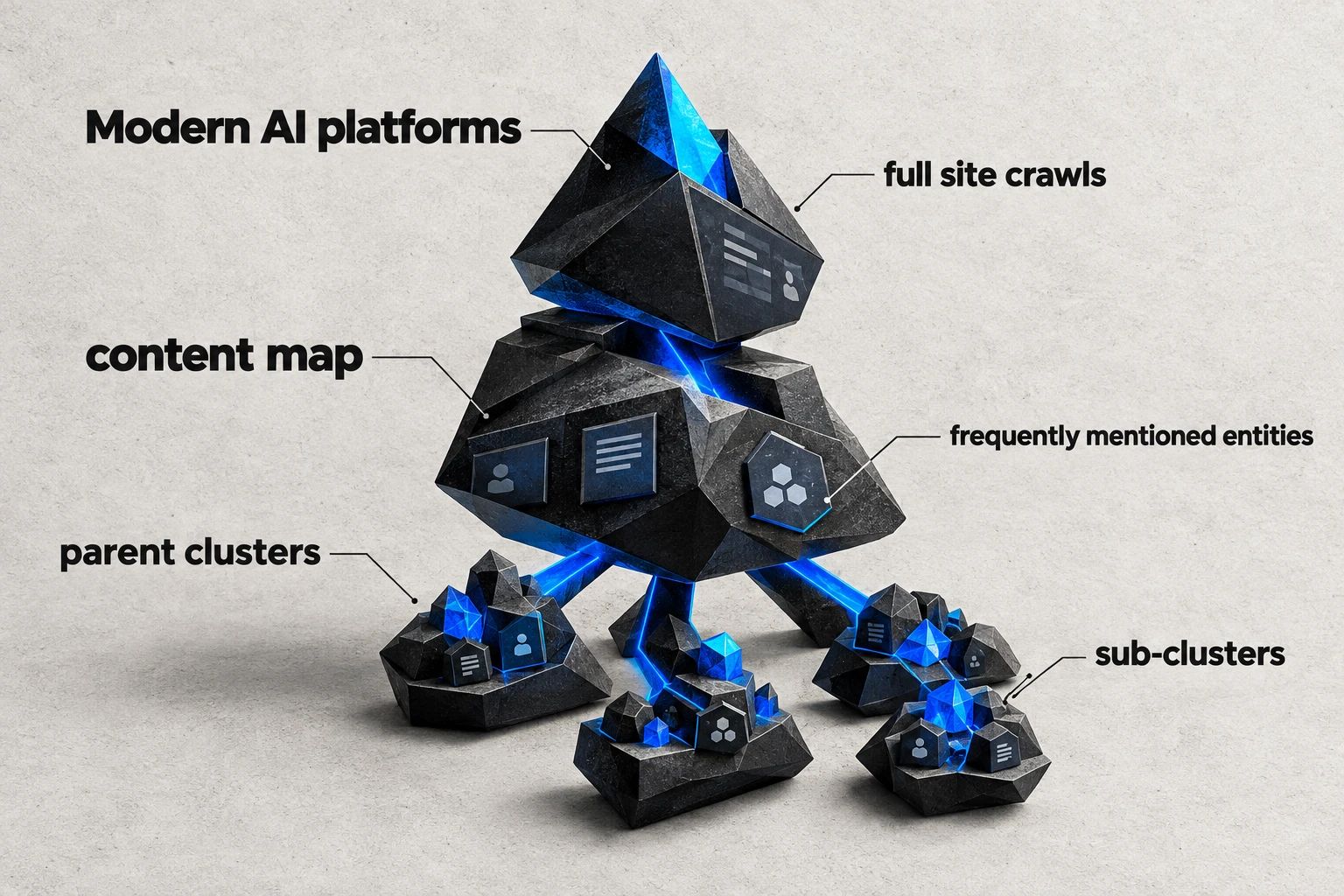
Modern AI platforms parse full site crawls to reconstruct a rival's entire content map, extracting the most frequently mentioned entities and grouping them into hierarchical parent and sub-clusters. This structure helps you evaluate content themes as connected coverage.
Engineering Targeted Authority Signals
Writing more articles does not fix a visibility problem if those articles lack clear signals. You must engineer structured information that both traditional search engines and newer language models can easily parse. This means creating Ranking Asset Packages that directly address the specific topics your competitors currently dominate. Mapping authority signals across winning pages reveals deeper patterns than simple keyword matching.
Artificial intelligence overviews introduce a new layer to your visibility requirements. Being referenced by these systems demands extreme precision in how you format definitions and answer direct questions. Finding and filling generative AI citation gaps requires a focused approach. To identify an AI citation gap, teams should manually query their top 20 to 30 target topics in ChatGPT, Perplexity, and Google with AI Overviews enabled [3]. This exercise clearly highlights where your brand is missing from the conversation.
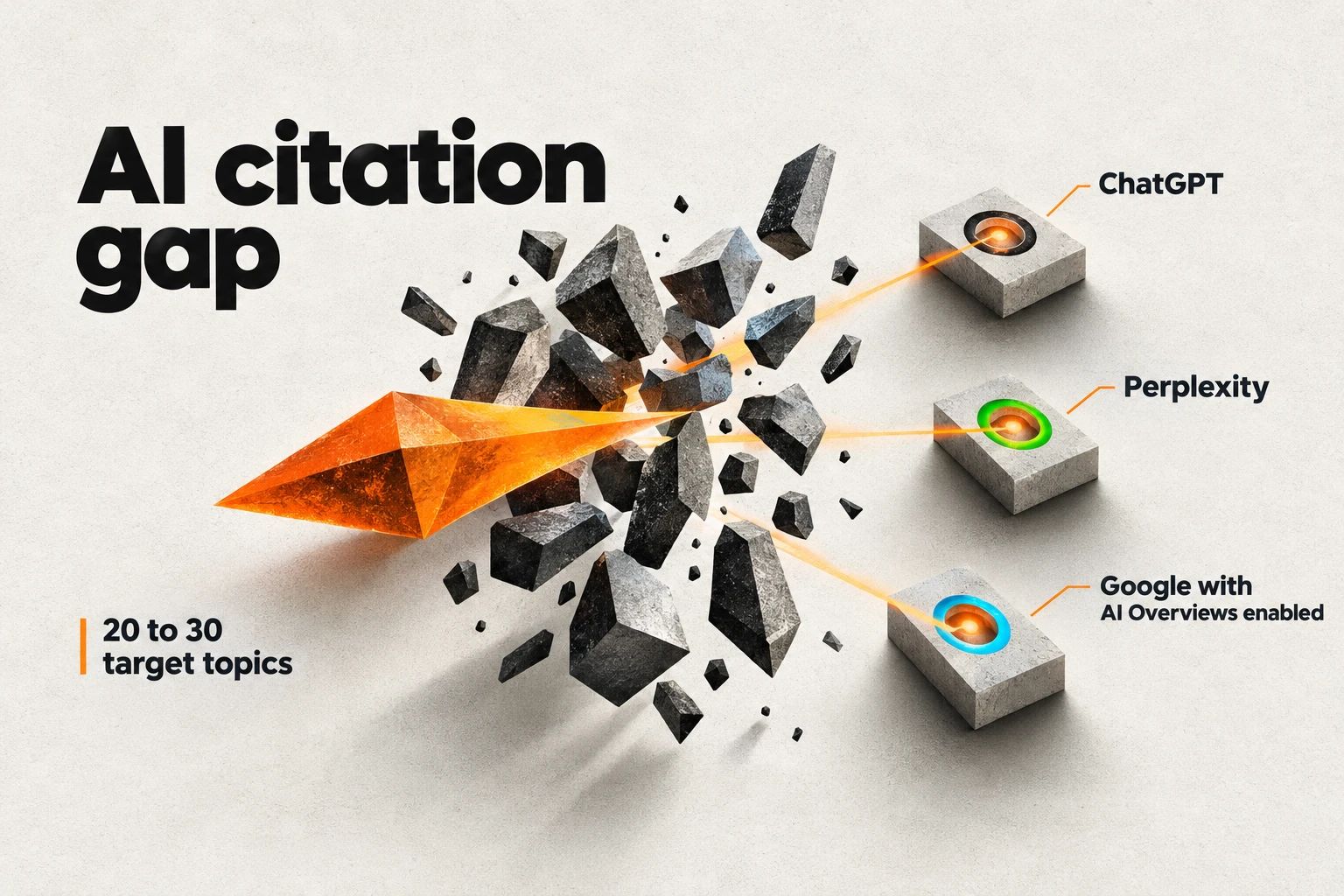
To identify an AI citation gap, teams should manually query their top 20 to 30 target topics in ChatGPT, Perplexity, and Google with AI Overviews enabled. This gives you a defined way to examine potential citation gaps.
Once you gather these insights, execution becomes a straightforward process of assembling the right assets. You stop blindly generating raw text and start building targeted responses that capture specific intent. AI unifies competitor content signals across channels, including volume, cadence, keywords, engagement quality, and distribution, then scores white-space opportunities your brand can win quickly [1]. The goal is to provide the best possible answer in the exact format the algorithmic models expect.
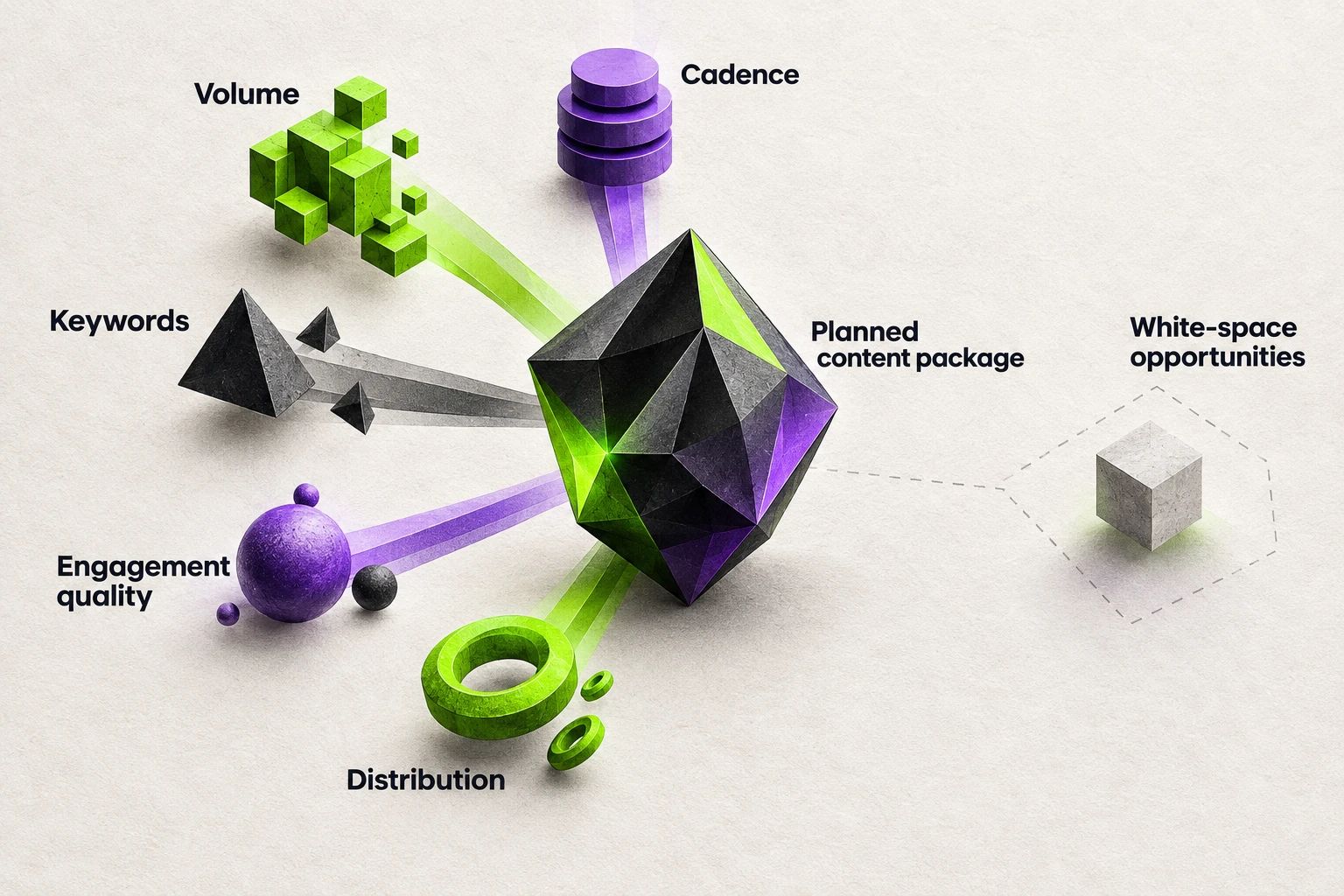
AI unifies competitor content signals across channels-volume, cadence, keywords, engagement quality, and distribution-then scores white-space opportunities your brand can win quickly.
Frequently Asked Questions
Are you locked into a long contract when adopting these systems?
No, you maintain complete control without vendor lock-in. This risk reversal ensures you only pay for workflows that actively drive your business forward.
Do you lose ownership of the assets generated by the agency?
The focus remains on building durable inbound growth and transferring that value directly to your brand. You supply the domain truth while the system handles the heavy lifting of production.
Will these automated frameworks integrate with your current content management system?
The structure arrives as a complete package regardless of the specific system you use. This seamless delivery prevents technical bottlenecks from delaying your publishing schedule.
Every proper analysis of competitor research shifts your strategy from raw output to engineered authority. You can stop guessing what search engines want and start delivering the exact structural signals that build visibility. Partnering with an AI Transformation Agency like pageBody.ai accelerates this process, turning detailed competitive intelligence into publish-ready assets. Take one of your underperforming topics today and run a full evaluation of the pages currently outranking you.
Sources:
- The Pedowitz Group - AI workflow time reductions
- SproutMe - Automated content map reconstruction
- KOZEC - Manual query testing processes