A Practical Guide to Ethical AI Frameworks: From Principles to Implementation
AI Summary
This practical guide to ethical AI frameworks explains how to embed responsibility, fairness, transparency, and privacy into AI development. It shows how to apply global standards and implement ethics by design throughout the AI lifecycle.
Bottom Line: Gain the tools and strategies to build trustworthy AI that balances innovation with accountability.
What You'll Learn:
- How to define and apply core ethical AI principles like fairness and transparency
- How to integrate ethical checks at every development phase
- How to navigate international AI ethics regulations and governance
Best For: Decision-makers and tech leaders aiming to develop AI solutions that are both effective and ethically sound.
The race to adopt AI is on. With PwC estimating a potential $15 trillion boost to the global economy by 2030, the incentive to move fast is immense. Yet, this rush creates a significant risk. Companies like Workday are facing lawsuits over alleged AI bias in hiring, revealing the high cost of getting it wrong. For decision-makers, the challenge is clear. You need to innovate responsibly without slowing down.
This isn't just about avoiding legal trouble or managing public perception. Building AI on a strong ethical foundation is about creating better, more reliable, and more valuable systems. It's about earning customer trust that becomes a durable competitive advantage.
This guide moves beyond abstract principles. We'll provide a practical framework for integrating ethical considerations directly into your AI development lifecycle, helping you evaluate global standards and implement strategies that build confidence and deliver real-world results.
Defining the Core Principles of Ethical AI
To build responsible AI, you need a shared vocabulary. While many frameworks exist, they consistently revolve around a set of core principles, often summarized as Fairness, Accountability, Transparency, and Privacy (FAT-P), along with a few other critical concepts.
Fairness and Non-Discrimination
Fairness means ensuring your AI systems do not perpetuate or amplify existing societal biases. Bias can creep in at any stage, often unintentionally. It's crucial to understand its forms, such as data bias from unrepresentative datasets, algorithmic bias from flawed model logic, and even cognitive bias from the developers themselves.
Real-world examples show the impact clearly. AI used in criminal justice has shown bias against minority groups, and hiring algorithms have been found to discriminate based on gender or race. True fairness requires proactive auditing and mitigation from the very start.
Accountability and Governance
When an AI system makes a critical decision, who is responsible? Accountability means establishing clear ownership and governance for your AI systems. This includes creating processes for auditing, redress, and human intervention. It’s not enough to deploy a model and hope for the best. Robust governance ensures there is always a human-in-the-loop for high-stakes decisions and a clear process for addressing errors.
Transparency and Explainability
Many advanced AI models operate as "black boxes," making it difficult to understand how they reach a conclusion. Transparency is the principle of making that process understandable to stakeholders. Explainable AI (XAI) is the set of techniques and tools, like LIME and SHAP, that help interpret model behavior. The goal isn't to explain every calculation but to provide clear, human-readable justifications for the AI's most critical outputs.
Privacy and Data Protection
AI systems are often fueled by vast amounts of data, much of it personal. The principle of privacy demands that this data is handled responsibly throughout its lifecycle. This involves secure data storage, proper anonymization techniques, and respecting user consent. It also means establishing strong data provenance to track where your data came from and ensure it was sourced ethically and legally.
A Comparative Look at Global AI Ethics Guidelines
Navigating the global landscape of AI regulations can be complex. Several major bodies have established influential frameworks. Understanding their focus can help you align your internal strategy with international standards.
- UNESCO's Recommendation on the Ethics of AI: This is the first global standard on AI ethics. It is broad and comprehensive, focusing on protecting human rights, promoting fairness, and ensuring environmental sustainability. It’s an excellent starting point for aligning with universal values.
- OECD AI Principles: These principles are practical and aimed at fostering an environment of trust for AI adoption. They emphasize inclusive growth, human-centered values, transparency, security, and accountability. They are highly influential among governments and businesses worldwide.
- The EU AI Act: This is a landmark regulatory framework that takes a risk-based approach. Systems deemed "high-risk," such as those in hiring or credit scoring, face strict requirements for transparency, data quality, and human oversight. It moves from principles to legally binding obligations.
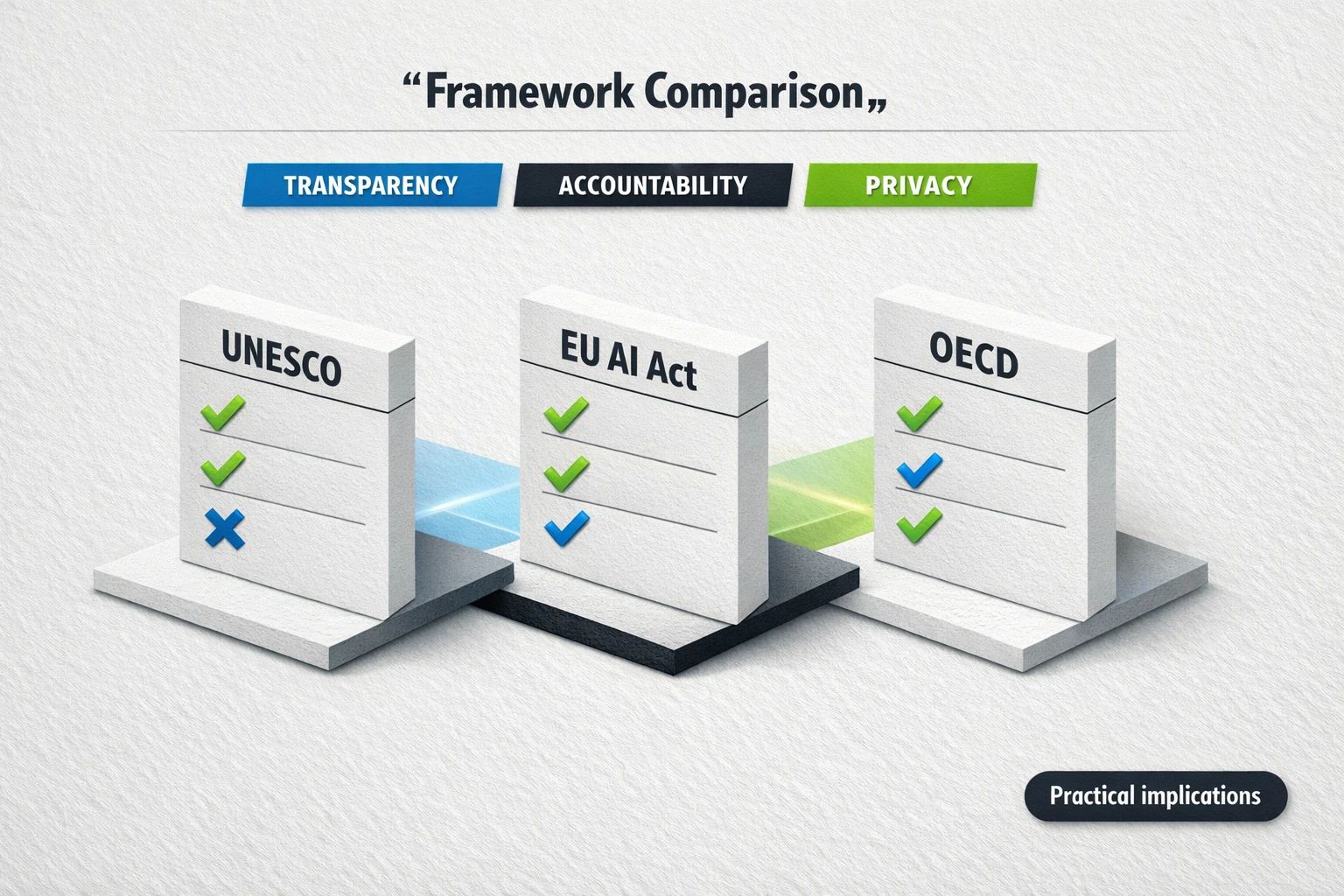
For most businesses, the key is not to pick one framework but to synthesize their common themes: protect individuals, ensure technical robustness, and maintain clear lines of human responsibility.
Integrating Ethics by Design into the AI Lifecycle
Ethical AI cannot be an afterthought. It must be woven into every stage of development. This "ethics by design" approach turns principles into practice.
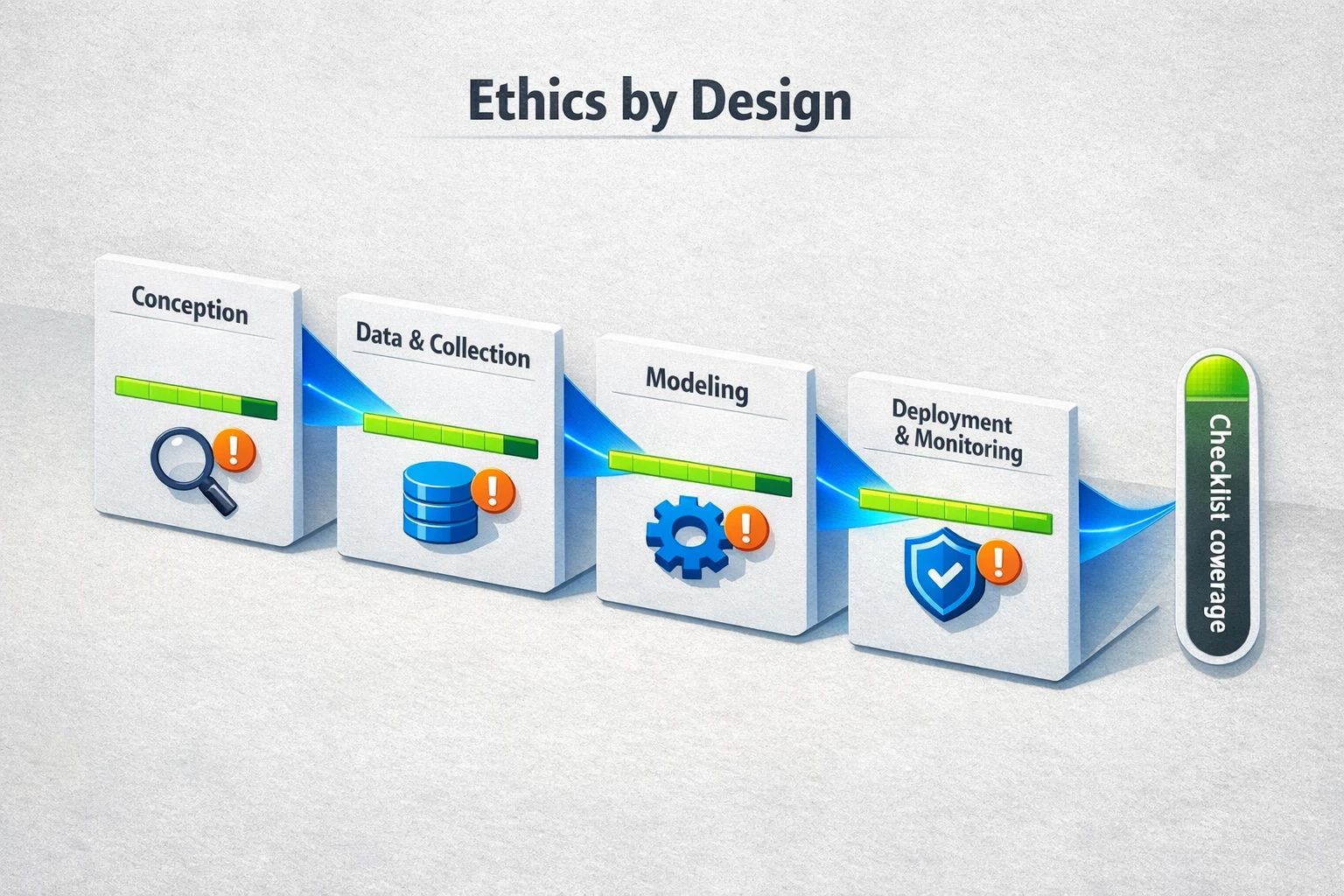
Phase 1: Conception and Design
Before writing a single line of code, conduct an Ethical Impact Assessment. Identify potential risks, define your fairness metrics, and engage diverse stakeholders to understand potential downstream consequences. This is where you decide what "good" looks like for your system.
Phase 2: Data Collection and Preparation
Data is the foundation of your model, and it is a primary source of bias. Your goal is a diverse and representative dataset. This involves auditing for quality, removing discriminatory proxies, and using techniques to balance data where needed. Documenting data provenance is critical for accountability.
Phase 3: Model Training and Development
Here, technical teams can implement fairness-aware machine learning. This may involve adding fairness constraints to the algorithm or using techniques like adversarial debiasing. Open-source toolkits like Microsoft's Fairlearn and IBM's AI Fairness 360 can help measure and mitigate bias during training.
Phase 4: Deployment and Monitoring
Once a model is live, its performance can change as it encounters new data. This is known as bias drift. Continuous monitoring is essential. Establish feedback loops for users to report issues and implement robust human oversight mechanisms, especially for systems making sensitive decisions.
Addressing Overlooked Challenges in Ethical AI
Implementing an ethical framework involves navigating complex trade-offs and technical details that are often missed in high-level discussions.
The True Cost of Ethical Validation
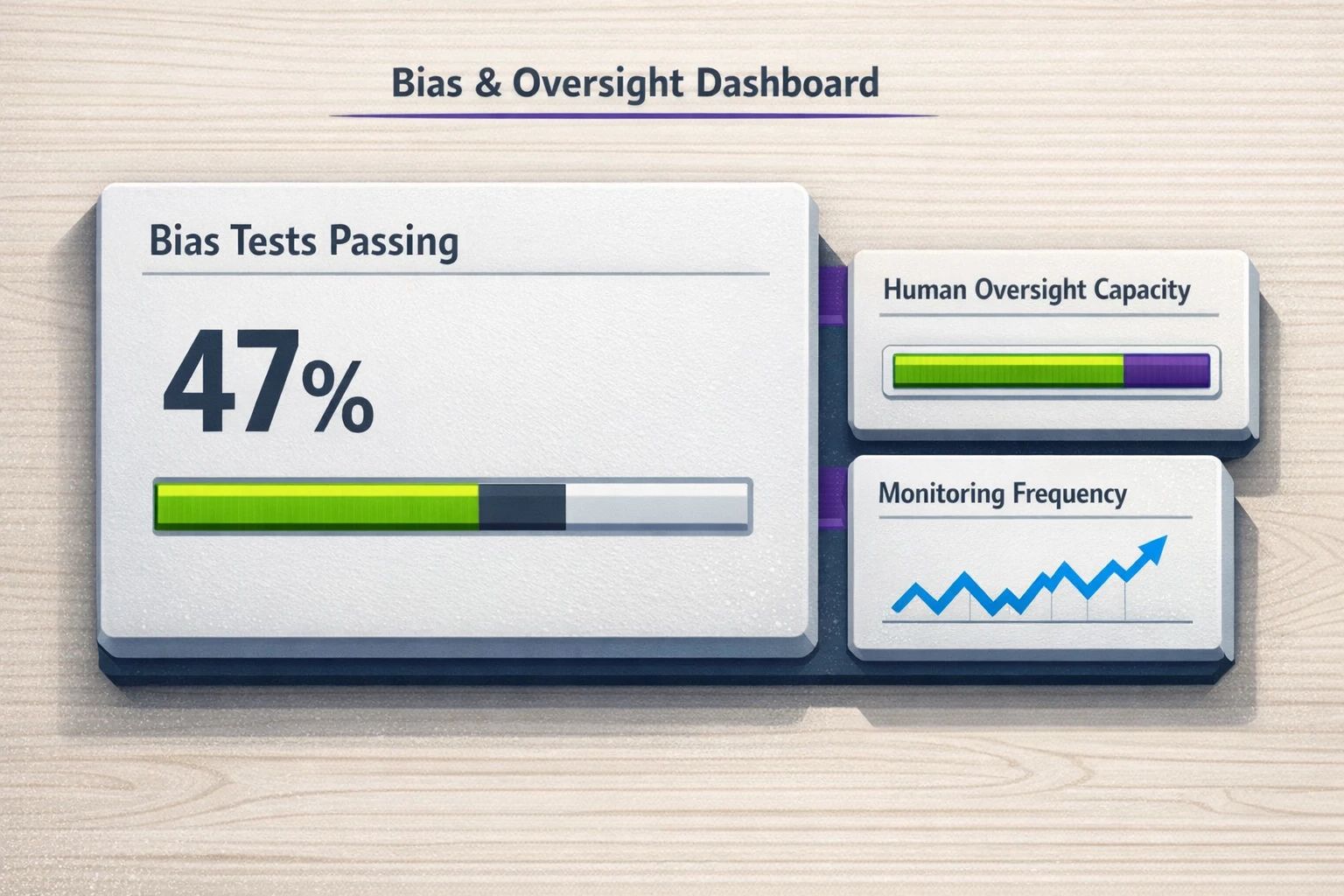
Thorough bias testing and auditing require resources. Only 47% of organizations currently test for bias in their AI systems, indicating a significant gap between intention and action. Budgeting for ethical validation from the start is crucial for success. This includes allocating time for specialized teams and investing in necessary monitoring tools.
Balancing Transparency and Privacy
Making a model explainable can sometimes risk exposing the sensitive personal data it was trained on. This creates a direct tension between two core ethical principles. The solution often involves finding the right level of transparency for the right audience, such as providing high-level explanations to end-users while giving detailed logs to internal auditors.
The Human Element: Cognitive Bias in Development Teams
We often focus on data and algorithms, but the biases of the people building the AI can be a major factor. A homogenous team may unknowingly encode its own perspectives and blind spots into a system. Building diverse teams and providing training on unconscious bias are essential mitigation strategies that complement technical solutions.
The Final Checkpoint: Human Oversight and Leadership
Technology alone cannot solve ethical challenges. A recent Penn State study found that most users cannot identify AI bias even when it's present in the training data. This highlights the absolute necessity of robust human oversight.
Effective governance relies on leadership. This means creating a culture where ethical concerns can be raised without fear and establishing cross-disciplinary review boards with the authority to guide and, if necessary, halt projects. Responsible AI is not just a technical problem. It is an organizational commitment.
Moving from principles to practice requires a deliberate, structured approach. By embedding ethics into your development lifecycle, navigating global standards thoughtfully, and fostering a culture of responsibility, you can build AI systems that are not only powerful but also trustworthy, fair, and safe.
Frequently Asked Questions
Where should our organization start with implementing an ethical AI framework?
Start with a small, cross-functional team to conduct an Ethical Impact Assessment on a single, high-visibility project. Use this pilot to define your core principles, identify tools, and create a repeatable process you can scale across the organization.
Isn't building ethical AI just a cost center that slows down innovation?
Initially, it requires an investment of time and resources. However, the long-term benefits are substantial. Ethical AI builds customer trust, reduces legal and reputational risk, and often results in more robust and accurate models. It's a strategic investment in long-term value, not just a cost.
Can we rely on off-the-shelf tools to make our AI ethical?
Tools for bias detection and explainability are incredibly helpful, but they are not a complete solution. They can identify statistical bias but cannot understand social context or define what "fair" means for your specific use case. Technology must be paired with human judgment, strong governance, and a culture of responsibility.
How do these principles apply to a smaller business with limited resources?
The principles are scalable. A small business can start by focusing on the fundamentals: using high-quality, representative data, documenting decisions, and ensuring a human is involved in reviewing critical outputs. The key is to be intentional and start building good habits early, even if you don't have a large compliance team.
What is the single most important factor for success in responsible AI development?
Executive sponsorship and a strong organizational culture. Without leadership commitment that empowers teams to prioritize ethics alongside performance, even the best frameworks and tools will fall short. It must be a shared priority, from the C-suite to the individual developer.
Sources:
- Zendata: AI Ethics 101 - Context on the economic incentives driving AI adoption.
- Crescendo.ai: AI Bias Examples & Mitigation Guide - Provided the Workday lawsuit example and a strong list of real-world cases.
- UNESCO: Recommendation on the Ethics of Artificial Intelligence - Primary source for the first global standard on AI ethics.
- OECD AI Policy Observatory - Authoritative source for the OECD's influential AI principles.
- Harvard University Professional Development: Building a Responsible AI Framework - Offered clear definitions and organizational best practices.
- IBM: What Is AI Bias? - Provided enterprise-level perspective on bias types and mitigation principles.
- Perplexity AI Research Summary - Sourced statistics on bias testing adoption rates and public concern over regulation.