Generative AI: The Next Frontier for Business Innovation
AI Summary
This article explores Generative AI as a transformative force reshaping business innovation. It moves beyond automation to core operations, offering strategies to overcome common pitfalls and maximize impact.
Bottom Line:
Gain actionable insights to effectively implement generative AI and unlock substantial business growth and efficiency.
What You'll Learn:
- How generative AI accelerates product design and personalizes customer experiences.
- Key strategic decisions for AI adoption to avoid pilot failures.- Frameworks for measuring ROI and scaling AI responsibly.
Best For:
Business leaders and decision-makers evaluating AI solutions to drive innovation and competitive advantage.
The conversation around generative AI has been dominated by content creation. While impressive, this focus overlooks the technology's true potential. For business leaders evaluating their next strategic move, the real opportunity isn't just about automating tasks. It's about fundamentally reshaping how your business innovates, competes, and grows.
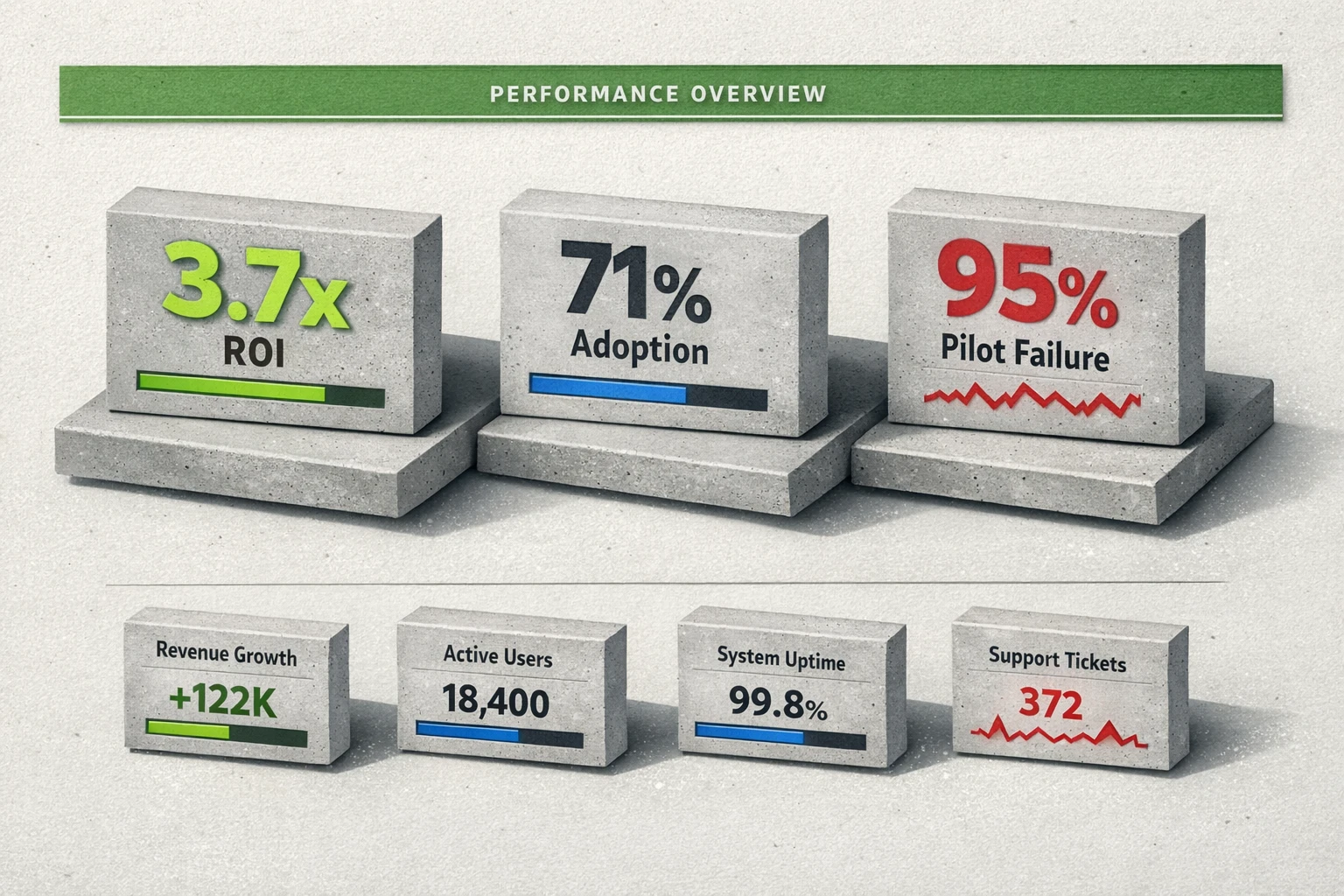
Generative AI is moving beyond writing blog posts and into the core of your operations. It’s designing products, creating secure synthetic data for intelligence, and delivering hyper-personalized customer experiences. But this potential comes with a significant challenge. A recent MIT report highlights a critical reality: 95% of generative AI pilot programs are failing to deliver on their promise.
This isn't a technology problem. It's a strategy and adoption problem. This guide moves beyond the hype to give you a clear framework for navigating this new frontier, avoiding common pitfalls, and harnessing generative AI for genuine business transformation.
The New Business Frontier: How Generative AI Reshapes Core Operations
While many organizations are seeing early wins, with 70% reporting revenue growth due to AI, the most forward-thinking companies are looking past the obvious applications. They are integrating generative AI into functions that were once the exclusive domain of human specialists.
Generative AI for Product Design and Prototyping
Imagine iterating on a new product design a hundred times in a single afternoon. Generative AI can produce countless variations of product concepts, from industrial components to consumer electronics, based on a set of defined constraints like materials, cost, and performance requirements. This accelerates the R&D cycle, reduces prototyping costs, and uncovers innovative designs that human engineers might never have considered.
Synthetic Data for Smarter Business Intelligence
Data is the fuel for AI, but what happens when you don't have enough of it, or privacy regulations restrict its use? Generative AI can create vast, high-quality synthetic datasets. This artificial data mirrors the statistical properties of your real-world data without containing any sensitive information. It's a game-changer for training machine learning models, testing system resilience, and conducting market research in data-scarce environments.
Hyper-Personalization Beyond Marketing
Personalization is no longer just about adding a customer's first name to an email. With generative AI, you can create dynamic, one-to-one experiences across every touchpoint. This means personalizing product features in real-time, tailoring customer support conversations with context-aware AI agents, and even customizing internal training programs for individual employee needs.
Automating Code and Accelerating Software Development
AI is becoming a collaborative partner for software developers. It can generate code snippets, debug complex problems, translate code between languages, and even automate the creation of entire application modules. This frees up developers to focus on high-level architecture and creative problem-solving, significantly accelerating project timelines.
Navigating the "Generative AI Divide": Why 95% of Pilots Fail and How to Succeed
The gap between AI's potential and its realized value is immense. The 95% failure rate for pilot programs isn't because the technology is flawed. It's because organizations underestimate the strategic and operational shifts required for success. Flawed integration, a significant learning gap, and misaligned budgets are the primary culprits.
Success hinges on making a critical strategic decision: do you build a solution from scratch or partner with a specialized vendor? The data provides a clear answer. According to Fortune, purchasing AI tools and forming partnerships succeed about 67% of the time. Internal builds succeed only one-third as often.
Choosing the right path requires a clear-eyed evaluation of your internal capabilities versus the speed and expertise a partner provides.
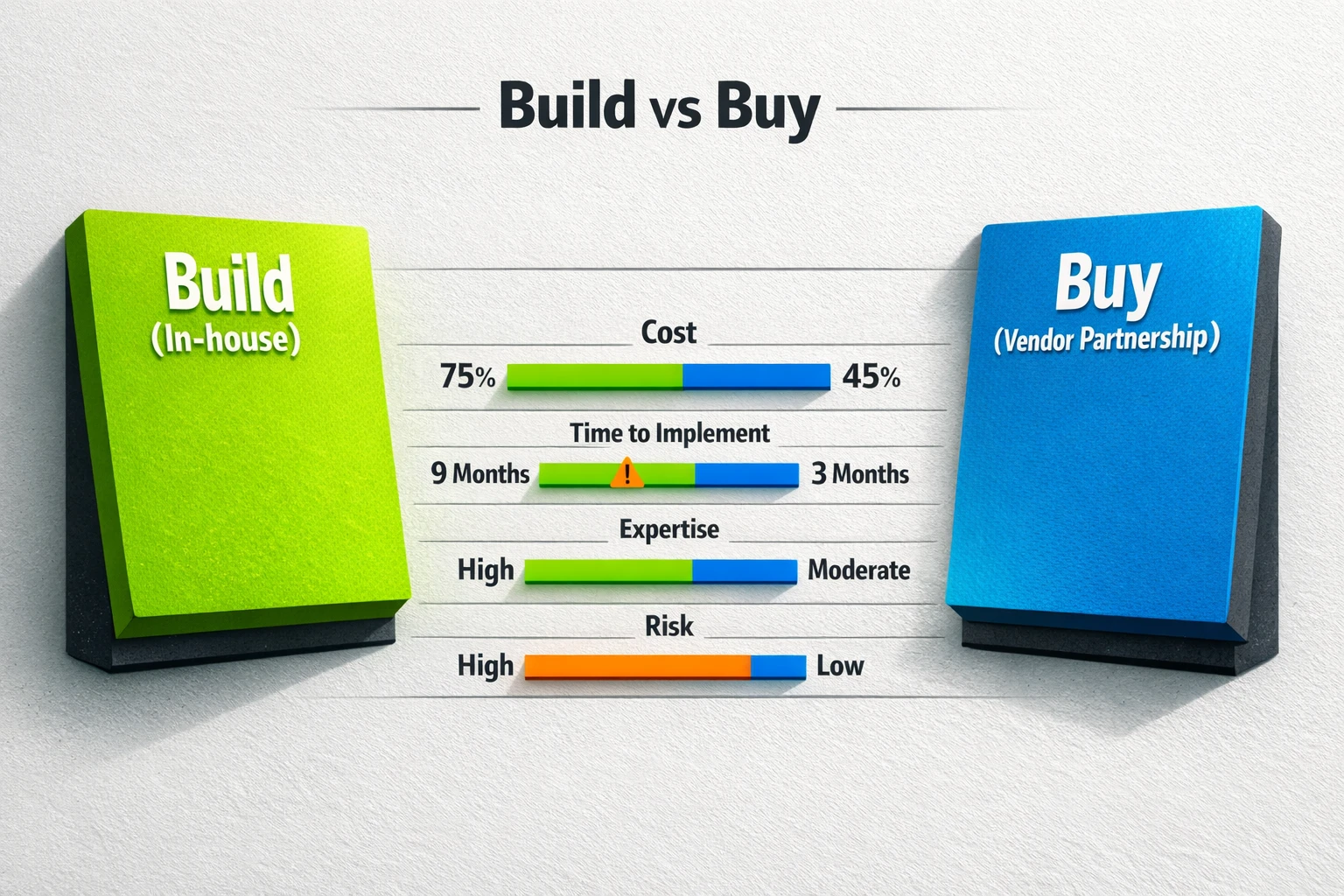
Building in-house demands a massive investment in specialized talent, data infrastructure, and ongoing maintenance. For most businesses, particularly in the early stages of a project, this creates unnecessary risk and delays time-to-value. A strategic partnership allows you to leverage proven systems and expertise, turning AI into an operational asset in weeks, not years. This is especially crucial for any ambitious small business ai implementation where resources are focused and impact needs to be immediate.
Unlocking Tangible ROI: A Practical Guide to Measuring AI's Impact
Justifying investment in generative AI requires moving beyond vanity metrics. The real value is measured in concrete business outcomes. Across the board, companies report an impressive 3.7x return on investment for every dollar spent on generative AI. This return, however, isn't always found where you expect.
Research shows that while more than half of generative AI budgets are spent on sales and marketing, the highest and fastest ROI often comes from automating back-office functions. Streamlining operations like invoicing, customer onboarding, and reporting frees up human capital for growth-focused activities. Focusing on these high-impact areas first can build momentum and fund more ambitious innovation projects down the line. To do this effectively, you need to understand the new marketing metrics in the ai era that connect operational efficiency to brand authority and revenue.
Responsible Innovation: Building a Framework for Ethical AI
Trust is the currency of the AI era. As you integrate these powerful tools, you must also build a robust framework for responsible and ethical use. This isn't just about compliance. It is about building confidence with your customers, employees, and stakeholders.
Key pillars of a responsible AI framework include:
- Unified Governance: Establish a cross-functional team to create clear policies for AI use, data privacy, and model validation.
- Addressing Hallucinations and Bias: Implement techniques like Retrieval-Augmented Generation (RAG) to ground AI responses in your company's verified knowledge base. Regularly audit models for inherent biases.
- Transparency and Explainability: While not always fully possible, strive to make AI decision-making processes as understandable as possible to users and operators.
Proactively managing these risks is essential for long-term success and protects your brand from reputational damage.
Building an AI-Native Organization: A Roadmap for Scaling Success
Technology alone doesn't create transformation. People and processes do. The most significant barrier to scaling AI is often human, not technical. Success requires a cultural shift where employees see AI as a collaborative partner, not a threat.
This journey involves a deliberate, phased approach focused on user adoption and workflow redesign. It's about empowering your team with the skills and confidence to use these new tools effectively.
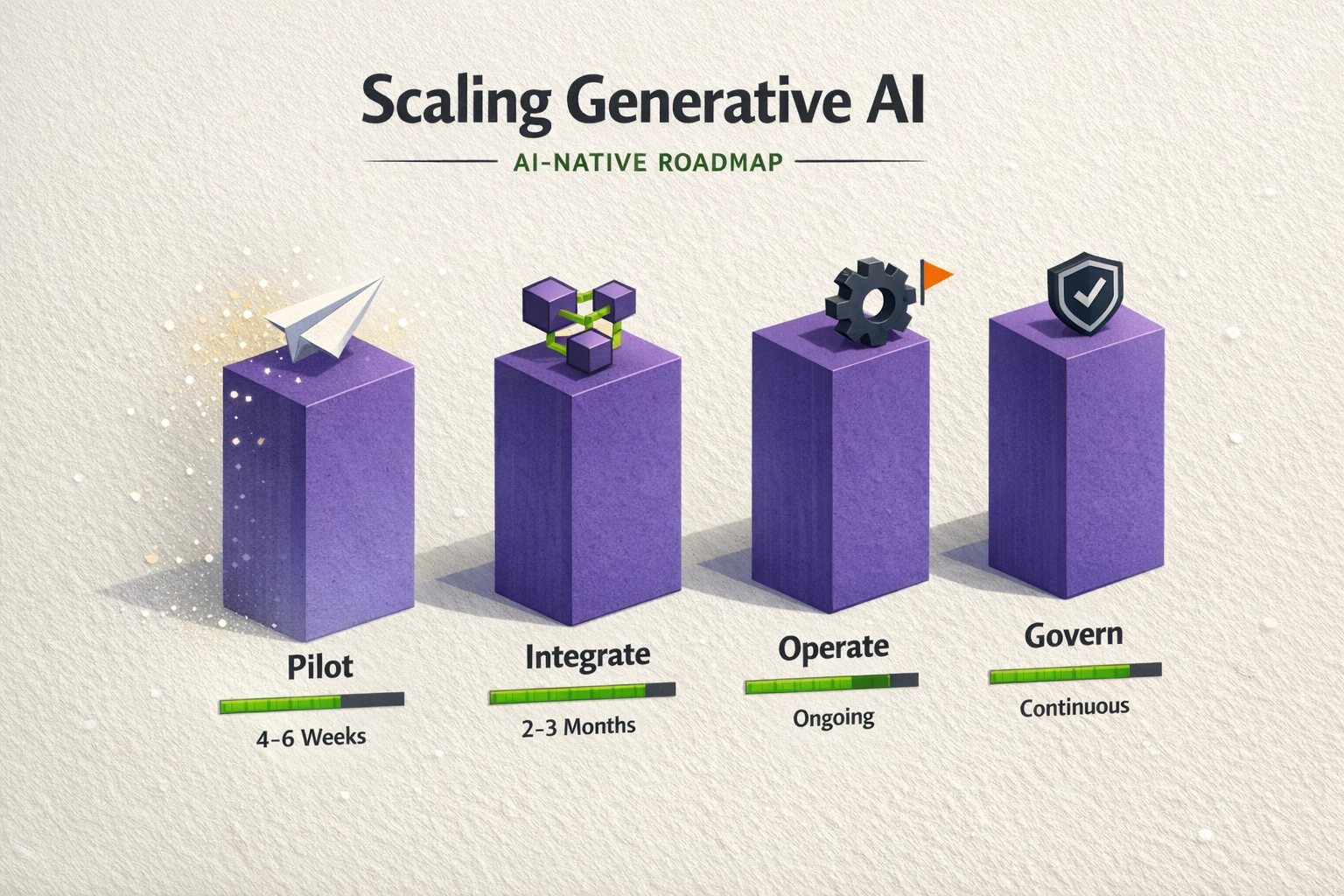
Establishing an AI Center of Excellence can centralize expertise and promote best practices across the organization. Investing in prompt literacy and continuous upskilling ensures your workforce can extract maximum value from your AI systems. This human-centric approach is what turns a stalled pilot into a thriving, AI-native operation.
pageBody.ai: Your Partner in the Generative AI Frontier
Navigating the complexities of AI adoption requires a partner who understands both the technology and the business strategy. pageBody specializes in bridging the gap between potential and performance. We deliver AI-driven systems that are operational within 14 days, providing a cost-effective and transparent alternative to hiring in-house teams or traditional agencies.
Our focus is on implementing proven solutions that tackle the root causes of pilot failure. We help you automate core operations, generate strategic content that builds authority, and scale your AI initiatives with a clear path to ROI. We handle the technical complexity so you can focus on driving your business forward.
Frequently Asked Questions
How can a small business afford to implement generative AI?
The key is to start with high-ROI applications, such as back-office automation or strategic SEO, which can often be implemented for less than the cost of a single full-time employee. Partnering with a specialist like pageBody avoids the high upfront costs of building an in-house team and infrastructure.
Isn't it better to build our own AI solution for more control?
While building in-house offers control, it comes with significant risks, costs, and delays. Data shows that vendor partnerships have a success rate double that of internal builds. A good partner will offer customized solutions that integrate with your existing systems, giving you the benefits of a bespoke solution without the development hurdles.
What is the first practical step my company should take?
Start by identifying a single, repeatable process within your organization that is time-consuming and has a clear success metric. This could be customer onboarding, invoice processing, or competitive content analysis. Automating this one area provides a quick win and builds the business case for broader AI adoption.
How do we ensure our data remains secure when using third-party AI systems?
Reputable AI partners prioritize security. Look for solutions that use secure data handling protocols and offer clear policies on data usage. For sensitive applications, techniques like synthetic data generation allow you to leverage the power of AI without ever exposing private customer information.
Sources:
- Fortune - Provided the core statistic on the 95% failure rate of AI pilots and insights into build vs. buy success rates.
- McKinsey & Company - Offered data on AI's economic contribution and the strategies of high-performing companies.
- Boston Consulting Group (BCG) - Provided context on the importance of people and process in successful AI adoption.
- MIT Sloan Executive Education - Highlighted AI's role across various business functions and the need for unified governance.
- VisualSP - Emphasized the critical role of human-centric adoption and prompt literacy for scaling AI initiatives.
- Kanerika - Contributed data points regarding the 3.7x return on investment for generative AI.
- Netguru - Supported claims on revenue growth and performance improvements due to AI adoption.