If Tools Fail Build Industry-Specific Custom AI Systems
AI Summary
Building industry specific custom AI systems is not just a response to failed tools; it turns proprietary workflows into an operational advantage when generic automation reaches its ceiling. The article compares practical use cases across HR compliance, B2B service operations, logistics, and manufacturing, then connects system ownership to long term ROI.
- Why market average platforms struggle with unstructured data, unique business logic, and data sovereignty.
- How credit scoring, anomaly detection, computer vision, and predictive maintenance create measurable leverage.
- A cost evaluation framework covering manual workarounds, quick win timelines, vendor lock in, and enterprise AI returns.
For teams whose software lacks context and keeps people manually bridging workflow gaps.
Most organizations buy off-the-shelf AI and expect immediate operational leverage. They install generic workflow tools. They write basic prompts. Then they wait for a transformation that never arrives. The reality is that standardized software hits a hard ceiling when it encounters proprietary business logic. You do not need another generic tool. You need a system built around how your company actually operates.
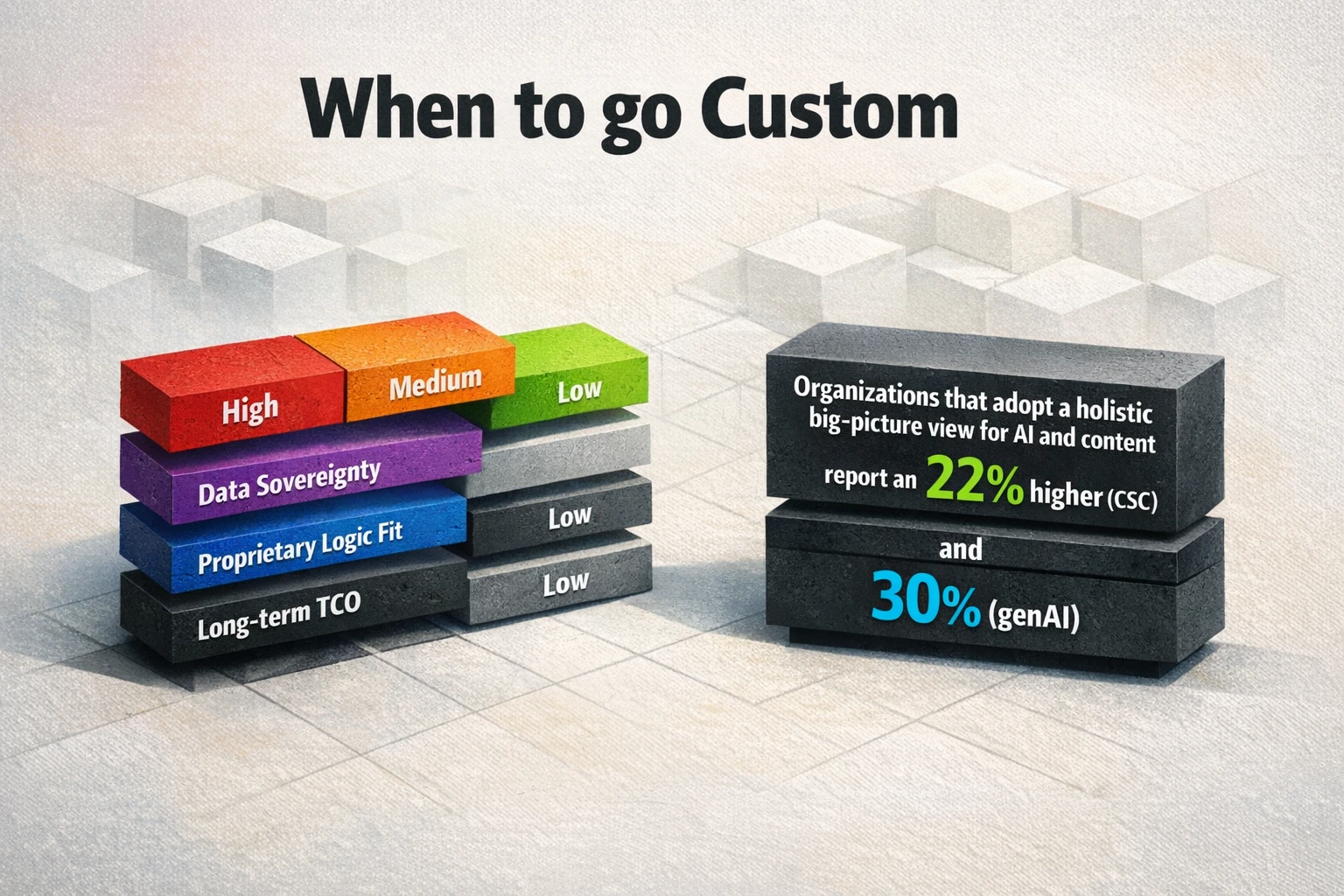
![Most organizations buy off-the-shelf AI and expect immediate operational leverage. They install generic workflow tools. They write basic prompts. Then they wait for a transformation that never arrives. The reality is that standardized software hits a hard ceiling when it encounters proprietary business logic. You do not need another generic tool. You need a system built around how your company actually operates. !Compare outcomes, not hype: IBM data shows only 37% of AI initiatives delivered results by end‑2025, while the typical enterprise AI portfolio generated USD115M (51% ROI) in 2025 — a clear case for rigorous custom execution. ## The Automation Illusion Standard platforms operate on market averages. They are designed to be acceptable for thousands of different companies across dozens of verticals. This broad design philosophy creates immediate friction when you try to force complex unstructured data through standardized pipes. You end up changing your successful internal workflows just to accommodate the software. This approach is completely backward. Custom AI adapts to the business instead of forcing the business to adapt to the tool. The software should map to your competitive priorities rather than limiting them. Generic AI tools operate within vendor constraints and optimize for no one in particular [1]. Your operations require precision, and standard products cannot deliver it. !Decision checklist: use qualitative fit criteria plus IBM Think's ROI insight — organizations taking a holistic AI/content view report ROI 22% higher (CSC) and 30% for genAI integration. ## Engineering Solutions Across Complex Sectors Every vertical requires a different application of machine intelligence. You cannot use the same basic language model to forecast inventory and evaluate credit risk. To win in the adaptive AI market, you must train systems on your specific domain data. ### Solving the HR Compliance Puzzle Human resources departments manage highly sensitive unstructured information. Standard automation tools often break compliance protocols or fail to grasp nuance in employee onboarding. Custom models navigate these human workflows securely. Recent data from the Society for Human Resource Management indicates that AI adoption in HR tasks surged to 43 percent in 2025 [2]. This reflects a growing mandate for bespoke systems that handle screening and compliance without compromising data sovereignty. !SHRM data: AI adoption in HR tasks surged to 43% in 2025 from 26% in 2024 — a strong signal for HR leaders to evaluate bespoke automation pilots. ### Optimizing B2B Service Operations Complex client servicing involves variables that generic software simply cannot process. B2B teams waste thousands of hours manually reviewing contracts, assessing risks, and routing inquiries. A tailored AI agent digests your proprietary historical data to automate these judgments. The impact on accuracy and speed is immediate when the system understands your specific evaluation criteria. A custom machine learning credit scoring system enabled Factris to achieve a 96 percent success rate for correctly evaluated accepted cases [3]. !AAI Labs case study: Factris achieved a 96% success rate and a 4% error rate with a custom machine‑learning credit scoring system — concrete evidence of custom AI impact. ### Eliminating Bottlenecks in Logistics Supply chains generate endless data points. Standard forecasting tools look at historical sales and guess what happens next. Custom models integrate computer vision and anomaly detection directly into your warehouse operations. They spot disruptions before they compound. You maintain complete control over the infrastructure and the intelligence it generates. ### Predictive Accuracy in Manufacturing Factories run on proprietary machine data. Off-the-shelf software rarely speaks the exact language of your legacy hardware. A true partnership with pageBody means we do the heavy lifting while you stay in control. We discover where machine intelligence fits your production line and engineer systems that predict maintenance needs directly from your sensor outputs. You do not overhaul your factory floor. You overlay intelligence onto it. ## Evaluating the True Cost of Automation You must look beyond the initial deployment timeline when comparing options. Generic tools look cheap on day one but cost you thousands of hours in manual workarounds by day ninety. The unassailable logic favors building your own automated assets. Bespoke architecture requires a strategic blueprint upfront. The real payoff comes from long-term operational leverage. Organizations that push past the experimentation phase treat machine intelligence as a permanent structural advantage. They integrate it deeply into their daily operations. The typical enterprise AI portfolio generated USD115 million in net value in 2025, yielding a 51 percent ROI [4]. They stop treating automation as a software subscription and start treating it as core business infrastructure. ## Frequently Asked Questions **Why do off-the-shelf AI tools fail in complex workflows** Standard tools are built for broad market appeal. They cannot process unique business logic, requiring your team to manually bridge the gaps and negating any efficiency gains. **How long does it take to implement a custom AI system** Most tailored quick wins go live within a few weeks. Comprehensive operational systems require thorough discovery and calibration, but you start seeing measurable leverage within the first month. **Do we retain ownership of the custom systems we build** Yes. You own the assets and the competitive advantage they produce. We build the infrastructure to run on your terms without restrictive vendor lock-in. Evaluate your current workflow bottlenecks today. Document the exact tasks where your team manually intervenes because your software lacks context. That list is your blueprint for a custom AI deployment. --- **Sources:** 1. ELEKS - Expert analysis on the constraints of generic AI tools 2. LinkedIn - SHRM research detailing 2025 AI adoption rates in human resources 3. AAI Labs - Case study outlining machine learning success rates in credit scoring 4. IBM IBV - Enterprise data on the financial return of mature AI portfolios](https://cdn.prod.website-files.com/6842dcf6d774403e83138de3/6aa0fcd3c6c79f2028aa2007_tmpw5_6ckyi.webp)
The Automation Illusion
Standard platforms operate on market averages. They are designed to be acceptable for thousands of different companies across dozens of verticals. This broad design philosophy creates immediate friction when you try to force complex unstructured data through standardized pipes. You end up changing your successful internal workflows just to accommodate the software.
This approach is completely backward. Custom AI adapts to the business instead of forcing the business to adapt to the tool. The software should map to your competitive priorities rather than limiting them. Generic AI tools operate within vendor constraints and optimize for no one in particular [1]. Your operations require precision, and standard products cannot deliver it.
Engineering Solutions Across Complex Sectors
Every vertical requires a different application of machine intelligence. You cannot use the same basic language model to forecast inventory and evaluate credit risk. To win in the adaptive AI market, you must train systems on your specific domain data.
Solving the HR Compliance Puzzle
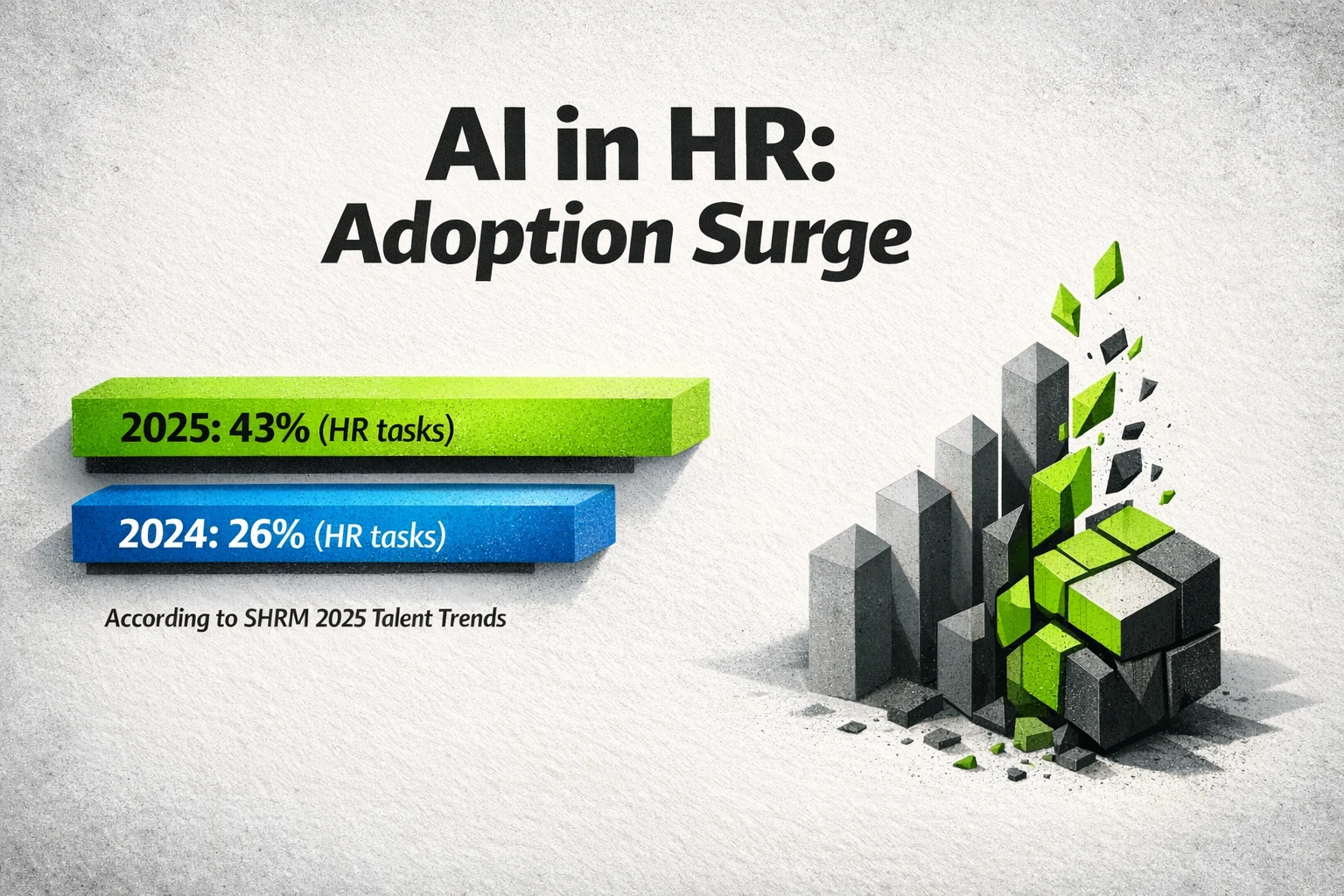
Human resources departments manage highly sensitive unstructured information. Standard automation tools often break compliance protocols or fail to grasp nuance in employee onboarding. Custom models navigate these human workflows securely. Recent data from the Society for Human Resource Management indicates that AI adoption in HR tasks surged to 43 percent in 2025 [2]. This reflects a growing mandate for bespoke systems that handle screening and compliance without compromising data sovereignty.
Optimizing B2B Service Operations
Complex client servicing involves variables that generic software simply cannot process. B2B teams waste thousands of hours manually reviewing contracts, assessing risks, and routing inquiries. A tailored AI agent digests your proprietary historical data to automate these judgments.
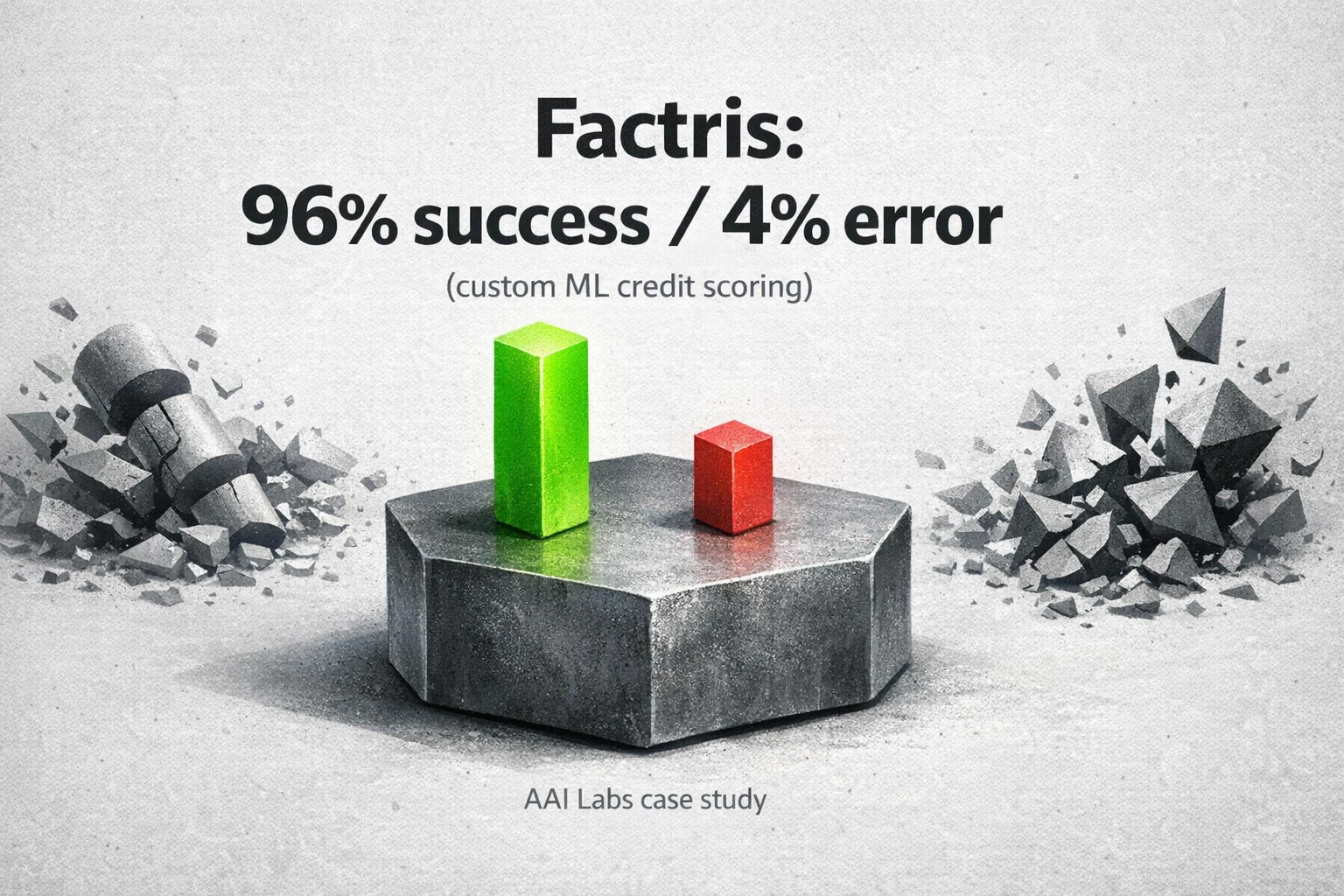
The impact on accuracy and speed is immediate when the system understands your specific evaluation criteria. A custom machine learning credit scoring system enabled Factris to achieve a 96 percent success rate for correctly evaluated accepted cases [3].
Eliminating Bottlenecks in Logistics
Supply chains generate endless data points. Standard forecasting tools look at historical sales and guess what happens next. Custom models integrate computer vision and anomaly detection directly into your warehouse operations. They spot disruptions before they compound. You maintain complete control over the infrastructure and the intelligence it generates.
Predictive Accuracy in Manufacturing
Factories run on proprietary machine data. Off-the-shelf software rarely speaks the exact language of your legacy hardware. A true partnership with pageBody means we do the heavy lifting while you stay in control. We discover where machine intelligence fits your production line and engineer systems that predict maintenance needs directly from your sensor outputs. You do not overhaul your factory floor. You overlay intelligence onto it.
Evaluating the True Cost of Automation
You must look beyond the initial deployment timeline when comparing options. Generic tools look cheap on day one but cost you thousands of hours in manual workarounds by day ninety. The unassailable logic favors building your own automated assets. Bespoke architecture requires a strategic blueprint upfront.
The real payoff comes from long-term operational leverage. Organizations that push past the experimentation phase treat machine intelligence as a permanent structural advantage. They integrate it deeply into their daily operations. The typical enterprise AI portfolio generated USD115 million in net value in 2025, yielding a 51 percent ROI [4]. They stop treating automation as a software subscription and start treating it as core business infrastructure.
Frequently Asked Questions
Why do off-the-shelf AI tools fail in complex workflows
Standard tools are built for broad market appeal. They cannot process unique business logic, requiring your team to manually bridge the gaps and negating any efficiency gains.
How long does it take to implement a custom AI system
Most tailored quick wins go live within a few weeks. Comprehensive operational systems require thorough discovery and calibration, but you start seeing measurable leverage within the first month.
Do we retain ownership of the custom systems we build
Yes. You own the assets and the competitive advantage they produce. We build the infrastructure to run on your terms without restrictive vendor lock-in.
Evaluate your current workflow bottlenecks today. Document the exact tasks where your team manually intervenes because your software lacks context. That list is your blueprint for a custom AI deployment.
Sources: