3 Steps to Leadership in Digital Transformation
AI Summary
Leadership during digital transformation is not just about deploying better technology — it is about preventing fear from turning useful tools into failed investments. Lean teams can build trust by making human decision rights explicit and proving that AI removes work instead of adding friction. The practical framework includes:
- Grassroots manager support that maps new technology to daily tasks.
- Resistance diagnosis focused on trust, ethics, workload, and workflow disruption.
- Clear boundaries between machine-generated outputs and human approval, judgment, and relationship expertise.
For founder-led teams trying to gain operational leverage without damaging morale or adoption.
Exercising effective leadership during a digital transformation requires confronting the immediate necessity of addressing grassroots fear. A lean team does not resist new technology because they hate efficiency. They resist because they fear replacement. You cannot mandate adoption from the top down. Transparency is a way to build a functional human-in-the-loop workflow.
When a founder wants rapid operational leverage, the team sees an impending layoff. In fact, 72% of managers said they believe employees fear AI tools will make them less valuable at work [1]. If you do not explicitly state what human work stays, the systems you build will fail at the starting line.
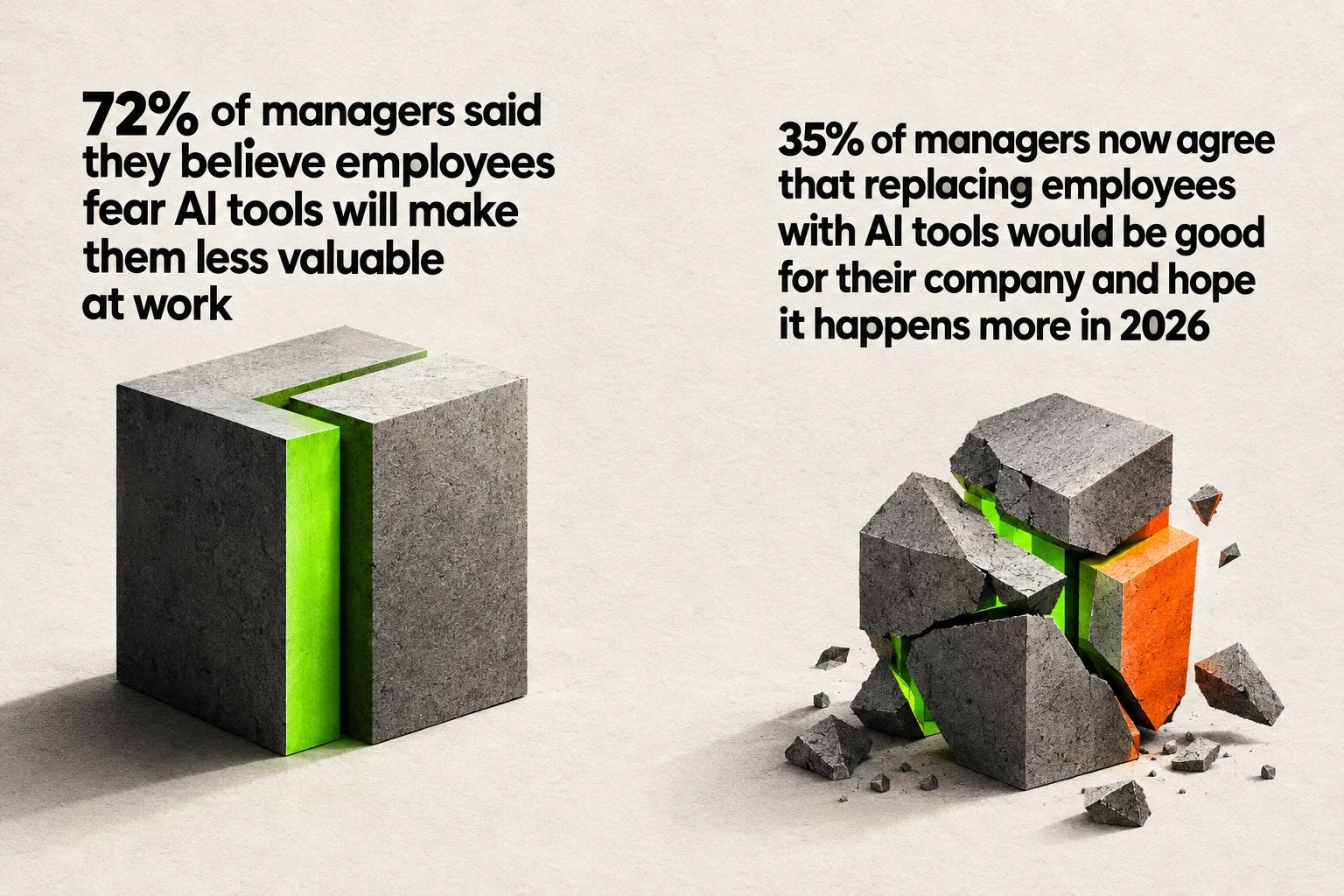
72% of managers said they believe employees fear AI tools will make them less valuable at work.
Grassroots Strategies for Managing Cultural Shifts
Lean organizations cannot afford drawn-out change management seminars. The shift happens in daily operations. Avoid high-level corporate culture exercises that sound good in a boardroom but mean nothing to an employee facing a new interface. Instead, secure manager support at the ground level where the actual work takes place.
Managers who actively help their teams navigate new processes create an environment where technology is viewed as a tool rather than a threat. Employees who strongly agree their manager actively supports their team’s AI use are more likely to say their workplace culture has improved in the past year (31%) compared with those who do not strongly agree (21%) [2]. You must train your managers to sit with their teams, map out the daily tasks, and integrate the technology step by step.
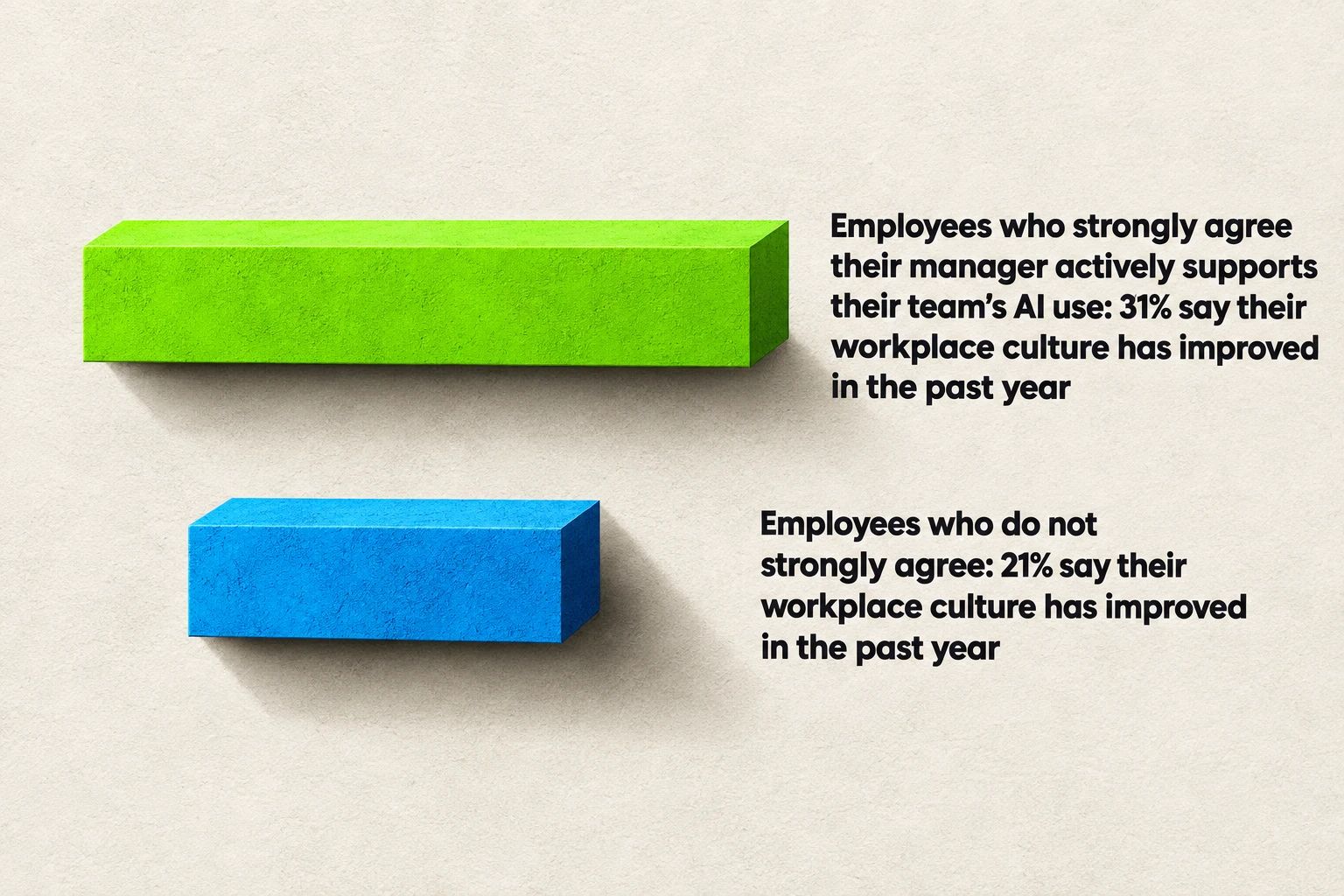
Employees who strongly agree their manager actively supports their team’s AI use are more likely to say their workplace culture has improved in the past year (31%) compared with those who do not strongly agree (21%).
Overcoming Employee Resistance During an AI Rollout
If the team quietly rejects the technology, the rollout fails. At least 30% of generative AI projects will be abandoned, often because they are quietly rejected by the very employees they were designed to help, who see them as a threat to their professional roles [3]. To stop this rejection, you have to diagnose the friction accurately.
Resistance is rarely about the software itself. It stems from the disruption of established routines and the fear of doing something wrong. Resistance is increasingly driven by trust and ethical considerations (53%), while concerns around increased workload or complexity have nearly doubled, rising from 28% to 51% [4]. When employees feel that a new system adds administrative burdens without providing clear value, they will revert to their old processes. You must prove that the tool actually removes manual effort rather than creating a new layer of confusing supervision.
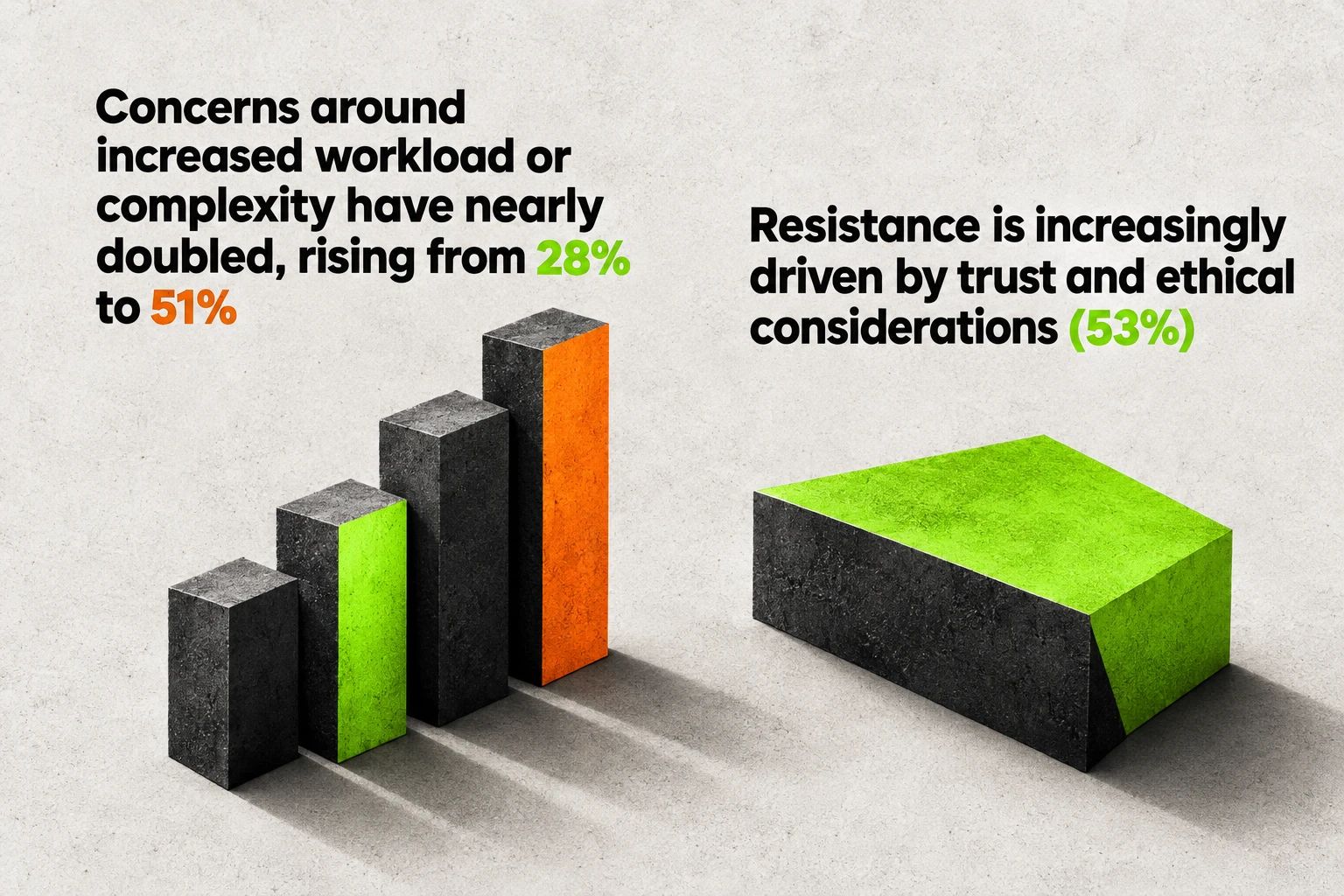
Resistance is increasingly driven by trust and ethical considerations (53%). Concerns around increased workload or complexity have nearly doubled, rising from 28% to 51%.
Clearly Communicating Redesigned Roles
The fix for adoption friction is strict workflow boundaries. You must explicitly define what the machine generates and what the human decides. Redesign the daily work around clear decision rights so that your team understands their specific value has not vanished.
As routine work is automated, specify which forms of judgment, customer knowledge, interpretation, problem framing, or relationship expertise become more visible. When employees see that their unique expertise is still a mandatory threshold for the final output, they stop fighting the tool and start managing it. This operational clarity gives lean teams the leverage they actually need to scale without breaking their internal culture.
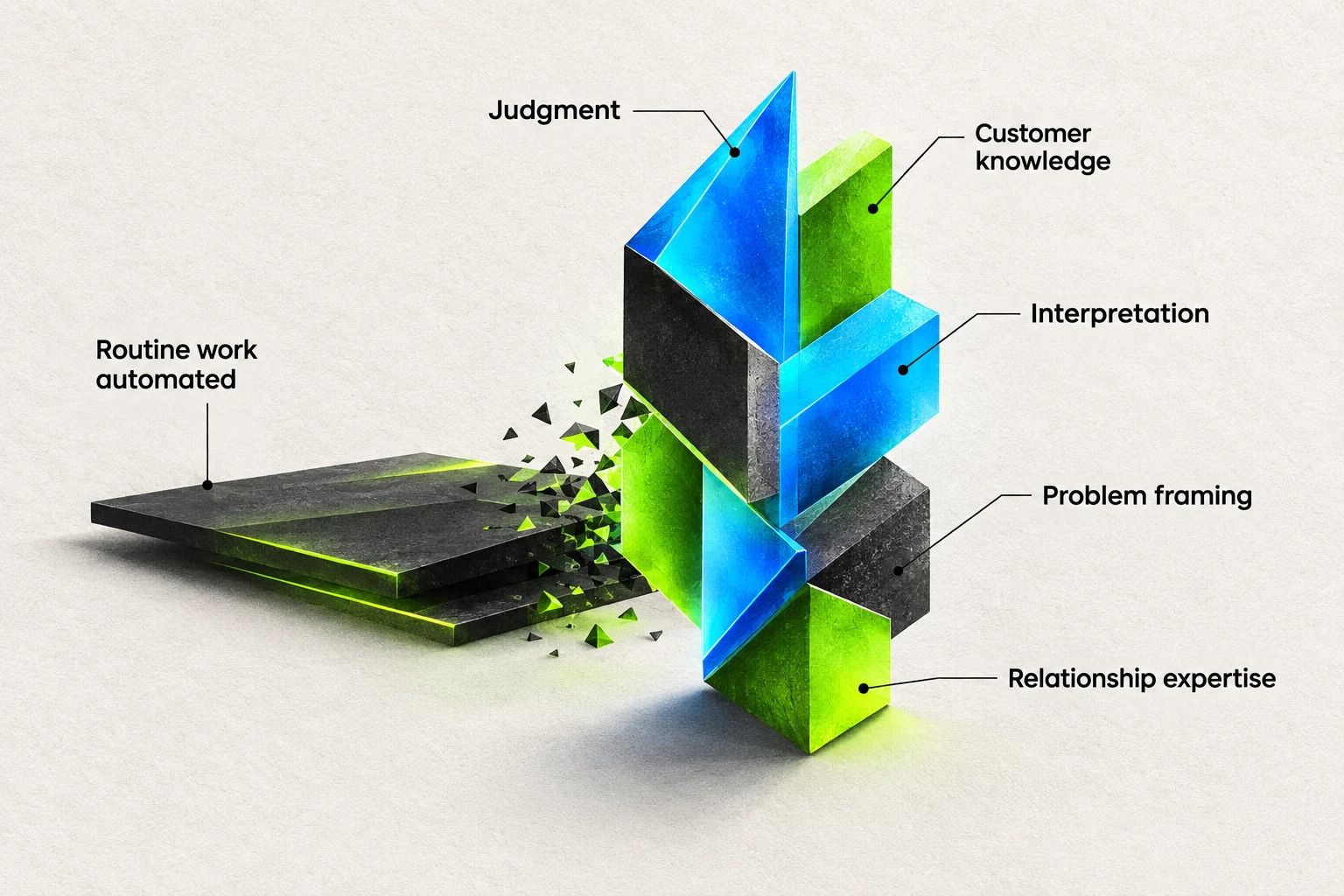
You have to specify which forms of judgment, customer knowledge, interpretation, problem framing, or relationship expertise become more visible because routine work has been automated.
FAQ
Why do some AI rollouts fail despite functional technology?
The technology works, but the team refuses to use it. The barrier is psychological and operational rather than technical. Employees quietly reject tools when they view them as a direct threat to their professional identity and job security.
Are human resources leaders confident in managers driving this adoption?
No, there is doubt at the top regarding management readiness. Executives worry that middle managers lack the practical frameworks needed to guide their teams through daily workflow changes. Lean organizations must therefore prioritize operational training over high-level vision statements.
Is employee resistance purely about the fear of replacement?
No, increased friction in daily tasks is another driver of rejection. Employees encounter new tools that add confusing administrative layers instead of removing work. Leaders must prove that the system actually reduces routine burdens before expecting full adoption.
Map out one single daily operational workflow and explicitly draw the line between the tool's output and your employee's final approval right now.
Sources:
- Beautiful.ai - 2026 workplace impact survey data
- Gallup - AI effect on workplace culture survey
- Harvard Business School - Research on generative AI project abandonment
- KPMG - Data on employee resistance and workload concerns