5 Steps to Build a LinkedIn Sales Pipeline That Stops Guessing and Starts Converting
AI Summary
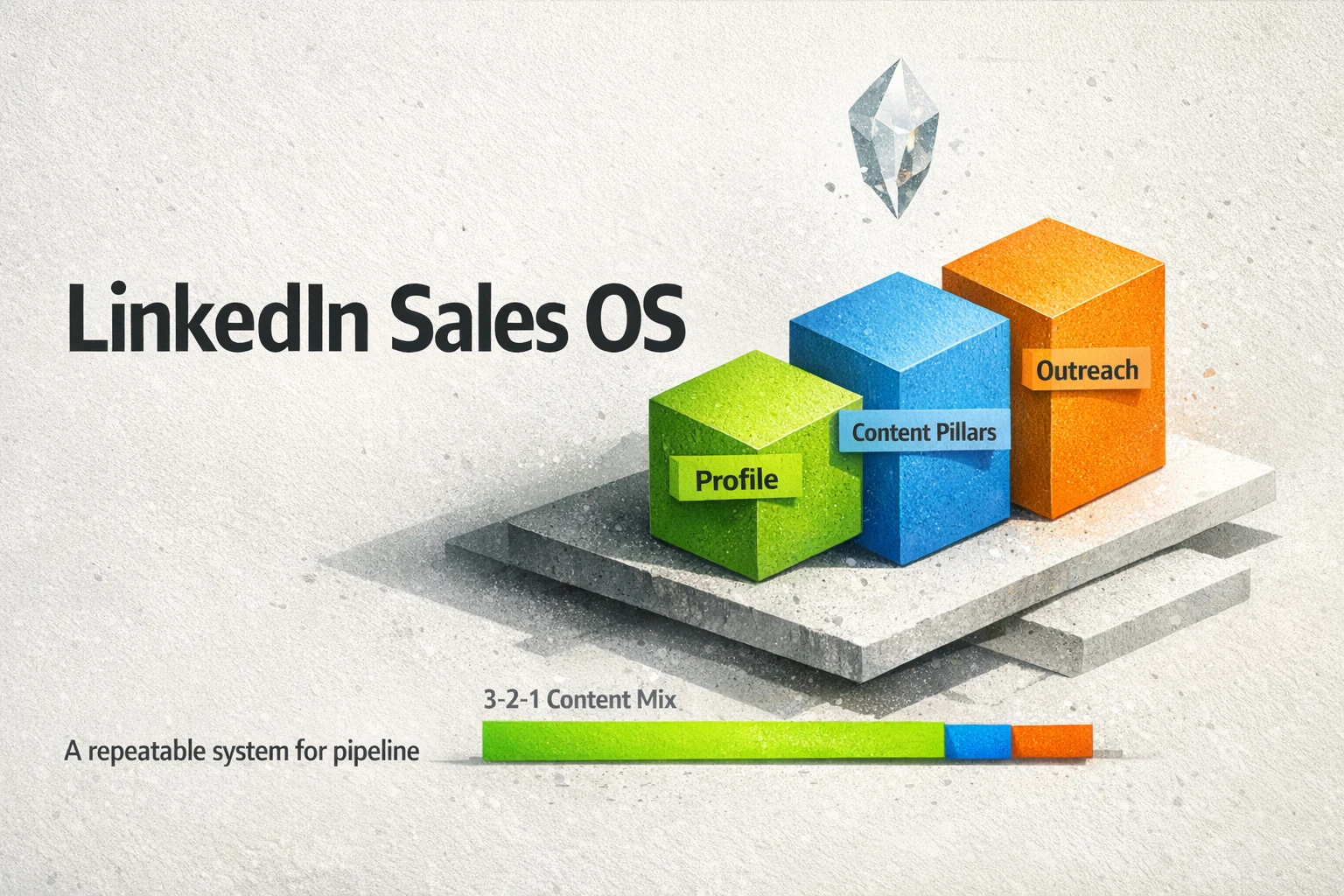
Building a LinkedIn sales pipeline that actually converts means trading random posting for a system that turns every touchpoint into trust and qualified conversations. This article walks through a five-step LinkedIn operating system designed to move buyers from silent research to booked meetings.
- Define one expensive problem and tight content pillars so every post signals clear expertise to a specific, high-value audience
- Apply the 3-2-1 content mix and PAS framework to balance value, proof, and offers while writing posts that surface pain and drive action
- Convert views into pipeline with engagement-first outreach, a simple off-platform funnel, and metrics that track profile views, conversations, and meetings
For teams posting consistently but not seeing meetings, this gives a repeatable framework to turn LinkedIn into a predictable revenue channel.
Most sales teams treat LinkedIn like a megaphone. They show up, blast out a feature list or a case study, and wonder why their pipeline is empty. They are stuck in a cycle of posting and praying, which leads to burnout and zero results.
The problem is not a lack of effort. It is a lack of a system.
The most common advice you will hear is to create a content calendar. This is a trap. A calendar tells you when to post, but it does not tell you what to say or why it matters. It mistakes activity for progress. Building a real pipeline on LinkedIn requires an operating system, a repeatable process that turns your expertise into qualified conversations. It is about engineering trust, not just scheduling updates.
This is critical because your buyers are already doing their research. The average B2B buyer now consumes between 7 and 10 pieces of content before ever speaking to a salesperson [1]. If your content is not part of that journey, you do not exist. This guide outlines the five phases of a LinkedIn operating system that generates predictable pipeline, not random likes.
Step 1: Optimize Your Profile for Conversion, Not Your Resume
Your personal profile is the most important sales page you have. When a prospect sees your content and clicks your name, they are not looking for your work history. They are looking for a reason to trust you. Your profile must answer one question in under three seconds: "What problem does this person solve for me?"
Stop treating it like a resume. Optimize it like a landing page.
- Headline: Do not just list your title. State the outcome you create for your customers. Instead of "Account Executive at SaaS Company," try "Helping Revenue Teams Eliminate No-Shows and Shorten Sales Cycles."
- Banner Image: This is free billboard space. Use it to reinforce your headline with a clear value proposition or a call to action, like pointing to a valuable resource in your Featured section.
- Featured Section: This is where you prove you can solve their problem. Pin your best content, a valuable case study, or a link to a resource that helps them immediately.
- About Summary: Tell a story. Start with the problem your customers face, show that you understand their world, and then briefly introduce how you help them reach a better future.
Every element should work together to qualify or disqualify visitors. If they are a fit, the next step should be obvious. If they are not, they should leave. That is what a good landing page does.
Step 2: Define Your Content Pillars Around One Expensive Problem
You cannot be known for everything. To build authority, you must be known for something. This is where content pillars come in. These are the two or three core topics you will own. Everything you post should connect back to these pillars.
The mistake most people make is choosing pillars that are too broad, like "sales" or "marketing." Your pillars must be specific and tied to a high-value business problem. Your goal is not to educate the entire world. It is to become the go-to expert for a very specific audience with a very expensive problem.
Growth expert Dickie Bush frames this perfectly: “Solve one expensive problem repeatedly. With every post, I try to answer: 'How do I build attention or revenue on my own?' That's a $100K+ problem. That’s what people remember me for” [2].
Find your $100K problem. What is the one thing your best customers would pay anything to fix? That is your content territory. Build your pillars there.
Step 3: Use the 3-2-1 Mix to Build Trust Before You Ask for It
Once you have your pillars, you need a rhythm for publishing. The key is to balance value and promotion. If you only give value, you will become a beloved educator with no pipeline. If you only promote, you will be tuned out as noise.
A simple and effective framework for this is the 3-2-1 content model. For every six posts, you create a strategic mix. The model suggests a weekly breakdown of three pieces of industry content, two pieces of "proud" content about your team or community, and just one piece directly promoting your brand [3].

Here is how to adapt this for a sales pipeline focus:
- 3 Posts of Pure Value: These posts teach your audience something related to your pillars. Share a framework, debunk a myth, or provide a unique perspective on a common challenge. The goal is to be generous with your expertise.
- 2 Posts of Social Proof: These posts show your expertise in action. Share a customer win, a compelling insight from a sales call (with permission and anonymized), or a case study. This is not a hard sell. It is evidence that you deliver results.
- 1 Post with a Clear Offer: This is your direct ask. It could be an invitation to a webinar, a link to a demo, or an offer to share a specific resource. Because you have built trust with the other five posts, this one feels earned and relevant.
This ratio ensures you are depositing value into the relationship five times for every one withdrawal. That is how you build an audience that wants to hear from you.
Step 4: Write Posts That Sell with the PAS Framework
Knowing what to post is half the battle. Knowing how to write it is the other half. The most effective structure for driving action on LinkedIn is the PAS framework: Problem, Agitate, Solution.
It works because it mirrors the psychology of your buyer. They are not looking for a solution until they feel the pain of the problem.
- Problem: Start by stating the specific, painful problem your prospect is experiencing. Use their language. Your opening line should make them think, "That's me."
- Agitate: Do not jump to the solution yet. Make the problem worse. Describe the consequences of inaction. What happens if they ignore this issue? What frustration, cost, or risk is involved? This is where you connect the problem to real business pain.
- Solution: Now, and only now, you can introduce a better way. This could be a new mindset, a simple framework, or your product. The solution should feel like a relief from the tension you just built.

This is not a gimmick. It is a structure for empathetic selling. It proves you understand the buyer's world before you ask them to care about yours.
Step 5: Turn Content Viewers into Pipeline Conversations
Content does not fill your pipeline. Conversations do. The final step of the operating system is to create pathways from your content to a meaningful sales conversation. The goal is not virality. The goal is to start one or two qualified conversations with every post.
First, you must understand that your time is best spent engaging, not just creating. Spend 20% of your time writing your own posts and 80% of your time leaving insightful comments on posts from your ideal prospects and other experts in your field. This puts you directly in the conversations that matter.
Second, you need a clear path to move interest off the platform. Creator Justin Welsh offers a simple but powerful social media sales funnel: Good Content leads to a link to an Article, which links to a Product or offer, which makes it easy to buy [4]. For B2B sales, this translates to using your content to drive prospects to a high-value asset, like a detailed guide or a webinar, where you can then make a clearer offer. Platforms like LinkedIn have an edge here, with some marketers seeing up to 2x higher conversion rates compared to other social media platforms [5].

Finally, use your content as a reason to connect. When someone engages with your post, do not just send a generic connection request. Send a personalized note that references their comment and offers to share something else you think they would find valuable. This turns a passive viewer into an active lead.
Your System for Predictable Growth
Stop posting and praying. A content calendar will not save you. The key to generating a predictable sales pipeline from LinkedIn is not more content, it is a better system.
By optimizing your profile, defining your pillars around an expensive problem, balancing your content mix, writing with the PAS framework, and building clear pathways to conversation, you transform LinkedIn from a social network into a pipeline generation machine. Consistency in the system is what drives results, not luck.
Frequently Asked Questions
How much time does this system take per week?
Initially, expect to spend 3-4 hours per week setting up your profile and defining your pillars. Once the system is running, you can maintain it in 2-3 hours per week, focusing most of that time on engagement rather than content creation.
What if I'm not a good writer?
You do not need to be a professional writer. You need to be an expert problem solver. Use the PAS framework as your guide. Record yourself talking about a customer problem for two minutes, then transcribe it. The best content often comes from your natural way of speaking, not from trying to "write" perfectly.
How do I measure the success of this strategy?
Forget vanity metrics like likes and follower count. Track the metrics that lead to revenue:
- Number of qualified profile views per week.
- Number of inbound connection requests from ideal prospects.
- Number of conversations started from your content or comments.
- Number of meetings booked that originated on LinkedIn.
Can I automate this process?
You can automate scheduling, but you cannot automate authenticity. The parts that build trust, like writing from your unique perspective and leaving insightful comments, must be done by you. Focus on automating repetitive tasks so you have more time for high-value engagement.
How long does it take to see results?
If you are consistent, you should start seeing an increase in profile views and engagement within the first 30 days. Generating consistent meetings can take 60-90 days as you build trust and authority with your audience. This is a long-term strategy, not a short-term hack.
Sources:
- LinkedIn Marketing Solutions - Research on B2B buyer content consumption habits.
- Supergrow.ai - An expert quote on content strategy from Dickie Bush.
- LinkedIn - Official guidance on the 3-2-1 content marketing model.
- JustinWelsh.me - A breakdown of a social media sales funnel from a leading creator.
- LinkedIn Marketing Solutions - Data on conversion rate performance for marketers on the LinkedIn platform.