Your LinkedIn Dashboard Is Lying How to Measure Pipeline Quality Not Vanity
AI Summary
Measuring pipeline quality on LinkedIn reveals not just engagement but true business impact by focusing on trust-based leads, not vanity metrics. This approach shifts attention from surface-level data to meaningful indicators like lead origin and intent.
- How to implement the Authority-First Pipeline Quality Score to evaluate lead value beyond demographics
- Step-by-step guide to link tracking with UTM parameters and CRM integration for accurate attribution
- Key B2B KPIs that reflect revenue impact including lead-to-opportunity conversion and pipeline contribution
For B2B marketers stuck in engagement traps wanting to connect LinkedIn efforts directly to sales results.
You post consistently on LinkedIn. The likes are ticking up, your follower count is growing, and a few posts even sparked a lively comment section. By all conventional measures, you are doing great. But when you look at your sales pipeline, you see a different story. It is quiet. The activity on LinkedIn feels disconnected from the revenue goals of the business.
This is the vanity trap, and most B2B companies are caught in it. The core problem is simple: we are measuring activity, not outcomes. The real goal of LinkedIn is not to collect followers; it is to build a pipeline filled with deals that are likely to close. Measuring pipeline quality means assessing not just the number of deals, but how likely those deals are to actually close and contribute to revenue [1]. Anything less is just noise.
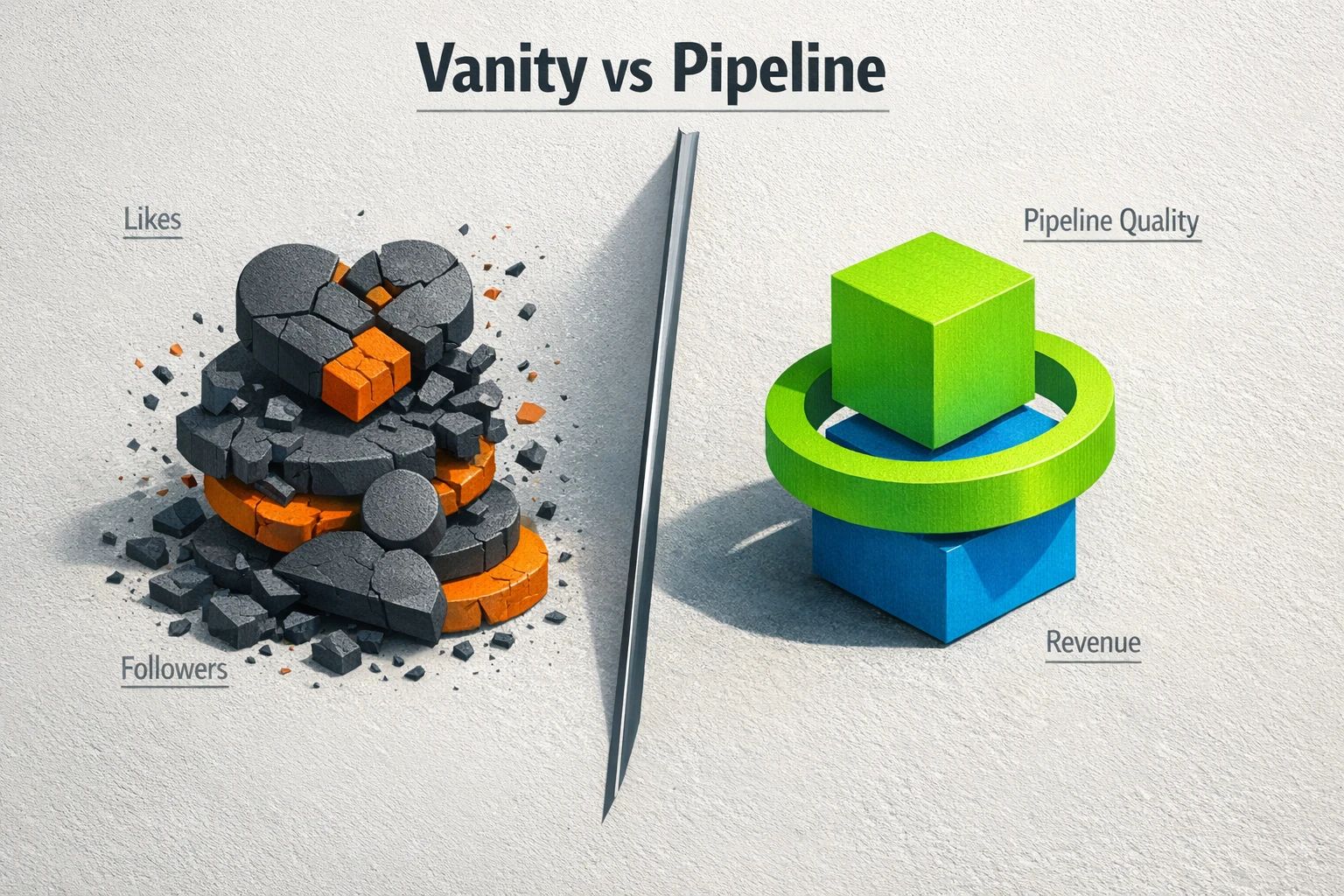
The Authority-First Shift: Why Better Leads Follow Trust, Not Clicks
The path out of the vanity trap is a fundamental shift in strategy. Instead of chasing broad engagement, you must focus on building deep authority within a specific niche. An authority-first approach means you stop broadcasting and start teaching. You become the go-to resource for your ideal customers by consistently sharing a sharp, valuable point of view.
When you operate this way, the nature of your leads changes completely. They are no longer cold contacts lured by a generic offer. They are prospects who have been following your thinking for weeks or months. They show up in your inbox with specific questions that reference your content. They have already decided you are the expert they need.
These are authority-sourced leads. They are fundamentally higher in quality because the trust-building work is already done. Your task is no longer to convince them you have a solution; it is to simply confirm you are the right fit. This is why LinkedIn is such a powerful B2B platform. It generates 80% of all B2B social media leads, proving far more effective than other platforms for finding high-intent customers [2].
Introducing the Authority-First Pipeline Quality Score
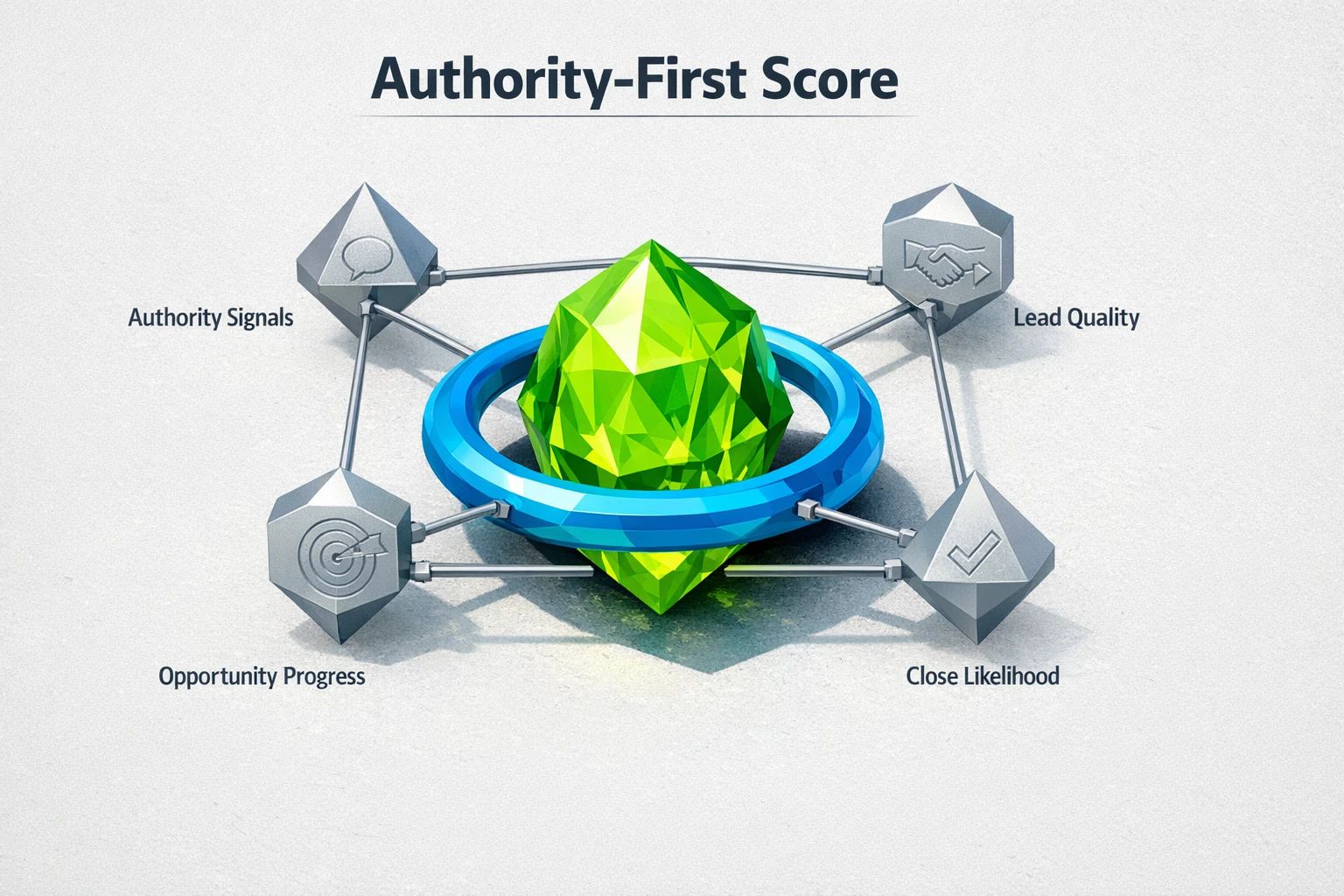
To measure the impact of this shift, you need a new model that goes beyond a simple lead score. A standard lead score looks at demographics and firmographics. An Authority-First Pipeline Quality Score looks at the context and intent behind the inquiry. It helps you quantify the value of the trust you have built.
This score is a simple framework for evaluating every inbound lead from LinkedIn. It prioritizes signals of authority over surface-level data.
- Lead Origin: How did they arrive? A direct message referencing a specific post is a high-quality signal. Clicking a generic ad for a downloadable is a lower-quality signal.
- Problem Awareness: Do they understand their problem in the same way you do? If their inquiry uses your language and frameworks, they are a high-quality lead. They are already aligned with your perspective.
- Intent Level: Are they asking "can you do this" or "how do you do this?" The first is a procurement question. The second is a strategy question, which indicates a much higher level of trust and qualification.
By scoring leads this way, you create a clear, objective measure of your authority's impact on pipeline quality. You stop asking "how many leads did we get?" and start asking "how many high-authority leads did we get?"
Setting Up Your Measurement System: From LinkedIn to Your CRM
Having a great scoring framework is useless without the data to power it. You need a simple, reliable way to connect the dots between your activity on LinkedIn and the deals in your CRM. This does not require complex software. It requires discipline.
Step 1: Tag Every Link
Every single link you post on your LinkedIn profile, in a post, or in a comment that points back to your website must be tagged with UTM parameters. These are simple tags you add to a URL that tell your analytics tools where the visitor came from. A tagged link for a blog post might look like this: yourwebsite.com/blog/your-post?utm_source=linkedin&utm_medium=social&utm_campaign=authority_content. This tells you the click came from LinkedIn, specifically from your organic social efforts related to your authority content campaign.
Step 2: Capture the Data in Your CRM
When a prospect clicks your tagged link and fills out a form on your website, your marketing automation platform or form software should capture those UTM parameters. They should be stored in hidden fields alongside the contact's name and email. This data is then passed directly into your CRM.
Step 3: Track the Journey to Revenue
Now, the magic happens. Inside your CRM, you have a new contact with a field that says "Original Source: LinkedIn." You can now track that contact's entire journey. When that contact becomes a qualified opportunity and eventually a closed deal, you can definitively attribute that revenue back to your authority-building work on LinkedIn. You have closed the loop.

The KPIs That Actually Matter for B2B Pipeline
Once your tracking is in place, your entire approach to analytics will change. You can ignore the vanity metrics and focus on the KPIs that directly reflect pipeline quality and revenue impact.
Your new dashboard should prioritize these numbers:
- Pipeline Contribution from LinkedIn: The total dollar value of all open opportunities in your pipeline that originated from your LinkedIn authority-building efforts. This is your most important leading indicator.
- Lead-to-Opportunity Conversion Rate: Of all the leads generated from LinkedIn, what percentage converts into a qualified sales opportunity? A high rate here is the clearest sign of lead quality. For context, some platforms see average close rates on inbound content leads around 14.6% [3], making this a powerful benchmark for what high-quality traffic can achieve.
- Sales Cycle Velocity: How many days does it take for a LinkedIn-sourced opportunity to close compared to other channels? Authority-sourced leads often move faster because the prospect is already educated and trusts your approach.
- Close Rate by Source: What is the win rate for opportunities that came from LinkedIn? This is the ultimate proof of quality.
Secondary metrics like click-through rates and engagement rates still have a place, but their role changes. They are no longer your primary goals. They are diagnostic tools. For example, a low CTR on a link to a whitepaper might tell you the messaging in your post is misaligned with the offer. Benchmarks can be useful here; CTR for top-of-funnel content often falls in the 0.6-0.8% range, while bottom-funnel offers are lower [4]. These numbers provide context, but they do not define success.

Common Mistakes That Sabotage Your LinkedIn ROI
Shifting to an authority-first measurement model requires avoiding common traps that pull you back into the vanity cycle.
- Treating LinkedIn Like a Digital Resume: Your profile is not a static document; it is a dynamic publishing platform. An outdated profile with no recent activity signals a lack of engagement and undermines your authority.
- Using the "Post and Pray" Method: Success on LinkedIn requires a strategic and consistent point of view. Randomly sharing articles or company news without a coherent narrative builds no authority. To get results, you need a plan that understands how the platform works and what kind of content it rewards. The team at pageBody provides a guide on how the
360brew linkedin algorithmworks, explaining that to win, your B2B strategy needs to adapt faster. - Sales and Marketing Misalignment: The most common failure point is a disconnect between teams. Marketing celebrates a high lead count, while sales complains the leads are junk. The Authority-First Pipeline Quality Score solves this by creating a shared definition of what a "good lead" is, based on tangible signals of trust and intent, not just demographic data.
Frequently Asked Questions
How long does it take to see ROI from an authority-first approach on LinkedIn?
Building true authority is a long-term investment. You will not see a flood of qualified leads in the first 30 days. However, you can see leading indicators of quality within the first 90 days, such as an increase in thoughtful comments, direct messages from ideal prospects, and a higher lead-to-opportunity conversion rate on the leads you do generate.
What is a good benchmark for a lead-to-opportunity rate from LinkedIn?
This varies significantly by industry, deal size, and sales cycle length. Instead of focusing on a universal number, benchmark against your own other channels. If your LinkedIn leads are converting to opportunities at a rate 2x higher than your paid search leads, you know the authority-first approach is working.
Can I do this without expensive tools?
Absolutely. The core of this system relies on process, not price. You can implement UTM tagging for free, use Google Analytics to track website behavior, and configure your existing CRM to capture and report on lead source data. The commitment to disciplined tracking is more important than any single piece of software.
What if my follower count goes down when I focus on a niche?
This is often a sign of success. When you sharpen your point of view and focus on a specific audience, you will naturally shed followers who are not a good fit. Your goal is not the largest possible audience; it is the most relevant audience. A smaller, highly engaged group of ideal potential customers is infinitely more valuable than a large, passive audience of unqualified contacts.
Your next step is not to create more content. It is to define what a quality lead looks like for your business. Schedule a 30-minute meeting with your sales team and agree on three criteria that define an "authority-sourced lead." That is the first step to measuring what matters.
Sources:
- LinkedIn - A summary defining pipeline quality and its importance over sheer deal volume.
- SalesHero.io - Provides statistics on LinkedIn's effectiveness for B2B lead generation.
- ConnectSafely.ai - Offers user data on conversion rates for inbound leads from content marketing.
- DigitalScouts - Details click-through rate benchmarks for different types of B2B offers on LinkedIn.