If You Fear Vendor Lock In Then Own Custom AI Systems
AI Summary
Owning custom AI systems can reduce vendor lock in, but the real advantage is turning business logic, data, and workflows into assets your team controls. The wrong platform may create migration costs, expose sensitive information, and weaken your strategic flexibility.
- How proprietary architecture, curated data layers, and prompt version histories strengthen defensible intellectual property
- Why modular language model systems and client-owned infrastructure reduce dependence on a single provider
- How governance, vector databases, documentation, and team training build lasting internal AI competency
For teams relying on public AI tools and facing rising concerns about data control, migration risk, or long-term platform dependence.
The market is obsessed with who controls the future of artificial intelligence. Business leaders constantly search for the corporate structures behind popular platforms. They want to know who is harvesting their data. For enterprise teams this curiosity hides a deeper operational fear. You are waking up to the reality that relying entirely on external software creates massive strategic risk. Building your workflows on closed platforms limits your growth and threatens your security.
The Trap of Rented Intelligence
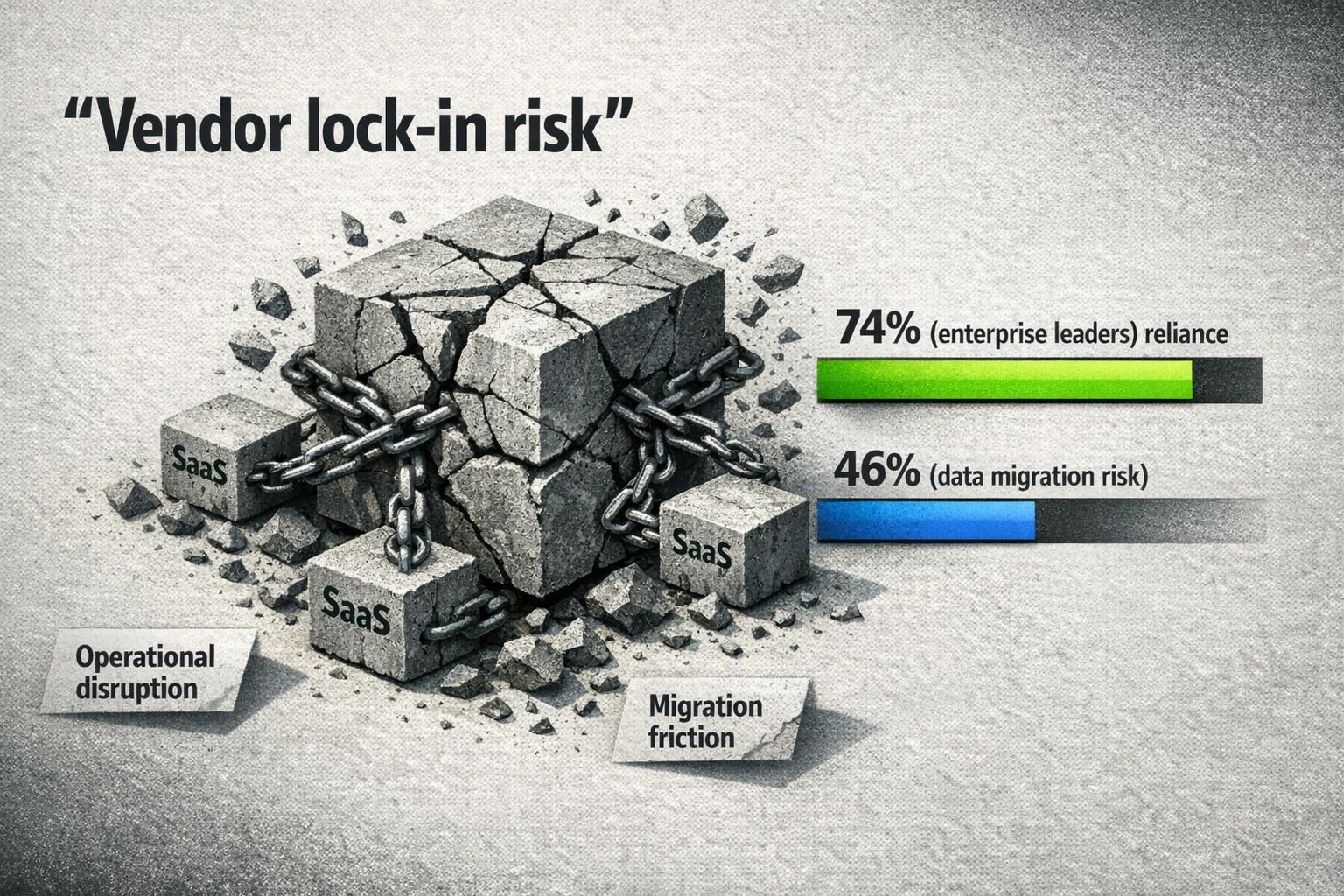
Most companies treat artificial intelligence as a simple software subscription. They buy seats for public copilots and generic automation tools. This feels productive until you realize you are building your core business logic on rented ground. When you let third parties own your infrastructure you surrender control over pricing and data rights. A sudden policy change can derail your entire workflow overnight. The dependence on a single provider quickly transitions from a convenience to a critical vulnerability. According to Zapier's 2026 AI vendor lock-in survey, 74% of enterprise leaders report day-to-day disruption or outright reliance on their primary AI vendor [1]. True empowerment requires stepping off this treadmill entirely.
Protecting Your True Intellectual Property
The legal landscape around generative outputs is notoriously rigid. You cannot simply claim ownership over generic machine generated text or code. The US Copyright Office has concluded that copyright can protect only material that is the product of human creativity, and will not register works that lack human authorship [2]. This means the raw output itself is legally fragile. You need a different asset to protect.
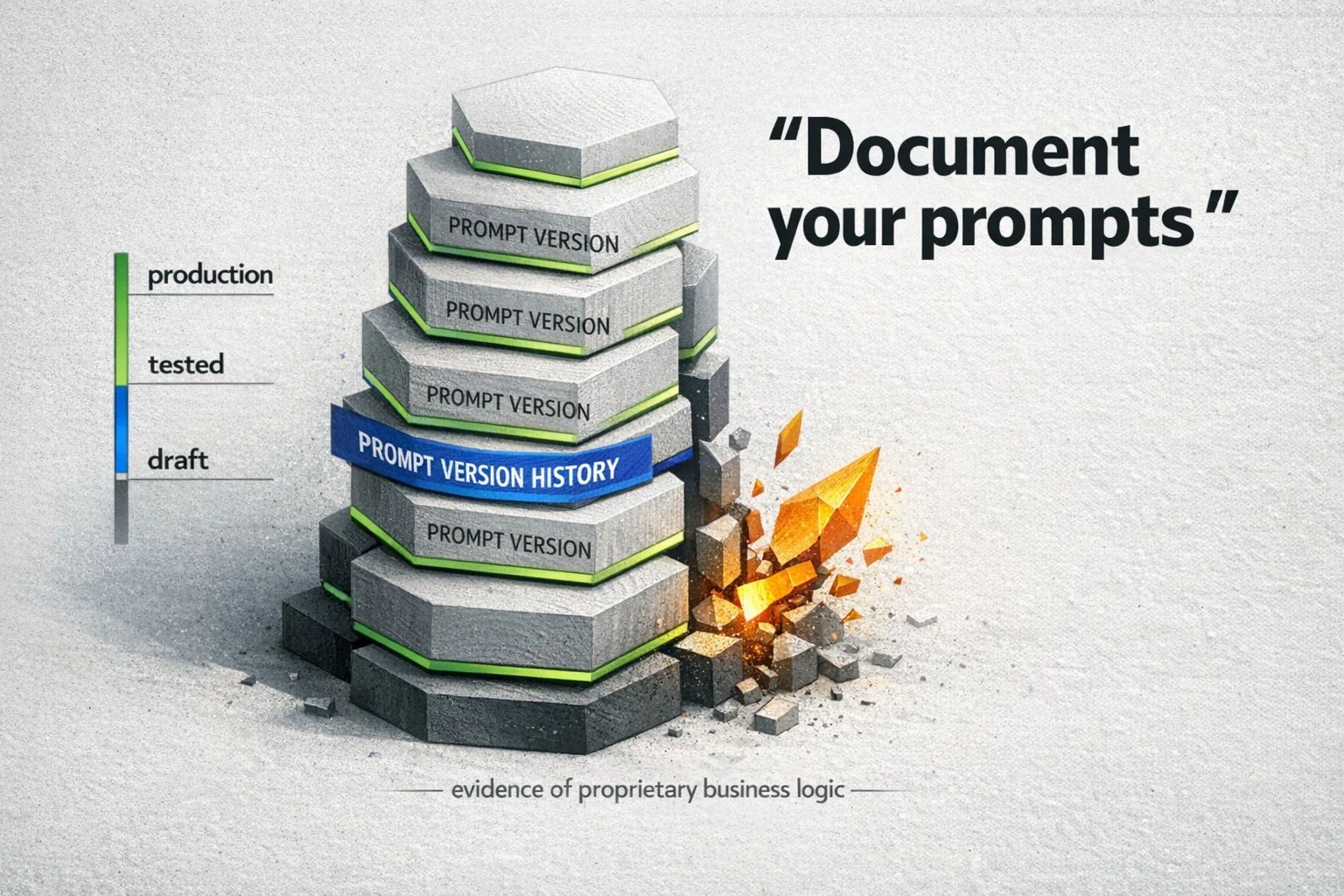
Your true intellectual property lies in the architecture of your system. Your proprietary business logic, your curated data layer, and your highly specific prompt engineering form the assets you can actually defend. Particle41 advises startups to keep version histories of the prompts that generate important code, as these serve as evidence of direction and proprietary business logic for IP claims [3]. This operational trail proves your human direction. It transforms a generic tool into a defensible corporate asset.
The Agency Partnership Model for Independence
This brings us to the core philosophical difference in how you acquire technology. Working with an AI Transformation Agency like pageBody.ai flips the traditional software model. We do not sell you a black box subscription where your data vanishes into a corporate server. Instead we build Custom Business Systems that you ultimately control. You can explore our custom AI solutions to see how we map technology directly to your internal processes without forcing you into a proprietary corner.
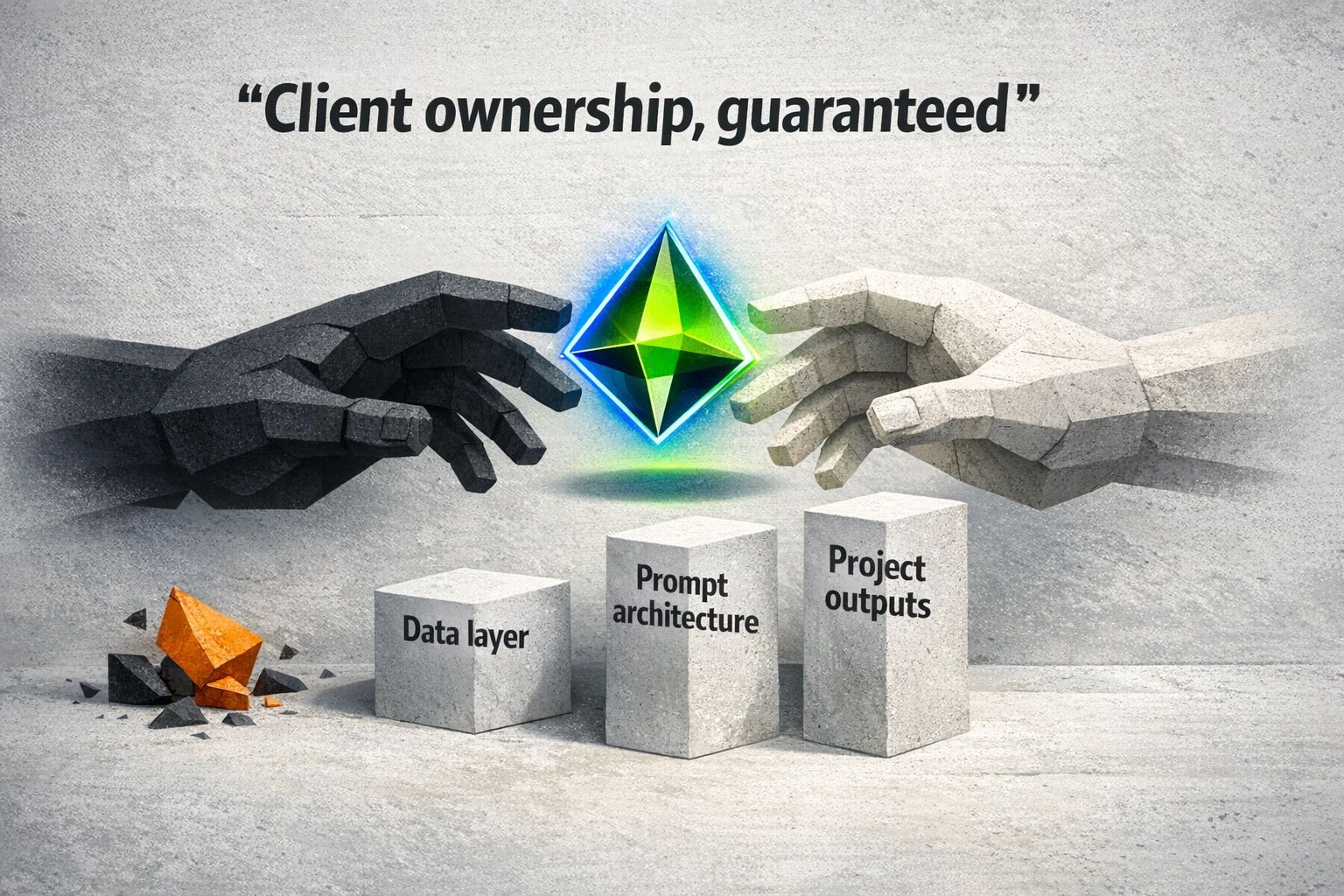
You walk away with total ownership of the specific outputs, the fine tuned parameters, and the data pipeline. You avoid the hidden costs of eventually moving away from a closed ecosystem. Moving platforms later is notoriously difficult when vendors actively restrict data portability. According to Zapier's 2026 AI vendor lock-in survey, 46% of enterprise leaders cite data migration challenges and overdependence on a single vendor as primary risks [1]. An open system built specifically for your team eliminates this friction entirely.
Building Internal Competency Post Implementation
Empowerment means ensuring you are self sufficient once the build is complete. A successful integration requires your team to understand data governance and the mechanics of the tools. You need systems that actually retain your company knowledge across multiple quarters. Publicis Sapient notes that public AI tools can generate insights on demand but cannot retain institutional or contextual knowledge over time, limiting their effectiveness for long term decisions [4].
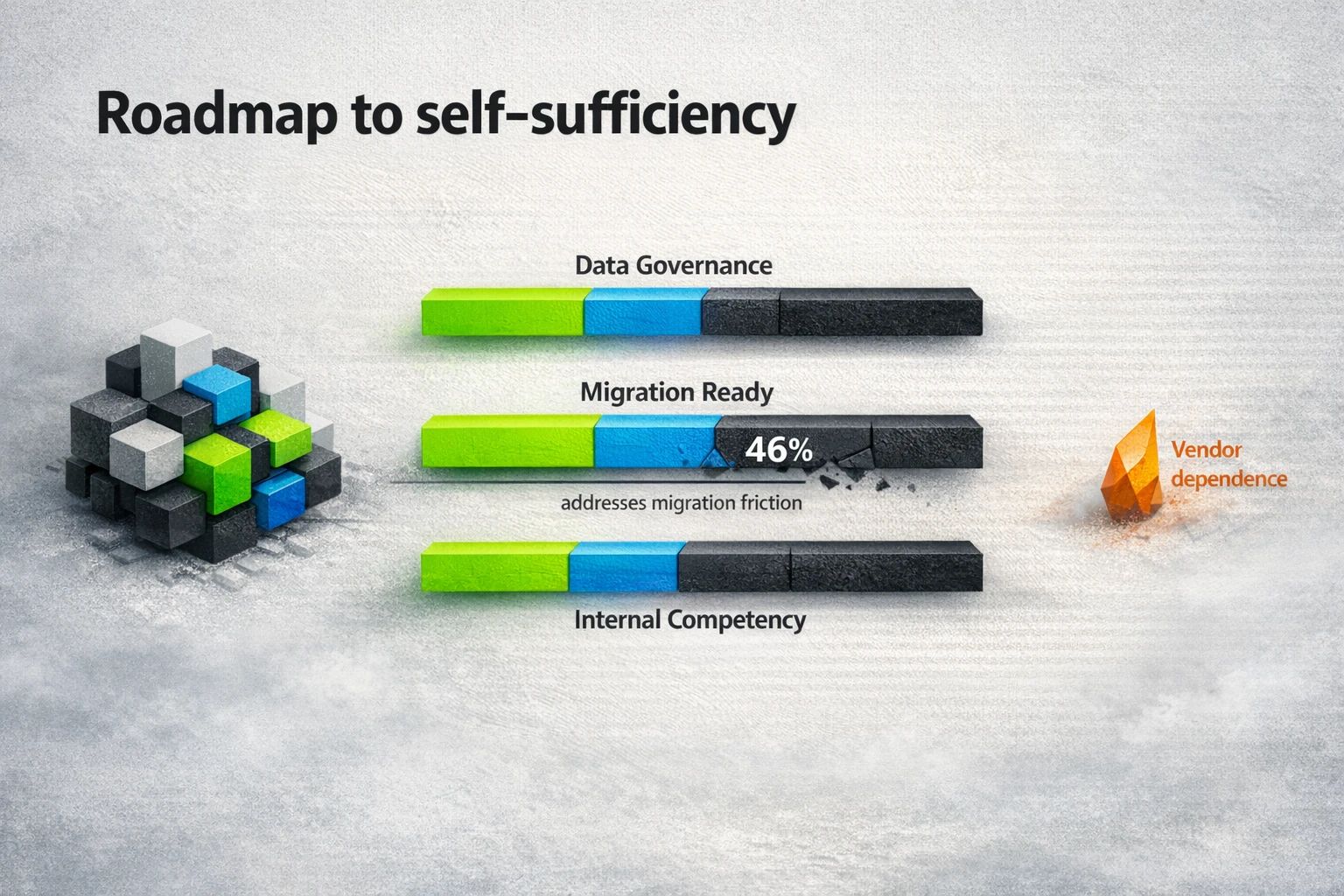
By owning the architecture you solve this memory problem. Your internal documents, customer interactions, and operational history become a secure vector database. Your team manages this asset directly. Evaluating your AI readiness for business requires assessing whether your staff has the bandwidth to govern these private models. We provide the documentation and training so you never have to rely on endless consulting retainers to run your own company.
Frequently Asked Questions
Who owns the data when an agency builds our system?
You own your data entirely. We design architectures that keep your proprietary information on your own infrastructure or within isolated cloud environments you control.
Can we modify the prompts and workflows later?
Yes. We provide complete transparency into the prompt logic. You have the freedom to adjust these elements as your business needs evolve without requiring our intervention.
How do we avoid lock in with language model providers?
We build modular systems that allow you to swap out underlying language models if pricing or privacy policies change. You are not permanently tethered to any single provider.
Next Steps for Technology Autonomy
Do not let another quarter pass while your team pours valuable company data into public tools. Audit your current technology stack today to identify which tools hold your data hostage. Map out one core repetitive process where you can replace a rented tool with an owned automation system. Take control of your infrastructure before your competitors do.
Sources:
- Zapier Blog - Survey on enterprise AI vendor dependence
- Inside Tech Law - US Copyright Office guidelines on AI output
- Particle41 - Best practices for protecting AI prompt intellectual property
- Publicis Sapient - Analysis of public AI context memory limitations