Quantum AI: Powering Unprecedented Business Solutions
AI Summary
Quantum AI: Powering Unprecedented Business Solutions presents how quantum computing combined with AI unlocks new levels of speed and complexity handling. This technology revolutionizes problem-solving for industries struggling with massive data variables and optimization challenges.
Bottom Line:
Gain a competitive edge by adopting Quantum AI to tackle problems beyond classical AI’s reach, boosting efficiency and innovation.
What You'll Learn:
- How Quantum AI outperforms classical AI in speed and complexity management
- Practical use cases in finance, logistics, healthcare, and cybersecurity
- Strategic steps to start integrating Quantum AI safely today
Best For:
Business leaders and decision-makers evaluating advanced AI technologies to solve complex operational and strategic challenges.
Your business runs on data, and for years, classical artificial intelligence has been the engine of analysis. It has optimized operations, personalized marketing, and uncovered valuable insights. Yet, some of your most complex challenges remain just out of reach. These are the problems with so many variables that even the most powerful supercomputers would take a lifetime to solve. This is where classical AI hits its limit, and where Quantum AI begins its revolution.
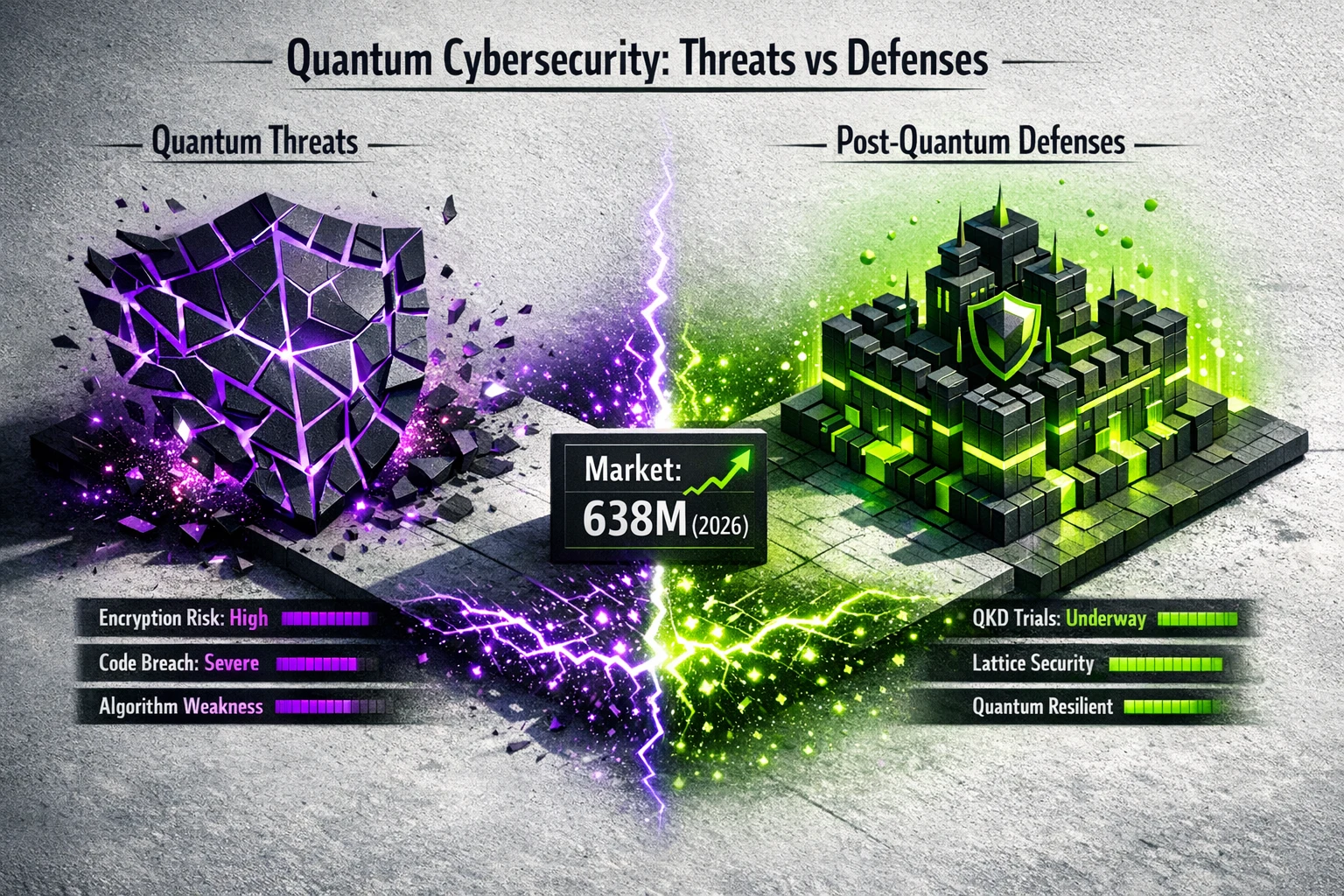
The Quantum AI market is not a distant sci-fi concept. It is a rapidly emerging reality, projected to reach $638.33 million in 2026. For business leaders evaluating the next frontier of competitive advantage, understanding this technology is no longer optional. It is the key to solving problems that were once considered impossible.
Beyond Classical Limits: Why Quantum AI is the Next Business Frontier
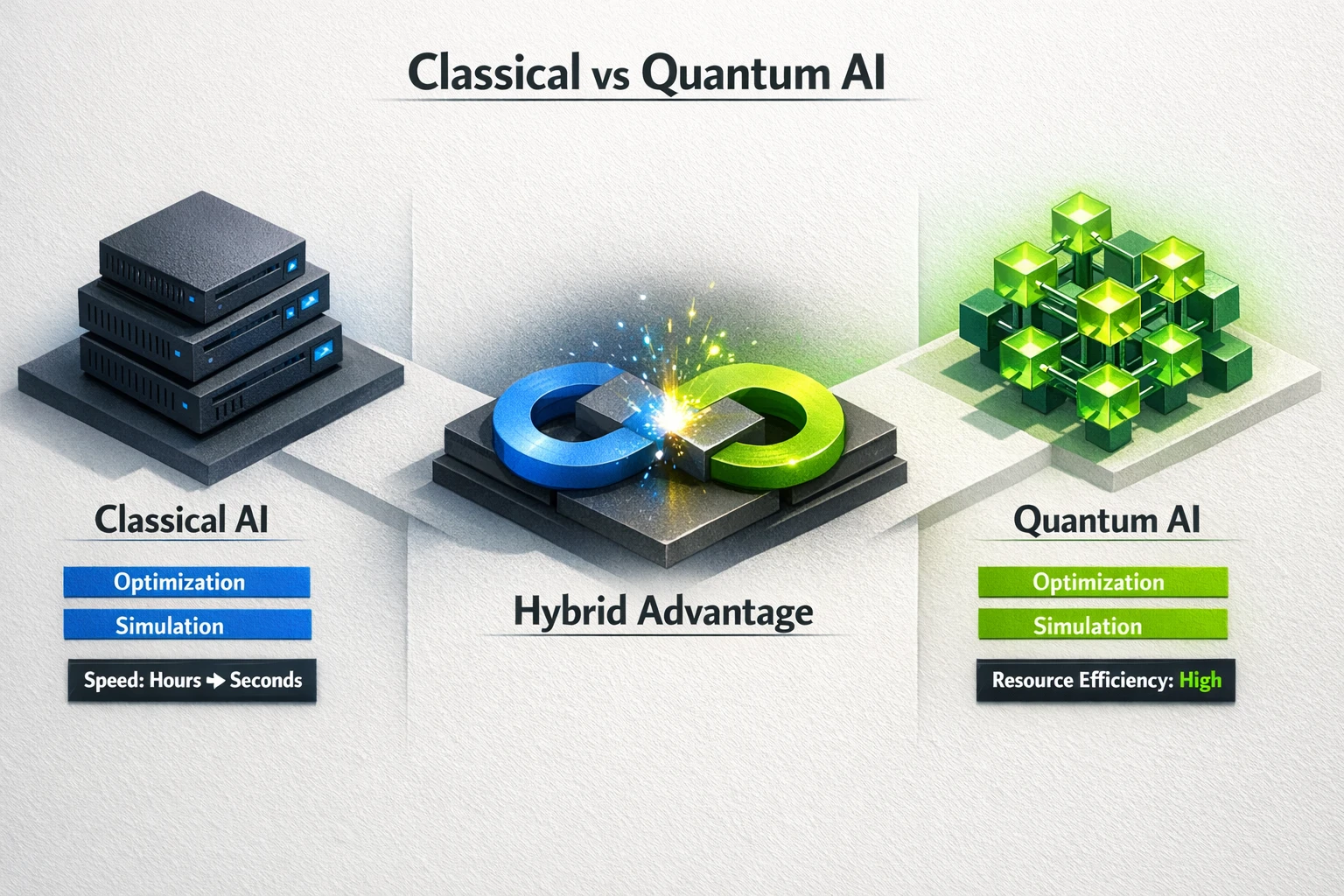
At its core, Quantum AI, or QAI, combines the sophisticated learning algorithms of AI with the exponential processing power of quantum computing. Classical computers process information in bits, which can be either a 0 or a 1. They solve problems sequentially, one calculation at a time.
Quantum computers use qubits. Thanks to principles like superposition and entanglement, a qubit can represent 0, 1, or both simultaneously. This allows a quantum computer to explore a vast number of possibilities at the same time. When paired with AI, this capability doesn't just make things faster. It opens up entirely new ways of calculating and solving problems, enabling solutions that are fundamentally out of reach for today's technology.
Decoding the Power Duo: Quantum vs. Classical AI
To make a confident decision about where to invest your resources, you need to understand the distinct roles of classical and quantum AI. They are not competitors. They are partners in a new, more powerful computational ecosystem.
Classical AI: The Foundational Powerhouse
Classical AI is the technology you know today. It excels at tasks like image recognition, natural language processing, and predictive analytics based on existing data. It has become a cornerstone of modern business, but it struggles with problems of extreme complexity, such as optimizing a global supply chain in real-time or simulating the intricate behavior of new molecules for drug discovery. Its linear approach simply cannot handle the sheer volume of variables.
Quantum AI: Unlocking Exponential Potential
Quantum AI is built for complexity. By processing immense datasets in parallel, it can identify optimal solutions from a near-infinite number of options. For business, this translates into three distinct advantages:
- Unmatched Speed: Quantum algorithms can perform calculations in seconds that would take classical AI hours or even years.
- Complexity Handling: QAI thrives on problems with countless variables, finding patterns and solutions that classical systems would miss.
- Superior Simulation: It can model complex systems with incredible accuracy, from financial markets to molecular interactions.
The Hybrid Future: Working Together
For the foreseeable future, the most practical and powerful approach will be a hybrid one. Classical systems will continue to manage everyday tasks while offloading their most complex problems to quantum processors. This allows businesses to gain a quantum advantage without replacing their entire infrastructure. Think of it as adding a specialized, high-performance engine to your existing vehicle for tackling the steepest hills.
Quantum AI in Action: Unprecedented Business Solutions and Use Cases
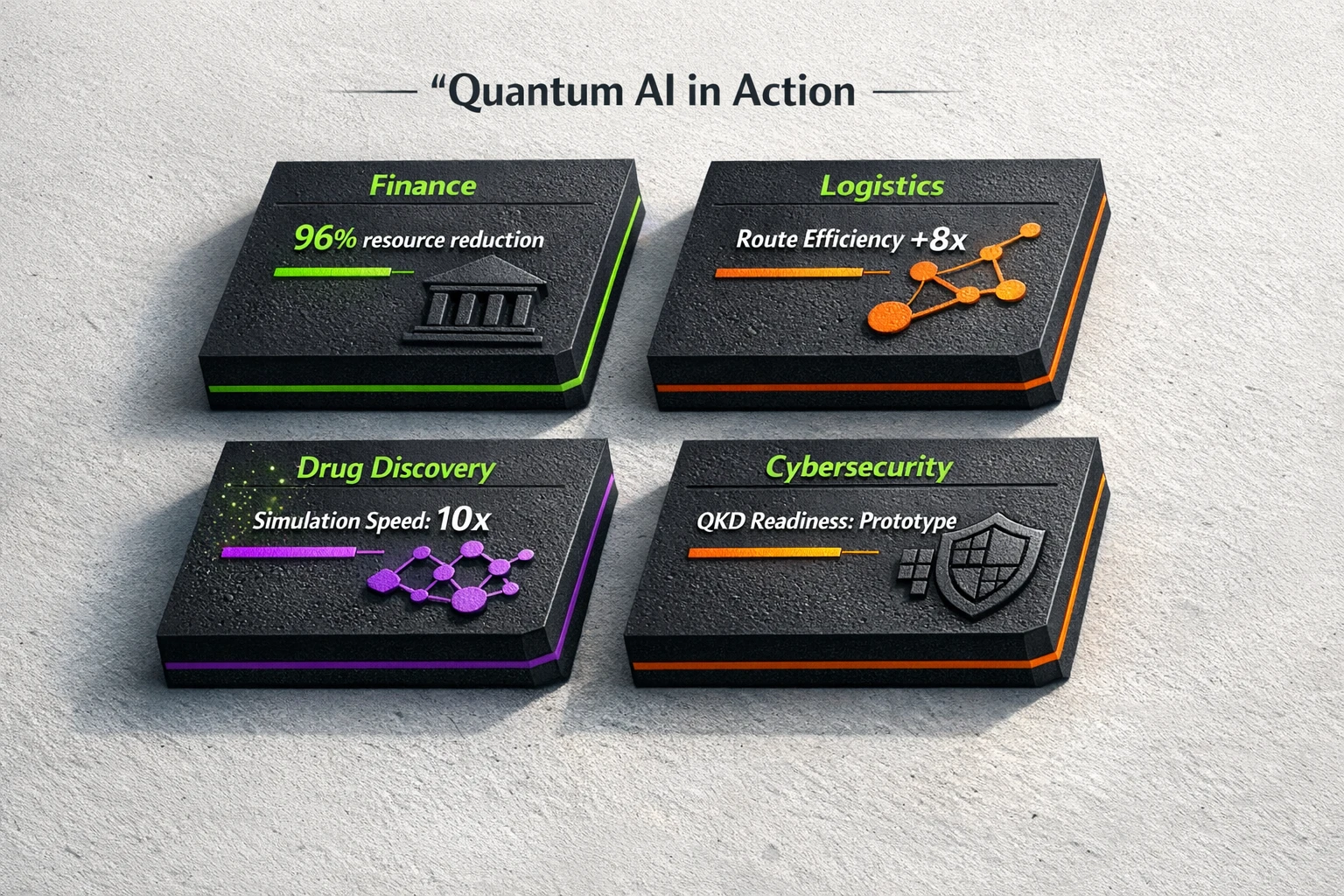
The value of Quantum AI becomes clear when you look at its application in specific industries. This is not about theoretical benefits. Early adopters are already proving the technology's worth.
Finance: Redefining Risk and Opportunity
The financial sector is an early leader in QAI adoption. McKinsey projects that quantum computing could generate between $200 and $700 billion in value for banking by 2035. Use cases include:
- Portfolio Optimization: Quantum systems can analyze thousands of market conditions and risk scenarios simultaneously. This allows for more resilient and profitable investment strategies. For instance, Multiverse Computing demonstrated enhanced capital allocation for financial institutions using 96% fewer computational resources than classical methods.
- Fraud Detection: QAI can identify subtle, complex patterns in vast transaction datasets in real-time, detecting sophisticated fraud rings that evade traditional systems.
- Risk Management: By accurately simulating market volatility and credit risk, financial institutions can make smarter lending decisions and maintain healthier balance sheets.
Logistics and Supply Chain: Mastering Complexity
Global supply chains are a perfect example of an intractable optimization problem. QAI offers a solution by:
- Dynamic Route Optimization: Calculating the most efficient delivery routes in real-time, considering traffic, weather, fuel costs, and vehicle capacity to dramatically reduce expenses and emissions.
- Demand Forecasting: Analyzing complex variables to predict consumer demand with unprecedented accuracy, preventing both stockouts and overstocking.
- Inventory Management: Optimizing warehousing and stock levels across a global network to minimize carrying costs and improve fulfillment times.
Drug Discovery and Healthcare: Accelerating Breakthroughs
Developing new medicines is a slow and expensive process, largely due to the difficulty of simulating molecular interactions. Quantum AI changes the game by:
- Molecular Simulation: Accurately modeling how potential drug compounds will behave in the human body. This allows researchers to identify promising candidates much faster.
- Personalized Medicine: Analyzing an individual's unique genetic makeup to design highly targeted treatments and therapies.
Quantum Cybersecurity: The Ultimate Defense
The same power that makes quantum computers revolutionary also poses a significant threat. A sufficiently powerful quantum computer could break most current encryption methods. KPMG warns this could happen at an "alarming speed." This creates an urgent need for quantum-resistant security.
Fortunately, the solution lies within the same technology. Quantum cybersecurity offers two key defenses:
- Post-Quantum Cryptography (PQC): New encryption algorithms designed to be secure against both classical and quantum computers.
- Quantum Key Distribution (QKD): A communication method that is, in theory, unhackable. It uses the principles of quantum physics to secure data transmission.
The Road to Quantum Readiness: A Strategic Blueprint for Businesses
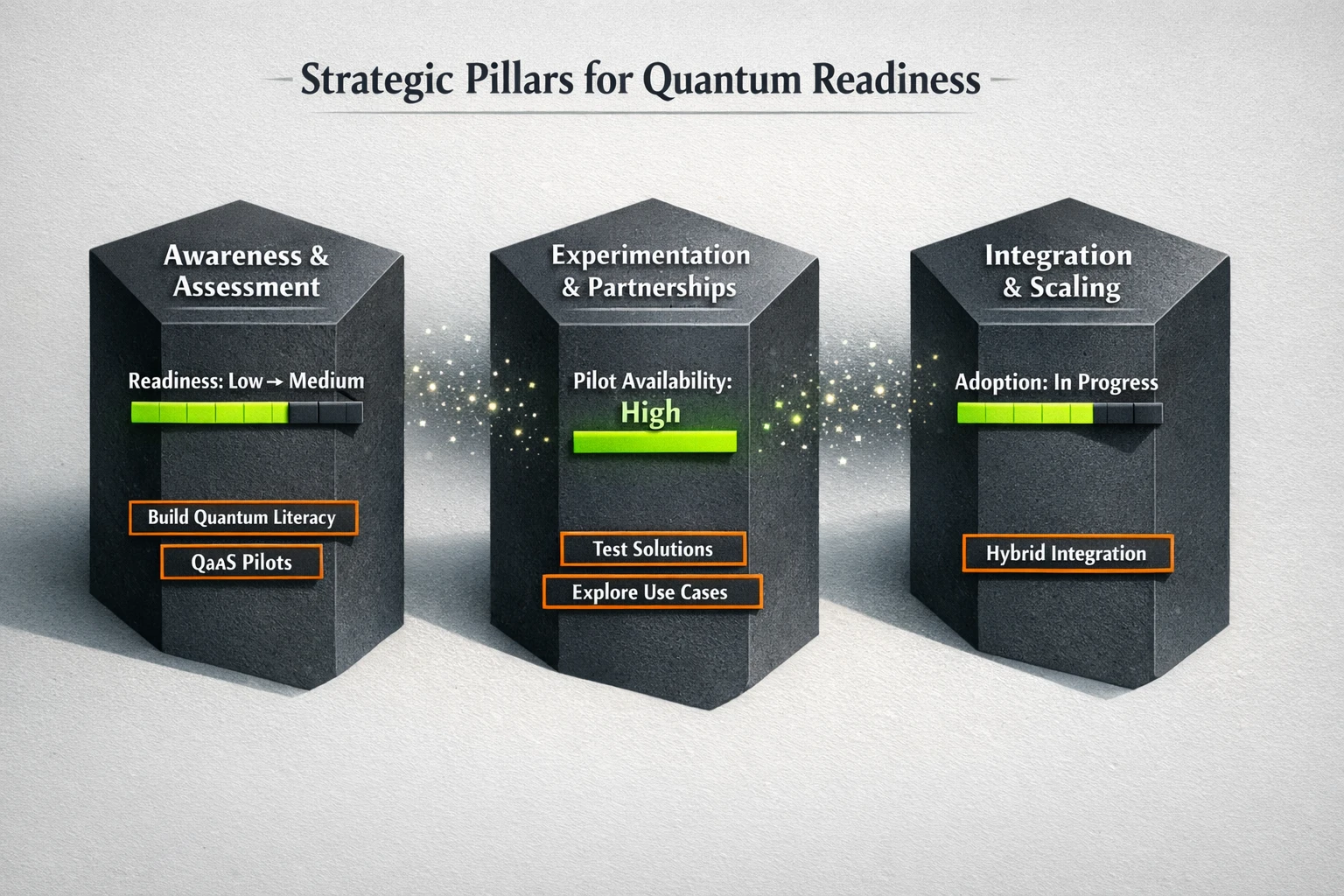
Preparing for the quantum era can feel daunting, especially when surveys show that a lack of understanding (35%) and uncertainty about practical uses (31%) are major barriers to adoption. A phased, strategic approach breaks the journey down into manageable steps.
Phase 1: Awareness and Assessment
The first step is to build foundational knowledge. Your leadership and technical teams need to understand what QAI is and what it can do for your specific business.
- Build Quantum Literacy: Invest in training to demystify quantum concepts. The goal is not to create quantum physicists, but to foster an understanding of the business implications.
- Identify Quantum-Ready Problems: Analyze your operations to find challenges characterized by high complexity and a massive number of variables. These are your ideal candidates for early QAI pilot projects.
Phase 2: Experimentation and Partnerships
You do not need to build a quantum computer to get started. The rise of Quantum-as-a-Service (QaaS) platforms allows you to experiment with quantum algorithms using cloud-based access.
- Launch Pilot Projects: Start with a small, well-defined problem. This allows you to test the technology and build a business case with manageable investment.
- Form Strategic Collaborations: The talent gap is real. Partner with academic institutions and specialized quantum startups to access expertise and stay on the cutting edge.
Phase 3: Integration and Scaling
As your pilot projects demonstrate value, you can begin developing a long-term integration strategy.
- Develop a Hybrid Architecture: Plan how quantum processes will work alongside your existing classical systems. Focus on creating seamless workflows where data moves efficiently between both environments.
- Prepare Your Data for Quantum: Quantum algorithms require data to be in a specific format. Start developing processes for data cleansing, feature engineering, and encoding to ensure your datasets are quantum-ready when you need them.
- Implement a Post-Quantum Security Roadmap: Begin the migration to post-quantum cryptography to protect your sensitive data from future threats.
The Future is Hybrid: PageBody AI's Vision for Quantum AI Leadership
The transition to a quantum-powered future will not happen overnight. It will be a gradual evolution led by forward-thinking businesses that embrace a hybrid approach. At PageBody AI, we see a clear path forward. Our expertise lies in demystifying complex technologies and building practical, AI-driven systems that deliver tangible business results.
We believe that the power of Quantum AI should be accessible to any business ready to solve its most challenging problems. Our focus is on translating the immense potential of quantum computing into strategic, scalable solutions that integrate seamlessly with your existing operations. We help you navigate the hype, identify real opportunities, and build a roadmap for sustained competitive advantage.
Conclusion: Seizing the Quantum AI Advantage
Quantum AI represents a fundamental shift in computing power. It promises to solve problems that have constrained industries for decades, unlocking new sources of value in finance, logistics, healthcare, and beyond.
Businesses that begin their quantum readiness journey today will be the market leaders of tomorrow. By building knowledge, experimenting with pilot projects, and developing a strategic roadmap, you can position your organization to harness this transformative technology. The question is no longer if quantum will impact your business, but when and how you will seize the advantage.
Frequently Asked Questions
Is Quantum AI going to replace classical AI?
No, Quantum AI is not expected to replace classical AI. Instead, they will work together in a hybrid model. Classical AI will continue to handle many tasks it excels at, while QAI will be used for specific, highly complex problems that are currently unsolvable. Think of QAI as a specialized co-processor for your most difficult computational challenges.
When will Quantum AI become mainstream for businesses?
While full-scale, fault-tolerant quantum computers are still some years away, businesses are already gaining value from quantum-inspired algorithms and early-stage quantum processors via cloud platforms. Many experts believe we will see significant business impact within the next 3 to 5 years, especially in fields like finance and pharmaceuticals, as quantum hardware continues to improve.
What is the first step my business should take to prepare for QAI?
The most critical first step is education. Your leadership and technical teams need to develop "quantum literacy" to understand the core concepts and, more importantly, identify which of your business problems are best suited for a quantum solution. Starting with a feasibility assessment to pinpoint high-value use cases is an excellent way to begin.
How does QAI handle the current talent shortage in the quantum field?
The talent gap is a significant challenge. Businesses are addressing this in two main ways. First, by upskilling existing data science and engineering teams with quantum-focused training. Second, by forming strategic partnerships with universities, research labs, and specialized quantum computing firms to access the necessary expertise without having to hire a full team in-house.
Is investing in quantum technology too risky right now given the high costs?
While building a quantum computer is extremely expensive, accessing one is not. The rise of Quantum-as-a-Service (QaaS) models allows businesses to experiment with quantum algorithms on a pay-as-you-go basis. This significantly lowers the barrier to entry and allows for low-risk pilot projects to prove ROI before making larger investments.
Sources:
- USDSI Quantum AI Market Report - Provided market size projections and growth rate for Quantum AI.
- McKinsey & Company Quantum in Banking - Offered detailed financial services use cases and potential economic value.
- SAS Quantum AI Survey - Sourced key business concerns regarding QAI adoption, including cost and lack of knowledge.
- KPMG Quantum Cybersecurity Insights - Provided context on the threat quantum computing poses to current encryption methods.
- The Strategy Institute - Highlighted the "quantum literacy" gap as a major challenge for businesses.
- PwC Quantum Preparedness Guide - Outlined actionable steps for businesses to become "quantum-ready."
- Viva Technology - Gave a broad overview of QAI and its potential applications across various future-focused sectors.