Integrating AI: A Practical Guide to Transforming Your Content Workflow
AI Summary
Integrating AI into content workflows reshapes how teams collaborate with intelligent systems to enhance efficiency and quality.
Bottom Line:
This article reveals how redesigning workflows, not just adopting tools, transforms content production and elevates human expertise.
What You'll Learn:
- How to build a human-centric AI workflow to improve productivity.
- Key criteria for selecting AI tools that fit your team’s needs.
- Strategies for upskilling teams and ensuring ethical AI use.
Best For:
Content teams and managers looking to optimize workflows and leverage AI while maintaining quality and trust.
The promise of AI in content creation is compelling. It offers unprecedented speed and efficiency. Yet, many teams find themselves caught in a paradox. While 88% of marketers now use AI daily, nearly 75% view maintaining quality as their single biggest challenge. The very tools meant to streamline operations can introduce new friction, with 56% of teams reporting workflow strain from the increased need for oversight.
This isn't a technology problem. It's a workflow problem. Successfully integrating AI isn't about finding the best tool. It is about redesigning how your team collaborates with intelligent systems. This guide provides a human-first framework for transforming your content workflow, turning AI from a disruptive force into a synergistic partner.
The New Content Reality: Why Workflow Transformation is Non-Negotiable
The data is clear. AI can reduce content production times by up to 50%, unlocking productivity gains between 25% and 35%. This efficiency is more than just a time-saver. It's a strategic catalyst. With AI handling the heavy lifting of initial drafts and research synthesis, 75% of content professionals find their work shifting toward higher-value strategic tasks.
However, these benefits don't materialize automatically. Without a deliberate plan, teams risk producing generic content that erodes audience trust. The goal is to build a system that amplifies human expertise, not one that merely automates content generation. True transformation requires a new operational blueprint.
Beyond Tools: Redefining Human-AI Collaboration
Effective AI integration moves beyond simple task handoffs. Research from MIT Sloan highlights the difference between augmentation, where AI helps humans perform a task better, and synergy, where humans and AI work together to achieve something neither could do alone. For creative work, synergy is the target.
This shifts the roles within a content team. Writers become AI orchestrators, skilled in prompt engineering and critical evaluation. Editors become quality guardians, ensuring brand voice, originality, and factual accuracy. Strategists use AI to analyze data and uncover insights, freeing them to focus on complex decision-making and exploring new opportunities through better product ideation frameworks. The common thread is a move from content creation to content curation and refinement.
Selecting the Right AI Partners: A Framework for Evaluation
Choosing an AI tool involves more than comparing features. The most critical factor is how well it integrates into your human-centric workflow. When evaluating solutions, prioritize platforms designed for collaboration and governance, not just standalone generation.
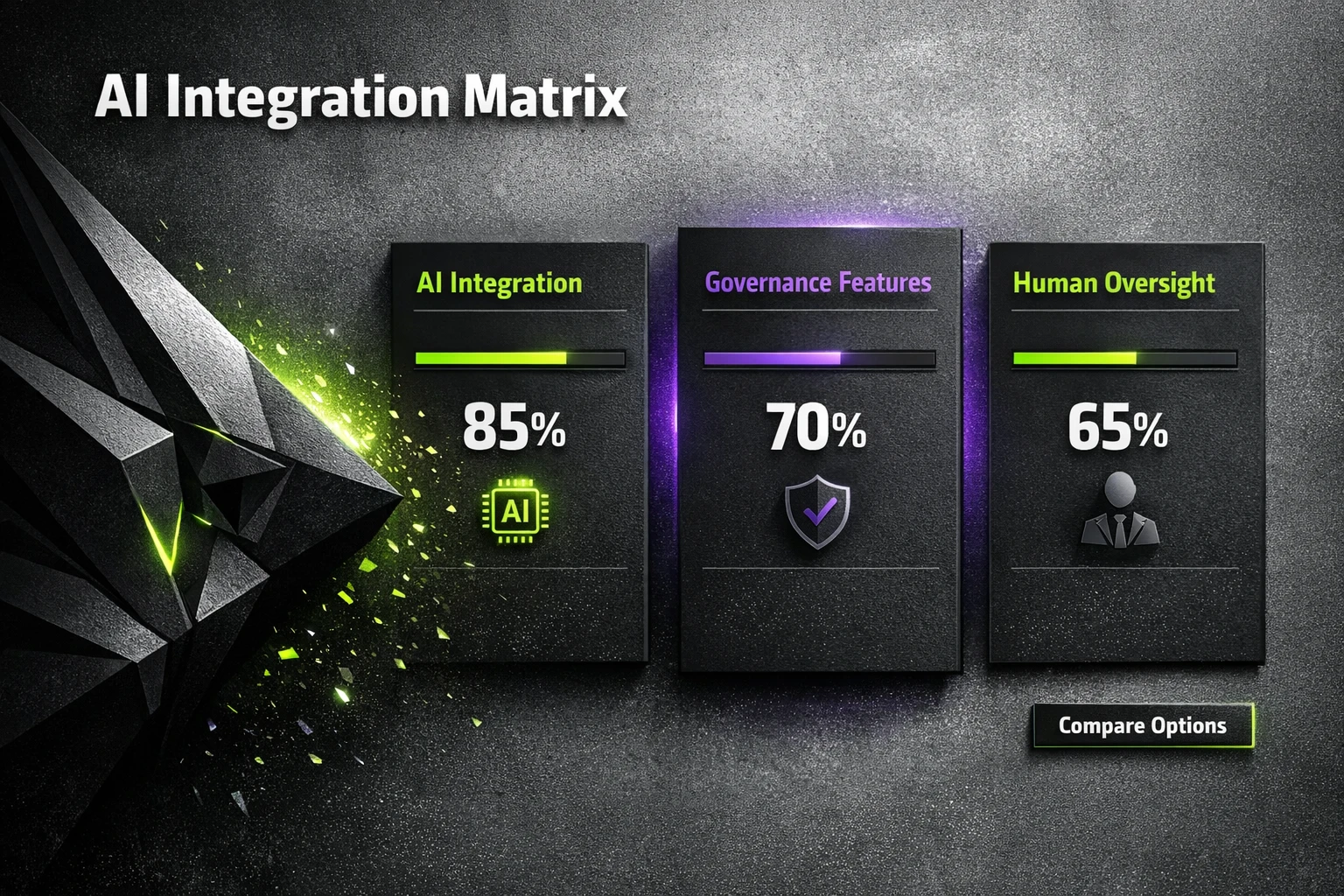
Use these criteria to guide your decision:
- Integration Capability: How easily does the tool connect with your existing CMS, project management, and analytics platforms? Avoid creating new data silos.
- Governance Support: Does the platform offer built-in checks for plagiarism, factual accuracy, and brand voice? Look for features like audit trails and version control.
- Human-in-the-Loop Design: Is the tool built to facilitate human review and editing, or does it treat human oversight as an afterthought? The best systems make collaboration seamless. A great starting point is to find AI tools with a strong semantic understanding of business content, as they provide a better foundation for human refinement.
Building Your Ethical AI Content Governance Framework
Without clear governance, AI-driven content creation can expose your brand to significant risk, from factual errors to reputational damage. An effective governance framework is not a barrier to speed. It is an enabler of quality and trust. Research from MIT shows that 15% to 20% of AI outputs contain factual errors without human review, making a robust verification process essential.
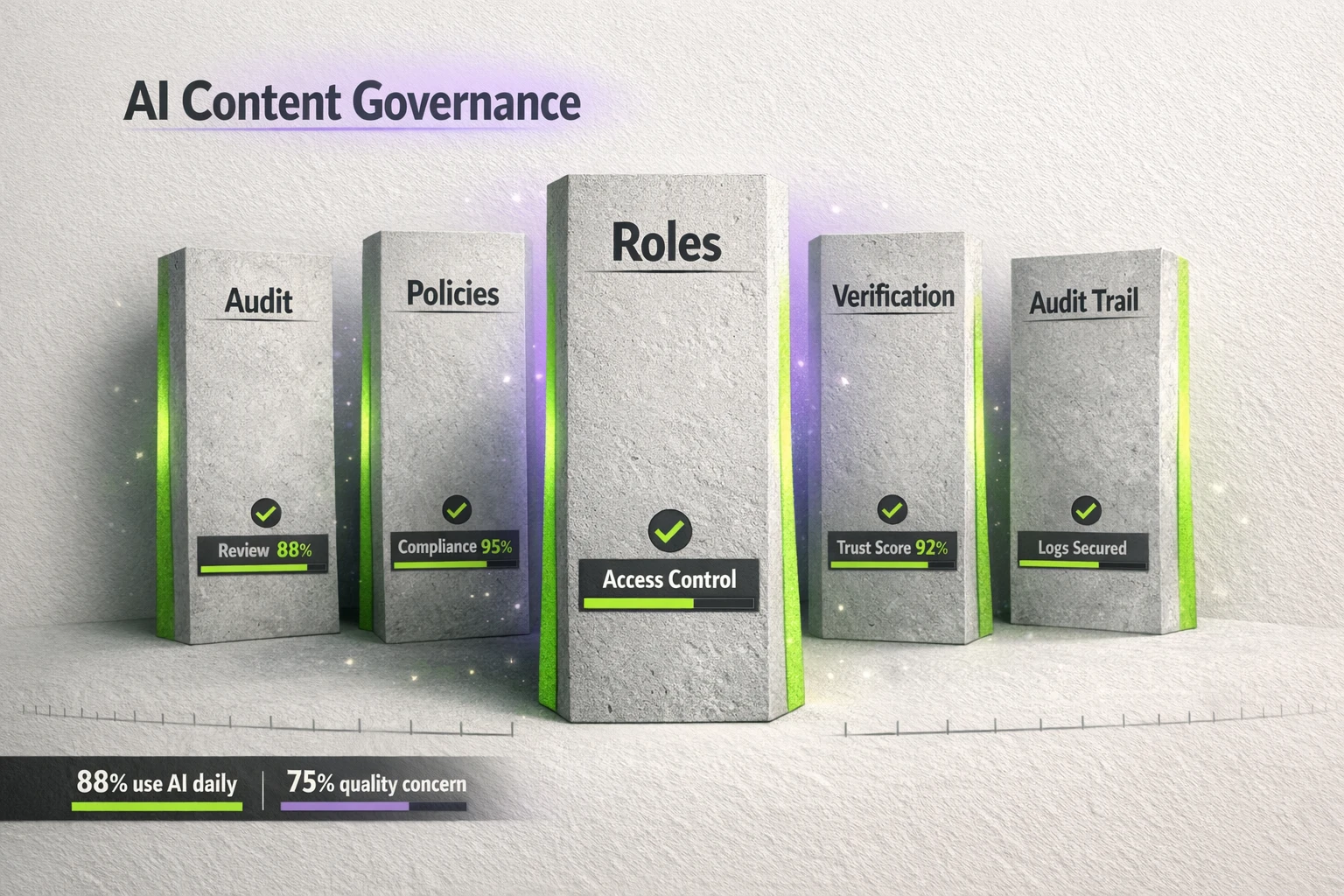
Your framework should be built on these pillars:
- Accountability: Clearly define who is responsible for the final published content. The AI is a tool; a human must always be accountable.
- Transparency: Establish clear guidelines for when and how to disclose the use of AI in content creation, both internally and externally.
- Verification: Implement a mandatory human review stage for all AI-generated drafts to check for accuracy, originality, and brand alignment. This process is crucial for building trust and credibility in the AI era.
- Originality: Use reliable plagiarism detection tools to ensure all content is unique and properly attributes any sources.
- Brand Voice: Create specific prompts and style guides for AI to follow, and empower editors to rigorously refine content to match your brand’s distinct personality.
Upskilling Your Team for the AI Era: A Practical Roadmap
Technology alone is not enough. Your team needs new skills to thrive. While 83% of marketers believe AI frees them for more strategic work, 44% cite the upskilling gap as a primary hurdle to successful adoption. A proactive training plan is essential for any small business AI implementation.
Focus on developing two types of skills:
- Technical Skills: Proficiency in prompt engineering, understanding different AI models, and using AI-powered analytics and editing tools.
- Cognitive Skills: Enhanced critical thinking to evaluate AI outputs, ethical reasoning to navigate complex governance issues, and creative judgment to add unique human value.
Foster a culture of experimentation where team members feel safe to test new tools and workflows. Encourage continuous learning and sharing of best practices to build collective intelligence.
Adopting Agile Sprints for AI-Powered Content Creation
Traditional, linear content workflows are too slow for the AI era. Adopting an agile, sprint-based methodology allows your team to iterate quickly, test ideas, and consistently deliver high-quality content. This approach breaks down large projects into manageable cycles of planning, creation, and review.
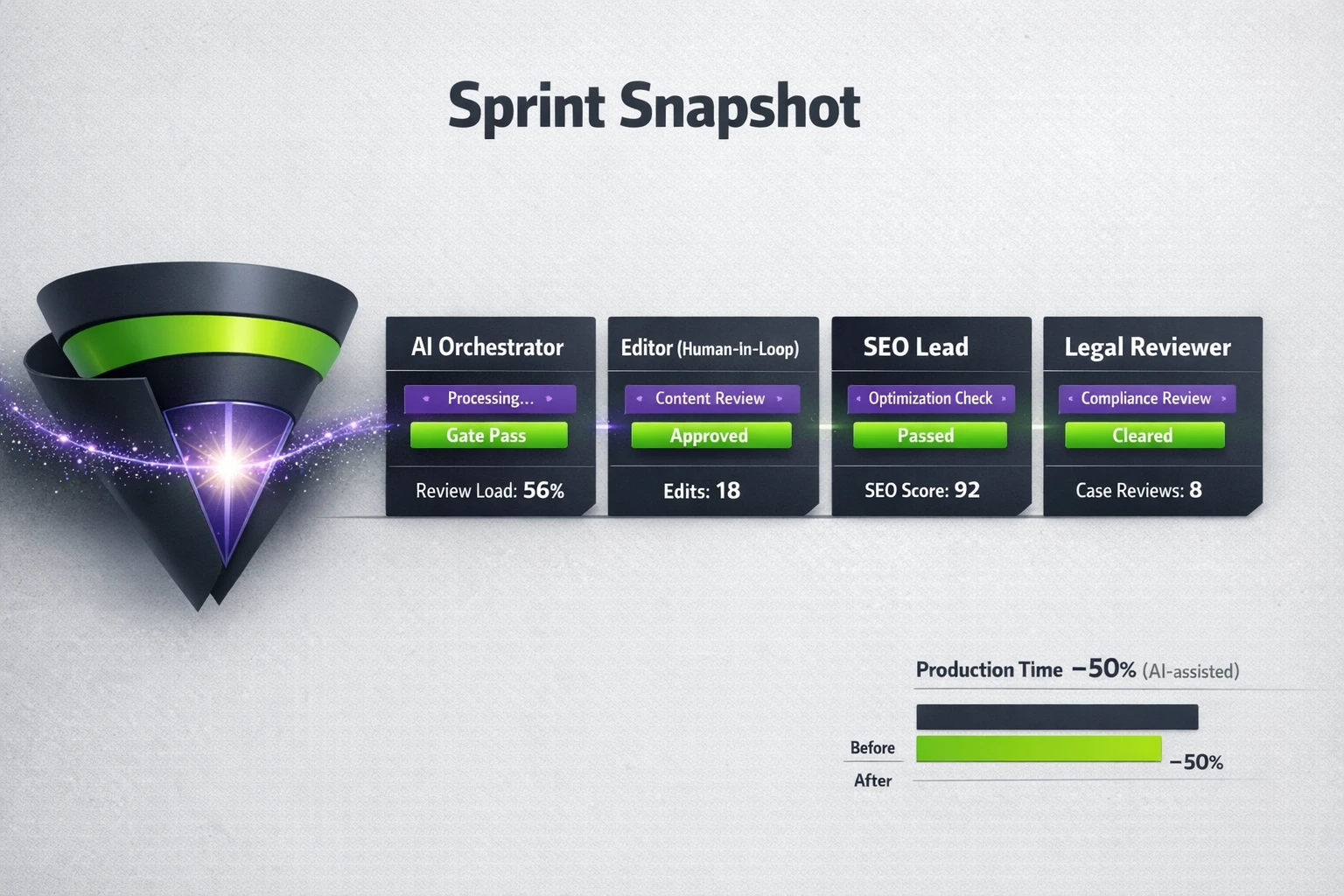
Here is how AI integrates into each phase of a content sprint:
- Sprint Planning: Use AI to analyze performance data and identify high-impact content topics for the backlog.
- Ideation: Leverage AI brainstorming tools to generate outlines, headlines, and creative angles.
- Drafting: Assign AI the role of first-drafter, producing initial content based on detailed prompts and outlines.
- Review and Refinement: Dedicate the majority of human effort here. Editors and subject matter experts review, fact-check, and enrich the AI draft.
- Optimization: Use AI tools to check for SEO, readability, and brand compliance before publication. The goal is a system of continuous fine-tuning where each sprint improves upon the last.
The Human Touch: Ensuring Authenticity and Trust in AI Content
Audiences are becoming increasingly wary of robotic, impersonal content. A staggering 52% of consumers reduce their engagement with a brand if they suspect the content is purely AI-generated. The most valuable contribution your team can make is infusing AI drafts with authenticity, originality, and a unique point of view.
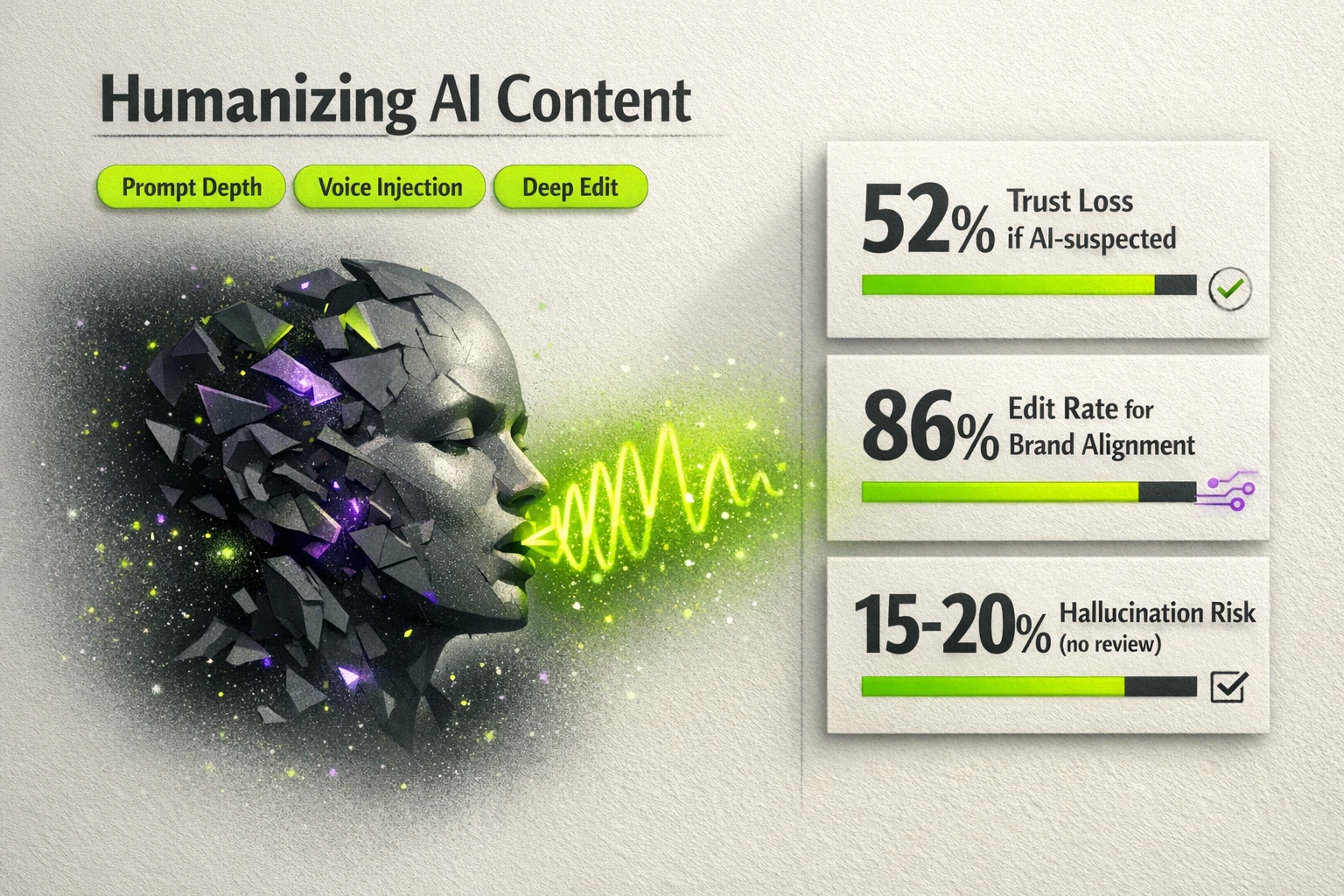
Master these humanization techniques:
- Advanced Prompting: Craft detailed prompts that specify tone, style, emotional resonance, and a distinct point of view.
- Injecting Personal Stories: Weave in unique anecdotes, expert opinions, and real-world experiences that an AI cannot replicate.
- Deep Editing: Go beyond correcting grammar. Restructure sentences for better flow, add nuance and humor, and ensure the content speaks directly to your audience’s needs.
Your 30-Day AI Integration Action Plan
Transitioning to a human-AI workflow is a journey, not an overnight switch. Start with focused, manageable steps to build momentum.
- Week 1: Audit and Align. Review your current content workflow and identify the biggest bottlenecks. Form a small, cross-functional team to lead the AI integration initiative.
- Week 2: Draft Your Governance Policy. Create a V1 of your AI content governance framework. Focus on the core pillars of accountability, verification, and originality.
- Week 3: Pilot a Single Sprint. Select one content piece and run it through an agile, human-AI sprint. Document the process, noting what worked and what needs improvement.
- Week 4: Train and Scale. Share the learnings from your pilot sprint with the broader team. Identify one or two key skills, like prompt engineering, and hold a hands-on training session. Explore these and other quick wins to build confidence and demonstrate value.
Frequently Asked Questions
Will AI replace our content writers and editors?
No, it will change their roles. The future is about human-AI collaboration, not replacement. AI will handle repetitive drafting tasks, allowing writers and editors to focus on higher-value work like strategy, creative direction, prompt engineering, and deep editing. The most valuable professionals will be those who can effectively orchestrate AI to produce exceptional content.
How can we ensure our AI-generated content is original and not plagiarized?
This requires a multi-layered approach. First, use reputable AI tools that are transparent about their training data. Second, always run AI-generated drafts through a reliable plagiarism checker as a standard part of your workflow. Finally, the most important step is deep human editing. By adding unique insights, stories, and analysis, your team makes the content truly original.
What is the single most important skill our content team needs to learn?
Prompt engineering is the most critical technical skill. The quality of AI output is directly tied to the quality of the input. Learning to write clear, contextual, and nuanced prompts is the key to unlocking AI's potential. Beyond that, the most important cognitive skill is critical thinking, which is needed to evaluate and refine AI output effectively.
How do we get started without a huge budget or a dedicated AI team?
Start small. Begin with a single, low-risk project and a few accessible AI tools. The goal is to learn and iterate. Focus on creating a clear governance policy and a pilot workflow. The most important investment is not in expensive software but in the time dedicated to training your team and redesigning your process.
Sources:
- AI Ops - Data on workflow strain and the shift to strategic work for content teams.
- Autofaceless.ai - Statistics on daily AI adoption by marketers and consumer trust in AI content.
- Averi.ai - Insights on productivity gains and time reduction from AI in content production.
- Content Marketing Institute - Research on content quality being the primary challenge in AI integration.
- Contently - Frameworks for AI governance in content teams and data on AI factual errors from MIT.
- MIT Sloan - Academic research on human-AI synergy versus augmentation.
- Mirantis - Best practices and formal frameworks for enterprise AI governance.
- SurveyMonkey - Data on the AI upskilling gap and marketers' belief that AI frees them for strategy.