AI-Powered Foundational SEO for Small Businesses: Your Step-by-Step Guide to Google Visibility
AI Summary
AI-Powered Foundational SEO for Small Businesses explains how small business owners can leverage AI tools to simplify SEO tasks like site audits, keyword research, and content optimization. This guide breaks down essential, budget-friendly steps to build better Google visibility using AI-assisted strategies.
Bottom Line: The article empowers small businesses to efficiently improve SEO with AI, saving time and reducing costs while boosting search rankings.
What You'll Learn:
• How to perform AI-assisted site audits and keyword research without technical expertise
• Ways to optimize site structure and on-page elements using free AI tools
• Strategies to build trust and authority with AI-enhanced content
Best For: Small business owners seeking actionable, affordable SEO solutions to improve online presence and compete effectively without advanced technical skills.
If you're running a small business, you've likely felt the pressure to "do SEO" and the frustration that follows. It feels technical, expensive, and overwhelmingly complex. You're evaluating solutions, but most guides either list dozens of tools without a clear starting point or assume a level of expertise you don't have time to acquire. You just need a solid foundation to get found on Google without breaking your budget or hiring a team.
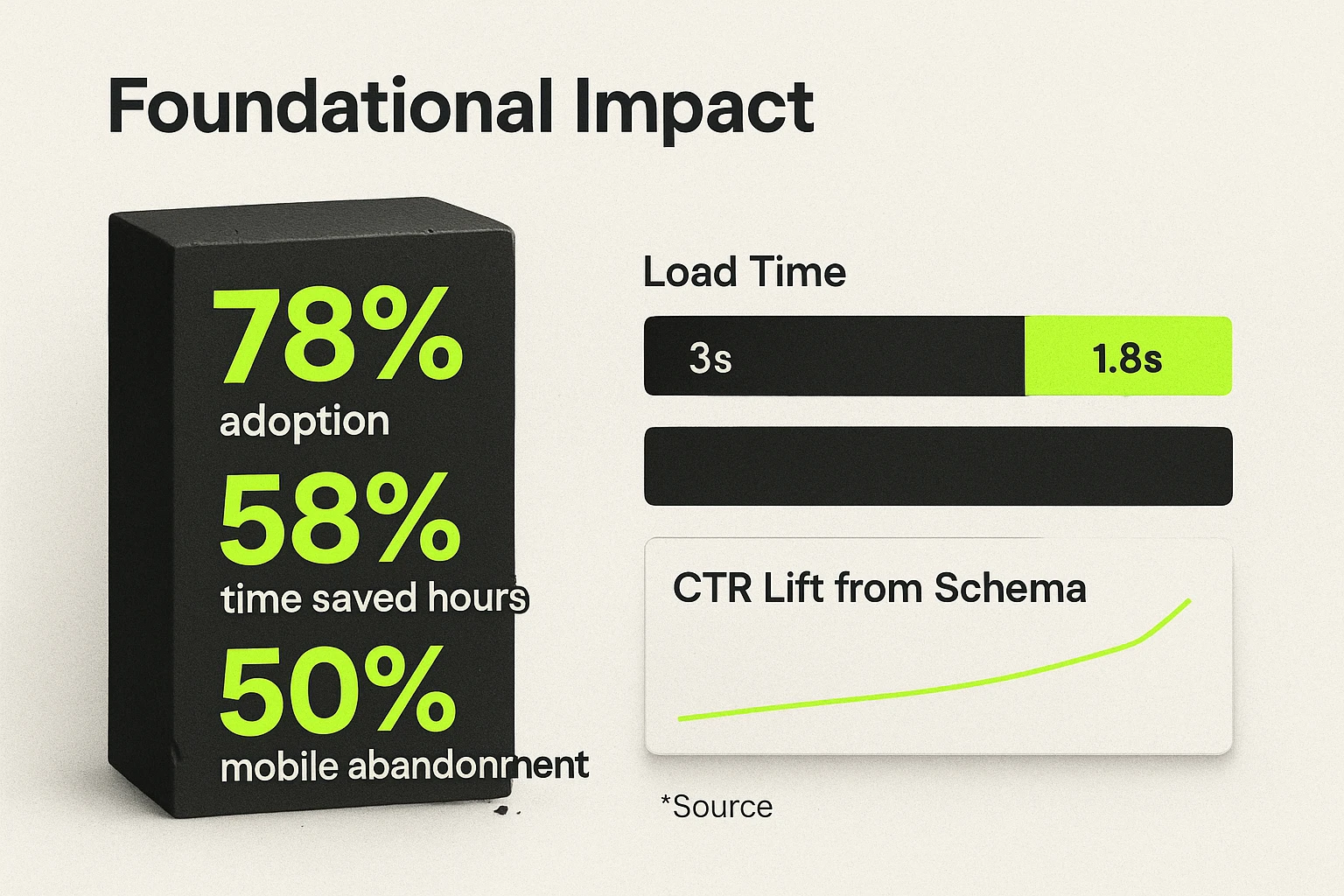
This is where AI changes the game. For small businesses, AI isn't about replacing strategy. It's about making foundational SEO accessible for the first time. Recent data confirms this shift. With 75% of SMBs already investing in AI, it's becoming a standard operational tool, not a futuristic luxury. The reason is simple. 58% of these businesses report saving over 20 hours per month, freeing them up to focus on what they do best.
This guide provides the practical, step-by-step framework you need. We will walk through the four essential phases of foundational SEO and show you how to use free and low-cost AI tools to build a powerful online presence from the ground up.
Phase 1: The AI-Powered Site Audit for Beginners
Before you can build, you need to inspect the foundation. A site audit sounds intimidating, but it's just about checking your website's basic health. Is it fast? Does it work on mobile phones? Are there any broken links that frustrate visitors and search engines? Over 50% of mobile users will leave a site if it takes more than three seconds to load, so getting this right is non-negotiable.
Your AI Site Audit Toolkit (Free & Low-Cost):
- Google Search Console (GSC): This is your direct line of communication with Google. Its AI-enhanced alerts will tell you about critical errors, like pages that can't be found or mobile usability issues.
- Google PageSpeed Insights: This tool analyzes your site's speed and provides suggestions. In the past, these suggestions were cryptic. Now, its analysis offers much clearer, prioritized recommendations.
- AI for Interpretation: This is the real advantage. Take a report from GSC or PageSpeed Insights, paste it into an AI chat tool like ChatGPT or Gemini, and ask it: "Explain this report to a non-technical small business owner and give me a prioritized list of the top three things to ask my web developer to fix." The AI acts as your translator, turning technical jargon into a simple action plan.
This process transforms a daunting technical task into a manageable checklist, ensuring your website provides a good experience for visitors and is easy for Google to understand.
Phase 2: AI for Basic Keyword Research and Intent Mapping
Keyword research is the process of finding the words and phrases your potential customers are typing into Google. Traditionally, this required expensive software and hours of analysis. AI simplifies this dramatically by helping you not just find keywords, but also understand the intent behind them.
Your AI Keyword Research Toolkit (Free & Low-Cost):
- Google Keyword Planner: A classic tool that helps you discover new keywords and estimate their search volume.
- AnswerThePublic or AnswerSocrates: These tools visualize the questions people ask around your topic, giving you direct insight into their problems and needs.
- AI for Brainstorming and Clustering: Start with a "seed" keyword, like "local coffee shop." Ask an AI tool to brainstorm related topics, questions people ask about local coffee shops, and comparison terms. Then, ask it to group these keywords into logical clusters for your website pages, like "espresso drinks," "cafe opening hours," and "coffee bean origins." This approach helps you build semantic authority by covering a topic comprehensively.
By using AI to map customer intent, you ensure the content you create directly answers their questions, making your site genuinely helpful and more likely to rank well.
Phase 3: AI-Optimized Site Structure and On-Page Essentials
Once you have your keywords, you need to organize your website and optimize your pages. This includes creating a logical site structure, writing clear page titles, and crafting compelling descriptions that show up in search results.
Your AI On-Page Toolkit (Free & Low-Cost):
- Yoast SEO / Rank Math: If you use WordPress, these plugins have built-in AI features that can help you generate meta titles and descriptions directly on the page.
- AI for Crafting On-Page Elements: You can use AI to write five different versions of a title tag for your homepage and pick the one that sounds best. You can ask it to write a meta description that includes your target keyword and a compelling call to action. It can even help structure your blog posts with clear H1 and H2 headings. This is where an AI internal linking strategy can begin, ensuring your site is easy to navigate.
- AI for Simple Schema: Schema markup is code that helps search engines understand your content better. For example, it tells Google your business hours, address, or product reviews. You can ask an AI tool: "Generate basic LocalBusiness schema markup for a company named [Your Company] at [Your Address]." Then, you can use a simple plugin to add this code to your site, which can help boost click-through rates by up to 30%.
Phase 4: Building Trust and Authority with AI (E-E-A-T)
In the era of AI-generated content, trust is your most valuable asset. Google's E-E-A-T guidelines (Experience, Expertise, Authoritativeness, and Trust) are more important than ever. Your website needs to prove it's a credible source of information run by real people.
AI-Assisted Trust Builders:
- Refine Your Story: Use AI to help you polish your "About Us" page. Provide it with your background, your company's mission, and what makes you unique. Ask it to weave this into a compelling narrative that showcases your experience and expertise.
- Showcase Social Proof: AI can help you write email templates to request reviews from happy customers. Displaying these testimonials prominently on your site is a powerful trust signal.
- Maintain Consistency: Use AI to check that your business name, address, and phone number are consistent across your website and any local directory listings. This consistency is a small but vital sign of a trustworthy business.
Successfully demonstrating E-E-A-T in the AI era isn't about faking expertise. It's about using AI to better articulate and present the genuine expertise you already have.
Choosing the Right AI SEO Tools for Your Small Business
The market is flooded with AI tools, but you don't need a complex, expensive platform to get started. For foundational SEO, your focus should be on tools that are easy to use, solve a specific problem, and fit within your budget. Many of the most powerful tools are the ones you already have access to, amplified by a free AI chat interface.
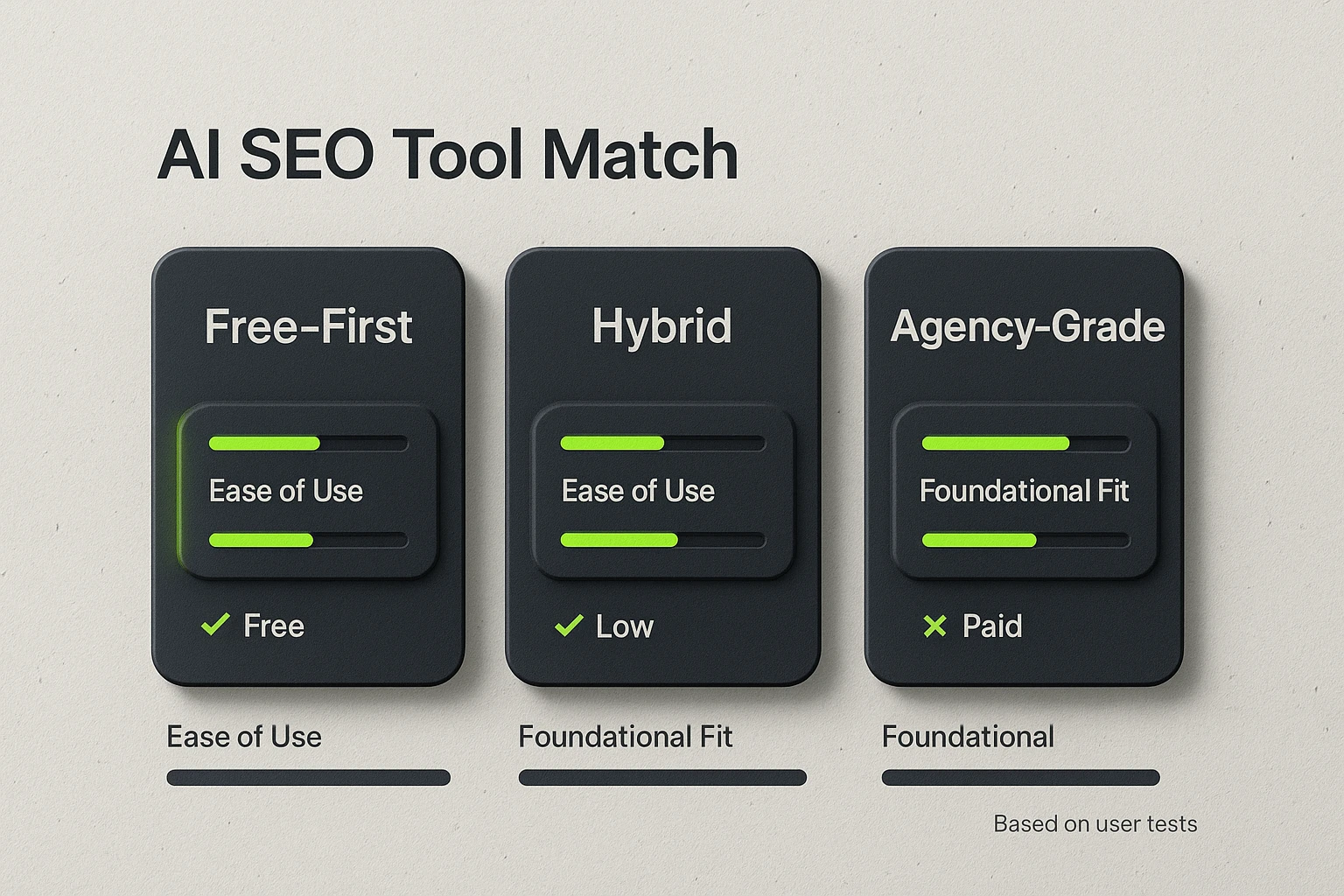
Your ideal starting toolkit combines Google's free platforms (Search Console, Analytics, PageSpeed Insights) with a versatile AI assistant like ChatGPT or Gemini. This combination costs you nothing but provides everything you need to execute your foundational audit, keyword research, and on-page optimization. As you grow, you can explore more specialized tools, but this simple stack is more than enough to achieve significant results.
The Human Touch: Your Key to Success with AI
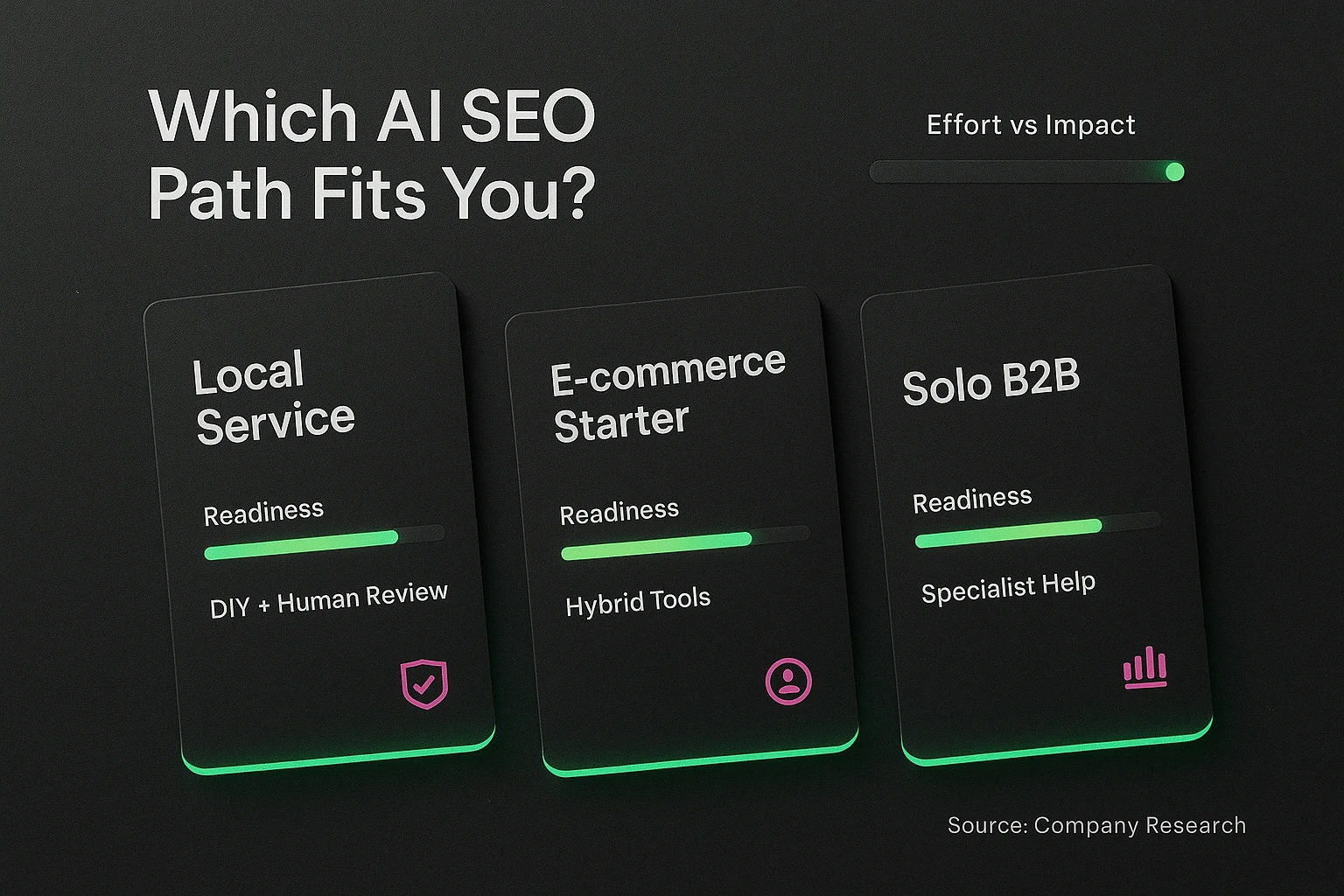
It's crucial to understand that AI is your co-pilot, not the autopilot. Blindly copying and pasting AI-generated content will lead to generic results that fail to connect with your audience and may even hurt your rankings. Search is evolving rapidly, and success in the world of Google's AI Overviews depends on genuinely helpful, human-refined content.
The true value comes from using AI as a tool to enhance your own knowledge and voice. Always apply a human review to anything AI produces.
Your Human Oversight Checklist:
- Fact-Check Everything: Does the AI-generated content contain accurate information?
- Inject Your Voice: Does it sound like you and your brand? Edit the text to reflect your unique tone and personality.
- Add Real Experience: Where can you add a personal story, a customer example, or a unique insight that only you have?
- Check for Helpfulness: Is this content genuinely useful to your target customer? Does it solve their problem completely?
This final human layer is what turns generic AI output into a valuable asset that builds trust and drives the long-term value of your AI content efforts.
Your Foundational SEO Journey Starts Now
For small businesses, AI-powered SEO is not about chasing algorithms. It is about reclaiming your time and building a digital foundation that works for you. By combining free tools with intelligent AI assistance and your own essential expertise, you can create a strong, visible online presence. You can compete effectively without needing a massive budget or a technical background. The key is to start with these foundational steps, stay consistent, and always remember that technology is there to amplify your human strategy, not replace it.
Frequently Asked Questions
Is AI SEO safe or will it get my site penalized by Google?
AI SEO is safe as long as you use it responsibly. Google's guidance is clear: they reward helpful content, regardless of how it's created. The risk comes from producing low-quality, unedited, or spammy content at scale. By using AI as a co-pilot for tasks like research, outlining, and drafting, and then applying a rigorous human review to ensure quality, accuracy, and originality, you align perfectly with Google's guidelines.
Can I really do foundational SEO with a zero-dollar budget using AI?
Yes, absolutely. The core toolkit for foundational SEO is surprisingly accessible. You can use Google Search Console, Google Analytics, and Google PageSpeed Insights for free to audit your site. You can use free versions of AI assistants like ChatGPT or Gemini for keyword brainstorming, content structuring, and interpreting technical reports. The primary investment is your time, but AI drastically reduces the hours required.
How much time does this actually save a small business owner?
The time savings are significant. According to a 2025 survey by Thryv, 58% of small businesses using AI save more than 20 hours per month. For foundational SEO, tasks that used to take days, like initial keyword research or a technical audit, can now be accomplished in a few hours. AI automates the repetitive, data-heavy parts of the process, freeing you to focus on strategy and adding your unique human expertise.
Do I need to be a tech expert to use these AI tools?
Not at all. The beauty of modern AI tools, especially conversational AI like ChatGPT, is that they are designed for natural language interaction. You don't need to write code or understand complex software. If you can write an email, you can write a prompt to an AI. The key is learning to ask clear, specific questions to get the most useful output.
Will AI completely replace the need for SEO professionals?
No, AI is an amplifier, not a replacement. While it democratizes access to foundational tasks, strategic oversight remains critical. An SEO professional's value is shifting from manual execution to higher-level strategy, such as interpreting complex data, understanding nuanced market trends, and making creative decisions. For a small business, AI empowers you to handle the fundamentals yourself, but as you grow, the strategic guidance of an expert can provide a significant competitive advantage.