Beyond Likes Using AI to Build a B2B Personal Brand on LinkedIn That Actually Wins Business
AI Summary
This article explores how AI-powered competitive analysis can elevate personal branding on LinkedIn within B2B niches. It explains the shift from manual guesswork to data-driven insights, enabling professionals to find unique positioning and create impactful content strategies.
Bottom Line
AI enhances your ability to stand out by revealing competitor patterns and content gaps, helping build authority and attract real business opportunities.
What You'll Learn
- How AI identifies key competitive positioning and content themes.
- Steps to craft a unique, differentiated personal brand.
- The importance of ongoing monitoring and human expertise alongside AI.
Best For
B2B professionals seeking to increase LinkedIn impact by leveraging AI to refine their personal brand and win more clients.
You’re doing everything right. You post on LinkedIn multiple times a week, share industry news, and engage with comments. You get likes, a few shares, and the occasional "Great post!" from your network. But when you look at your pipeline, you see a disconnect. The activity isn't turning into conversations, discovery calls, or new business.
If this sounds familiar, you're not alone. The problem often isn't your effort. It's your positioning. In a crowded B2B niche, being active isn't enough. You have to be seen as the clear, go-to authority for a specific problem. But how do you find that unique angle when everyone seems to be saying the same thing?
For years, the answer was manual research. Hours spent scrolling through competitor profiles, trying to decode their strategy from a handful of posts. Today, AI offers a more intelligent path. It allows you to move from guesswork to a data-driven strategy, uncovering the subtle patterns that define leadership in your industry.
From Guesswork to Intelligence: What is AI-Powered Competitive Analysis?
AI-powered competitive analysis for LinkedIn is not about "spying" on your competitors. It's about systematically understanding the landscape you operate in. Think of it as having a team of analysts who can read and synthesize every top-performing profile, post, and comment in your niche instantly.
Instead of you manually tracking a few rivals, AI systems can analyze dozens of influential voices at scale. They identify:
- Positioning Patterns: How do leaders frame their expertise in their headlines and "About" sections?
- Keyword Strategies: What specific terms and phrases do they use to attract their target audience?
- Content Pillars: What core topics do they consistently discuss to build authority?
- Engagement Triggers: What types of posts generate the most meaningful conversations, not just empty likes?
This process highlights a critical distinction often missed in general marketing advice. Analyzing a company's brand is different from analyzing an individual's personal brand. A company page speaks with a corporate voice. A personal profile builds trust through an individual's unique perspective and expertise. AI helps you dissect the latter, revealing how specific people become trusted advisors in their field.
A Framework for Winning: The AI-Powered Personal Branding Matrix
To turn this data into a strategy, you need a structured approach. We call this the AI-Powered Personal Branding Matrix. It is a repeatable workflow for transforming raw competitive data into a differentiated personal brand that attracts high-value opportunities.

This framework moves you from reactive posting to proactive brand building. Let's break down how each stage works.
Step 1: Define Your Niche and Identify Competitors
First, you need to tell the AI where to look. This starts with defining your niche with precision. Instead of "B2B SaaS marketing," you might specify "product marketing for early-stage B2B SaaS." AI tools can then scan LinkedIn to identify individuals who are the most visible and authoritative voices in that specific conversation. This isn't just about finding people with similar job titles. It’s about finding those who consistently win attention on the topics that matter to your ideal clients.
Step 2: Conduct AI-Driven Profile and Content Audits
Once you have your list of key players, the AI performs a deep audit. It analyzes their profiles to extract their core value proposition, the language they use to describe outcomes, and the calls-to-action that prompt engagement. It also reviews their content, identifying the formats (text, video, polls) and themes that perform best. This gives you a blueprint of what currently works in your niche.
Step 3: Uncover Opportunities and Messaging Gaps
This is where the true "aha moment" happens. AI doesn't just show you what others are doing. It shows you what they aren't doing. By analyzing the entire conversation, it can identify:
- Content Gaps: Are there important client questions that no one is answering in-depth?
- Audience Pain Points: What frustrations or challenges appear repeatedly in the comments of competitor posts?
- Contrarian Angles: Is there a popular opinion in your niche that you can challenge with data or a unique perspective?
This analysis is powered by a deep semantic understanding of business content, allowing the AI to grasp context and nuance far beyond simple keyword matching.
Step 4: Craft Your Differentiated Brand Strategy
With these insights, you can stop copying and start innovating. The AI-driven analysis provides the raw materials to build a unique position. You can now rewrite your profile headline and "About" section to speak directly to an underserved need you've identified. You can plan a content calendar that fills the gaps your competitors are leaving open. This is how you build a brand that stands out because it is genuinely different and more valuable.
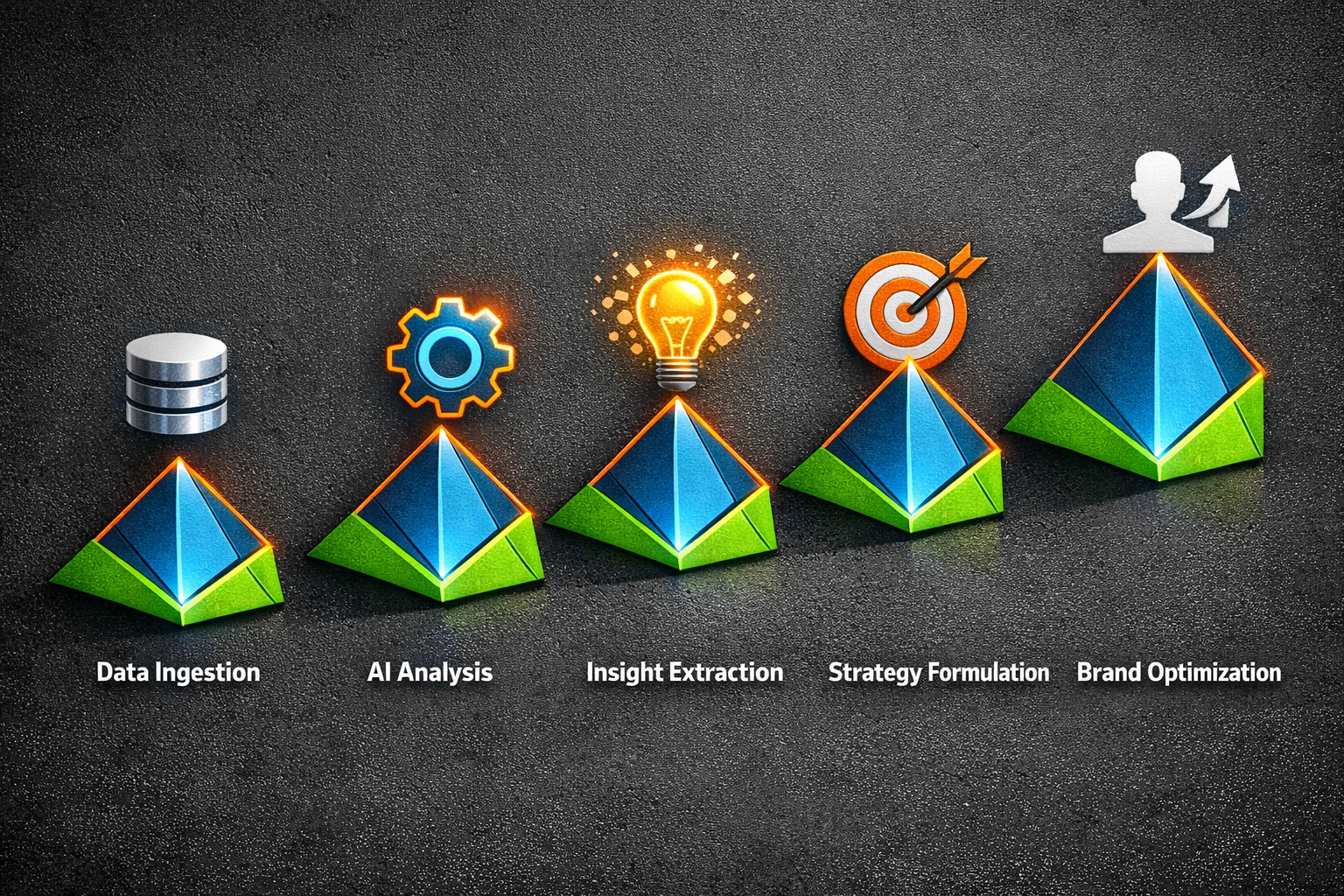
Step 5: Monitor and Iterate in Real-Time
Your niche is not static. Competitors will adapt, and new voices will emerge. AI tools can monitor the landscape for you, providing real-time alerts on shifts in messaging or new, trending topics. This allows for the continuous fine-tuning of your content, ensuring your personal brand remains relevant and authoritative over the long term.
The Human Element: Where AI Stops and Your Expertise Begins
It is easy to see the power of AI and think it can do everything. But that is a common misconception. AI is an incredible tool for analysis and pattern recognition. It handles the "system work" of sifting through massive amounts of data.
However, it cannot replicate the "human work" that actually builds trust and closes deals.
- AI provides the data. You provide the judgment and context.
- AI identifies content gaps. You create the stories and share the experiences that fill those gaps.
- AI spots engagement patterns. You build the real relationships in the comments and direct messages.
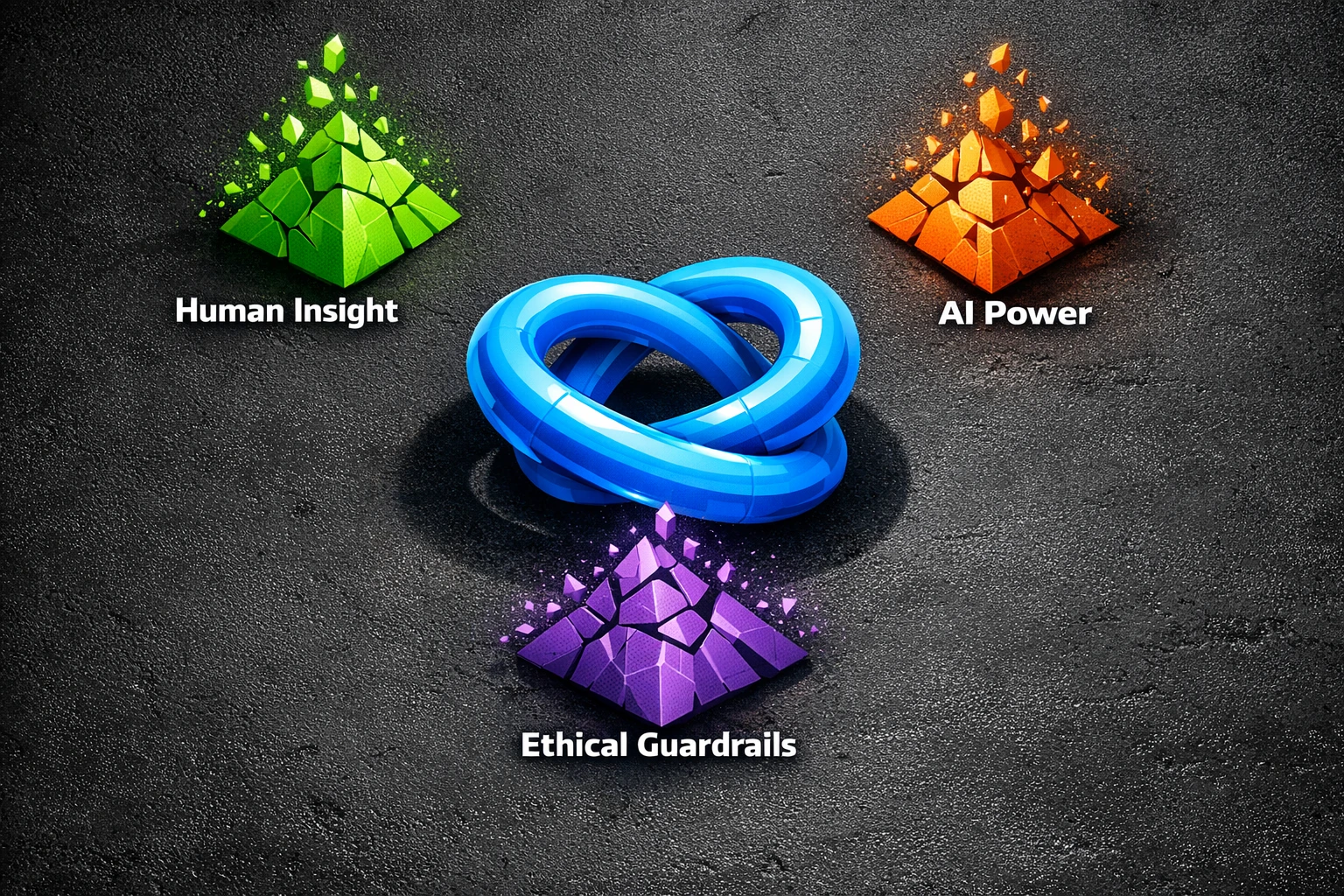
The goal isn't to automate your personality. The goal is to use intelligence to position your authentic expertise where it will have the most impact. True authority comes from the synergy between powerful AI insights and irreplaceable human wisdom.
From Theory to Action
Understanding these concepts is the first step. Applying them is what drives results. Frameworks like LinkedIn's own 360Brew encourage professionals to think holistically about their brand presence. For those looking to accelerate the process, specialized services have emerged. For example, pageBody’s Authority Blueprint for LinkedIn acts as one of the fastest quick wins by using an AI-powered interview to extract your expertise and deploy it into an optimized profile and content strategy in about 24 hours.
Whether you use an automated service or apply the framework manually, the principle is the same. A data-informed strategy will always outperform one based on guesswork. In many ways, this approach mirrors the work of a modern SEO intelligence agency, which uses deep analysis to secure visibility in crowded digital spaces.
FAQ: Common Questions About AI and LinkedIn Branding
What is the difference between this and just asking ChatGPT to analyze a profile?
General AI chatbots like ChatGPT can provide a surface-level summary of a single profile. Specialized AI-powered competitive analysis tools are different. They are designed to analyze dozens or hundreds of profiles simultaneously, cross-reference data, identify broad market trends, and spot statistical outliers or content gaps that a single-profile analysis would miss.
Is using AI for competitive analysis on LinkedIn ethical?
Yes. This process uses publicly available information from LinkedIn profiles and posts. It is no different from manually researching competitors. The AI simply automates and scales the process of data collection and analysis. It is about understanding public conversations to inform your own strategy, not accessing private data.
How long does it take to see results from this approach?
Optimizing your profile based on AI insights can have an immediate impact on how visitors perceive your brand. You will appear more focused, professional, and authoritative right away. Seeing tangible results in lead flow, however, depends on the consistency of your content and engagement strategy. Typically, clients who apply a new, data-driven content plan start seeing a noticeable increase in qualified inbound inquiries within 30 to 60 days.
Sources:
- CXL - Provided a structured approach to AI-powered competitive analysis in B2B markets.
- LinkedIn Pulse - Offered practical, quick-win advice from expert Andy Crestodina on using AI for competitive scoring.
- Vulse - Focused on the active monitoring of competitors to inform and transform LinkedIn content strategy.
- Klue - Detailed specific methods for conducting competitive analysis using AI tools.
- Socialinsider - Offered a guide on the principles of B2B competitor analysis on social media platforms.