AI SEO Competitor Analysis Ultimate Guide
AI Summary
AI SEO competitor analysis turns search competition from a delayed reporting task into a proactive growth system, but automation alone cannot build authority. The strongest approach combines continuous monitoring, semantic intelligence, and human judgment to act before competitors consolidate their gains.
- How delta detection tracks competitor content, headings, SERP features, AI citations, and internal linking changes.
- Why entity extraction and intent analysis reveal missing comparisons, specifications, buyer questions, and trust signals.
- How the three-tier model combines AI intelligence gathering, human editorial direction, and automated asset production.
For teams tired of slow audits, generic AI drafts, and unclear tool choices, this framework provides a practical path to faster, more defensible organic growth.
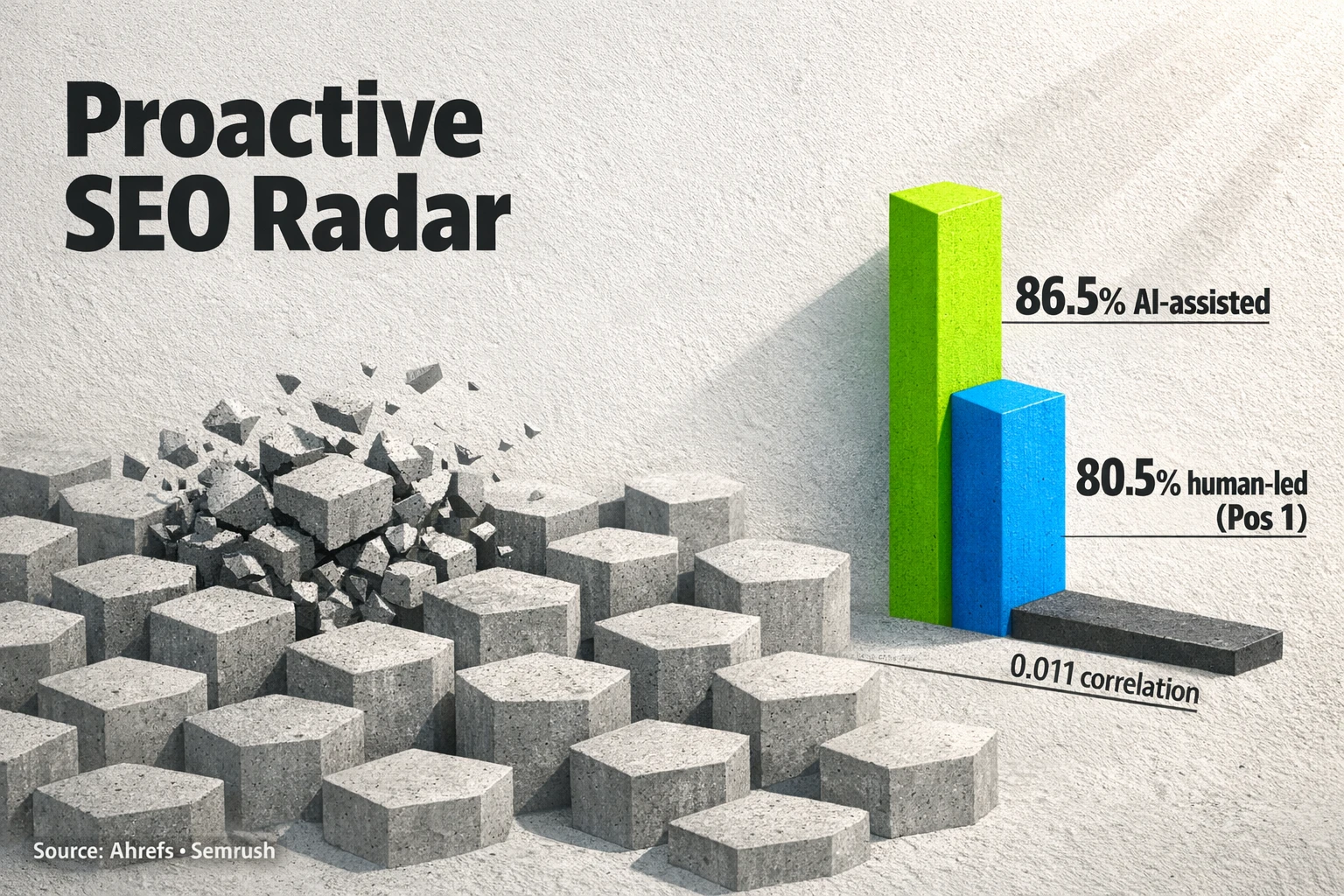
Most marketing leaders evaluating search strategies face a frustrating reality. You conduct a quarterly keyword audit, spot a content gap, brief a writer, and publish an article six weeks later. By the time your page indexes, your primary competitor has already expanded their topical footprint, captured the top search positions, and locked down citations across AI search engines. Reactive search engine optimization always leaves you playing catch-up.
Winning in modern organic search requires shifting from periodic manual audits to continuous, proactive competitive intelligence. When you use AI systems to monitor competitor moves, extract entity gaps, and predict search shifts in real time, you turn search engine optimization into an offensive growth driver.
The core problem in search engine marketing today is not a lack of content creation capacity. It is a strategic gap between automated drafting and systematic authority building. Purely automated text generation without deep market intelligence produces superficial content that search engines ignore. To dominate competitive search landscapes, you need intelligence systems that analyze winning pages, pinpoint exact missing elements, and deliver publish-ready assets that demonstrate genuine domain expertise.
The Flaw in Reactive SEO and Generic AI Tools
The standard approach to competitive analysis relies on historical keyword export files and manual spreadsheet mapping. This static workflow fails because search engine results pages evolve daily. Search engines continuously re-evaluate intent, incorporate dynamic summaries, and reward pages that offer complete topical coverage.
Generic AI writing tools have compounded this issue. Marketers often mistake prompt-based drafting for strategic execution. They generate dozens of generic blog posts, publish them without editorial oversight, and wonder why organic visibility remains flat. Simply pumping out text does not build search authority.
True search dominance comes from deep competitive research combined with targeted content execution. Systems must reverse-engineer what makes top-performing pages succeed before a single paragraph is written. At pageBody, our flagship AI SEO Strategist framework approaches competitive analysis as an engineering challenge. Instead of writing blindly, the platform analyzes over 50 winning pages per topic cluster to identify the exact structural factors, internal links, and semantic entities required to claim top positions.
Core Pillar 1: Automated Competitor Monitoring and Delta Detection
Continuous search intelligence requires automated monitoring stacks that track competitor URLs across multiple parameters. When a competitor updates a core landing page, changes their heading hierarchy, or begins targeting new search queries, your team should know immediately, not three months later during a site audit.
Automated systems track changes across four critical layers:
- Content volume and structural shifts across competing domains
- Heading changes and new subtopic introductions
- Dynamic adjustments in search features and AI Overview citations
- Internal linking pattern modifications across content clusters
Many marketing teams ask, What tools automatically summarize competitor news without data overload? The answer lies in deploying specialized AI agents configured to deliver actionable summaries rather than raw data dumps. An intelligence agent filters out minor site updates and surfaces strategic movements, such as a competitor launching an entire new sub-topic cluster or altering their commercial landing pages.
.jpeg)
By automating competitive monitoring, your team moves from passive observation to preemptive action. When a competitor expands into a adjacent topic, your system detects the early structural pattern, allowing you to deploy counter-content before their topical authority solidifies.
Core Pillar 2: Semantic Gap Analysis and Entity Extraction
Traditional gap analysis focuses on missing keywords. Modern search intelligence focuses on missing entities and unanswered intent. Search engine algorithms map web content using entity relationships, evaluating how thoroughly a page addresses a concept compared to competing sources.
When evaluating competing pages, advanced AI analysis extracts the underlying entity map. It identifies missing comparison tables, omitted technical specifications, unaddressed buyer questions, and weak trust indicators. By identifying these specific omissions, you can craft content that provides superior depth and immediate utility.
Understanding vector alignment and search intent is vital for ranking in modern search features. Detailed SERP intent analysis reveals whether search engines favor concise definitions, step-by-step technical guides, or structured direct answer blocks for a given query. Furthermore, by deconstructing competitor content clusters, AI systems map how top sites pass internal page rank and establish thematic hierarchy across their websites.
Identifying these semantic gaps gives your content team a clear blueprint. Instead of guessing what to include, you publish assets designed to complete the semantic picture that competing pages left unfinished.
Core Pillar 3: Preemptive Content Architecture and Deployment
Identifying competitive gaps is only half the battle. You must deploy high-quality content faster than competitors can adapt. Achieving this operational velocity requires a structured workflow that balances automated research with rigorous human quality control.
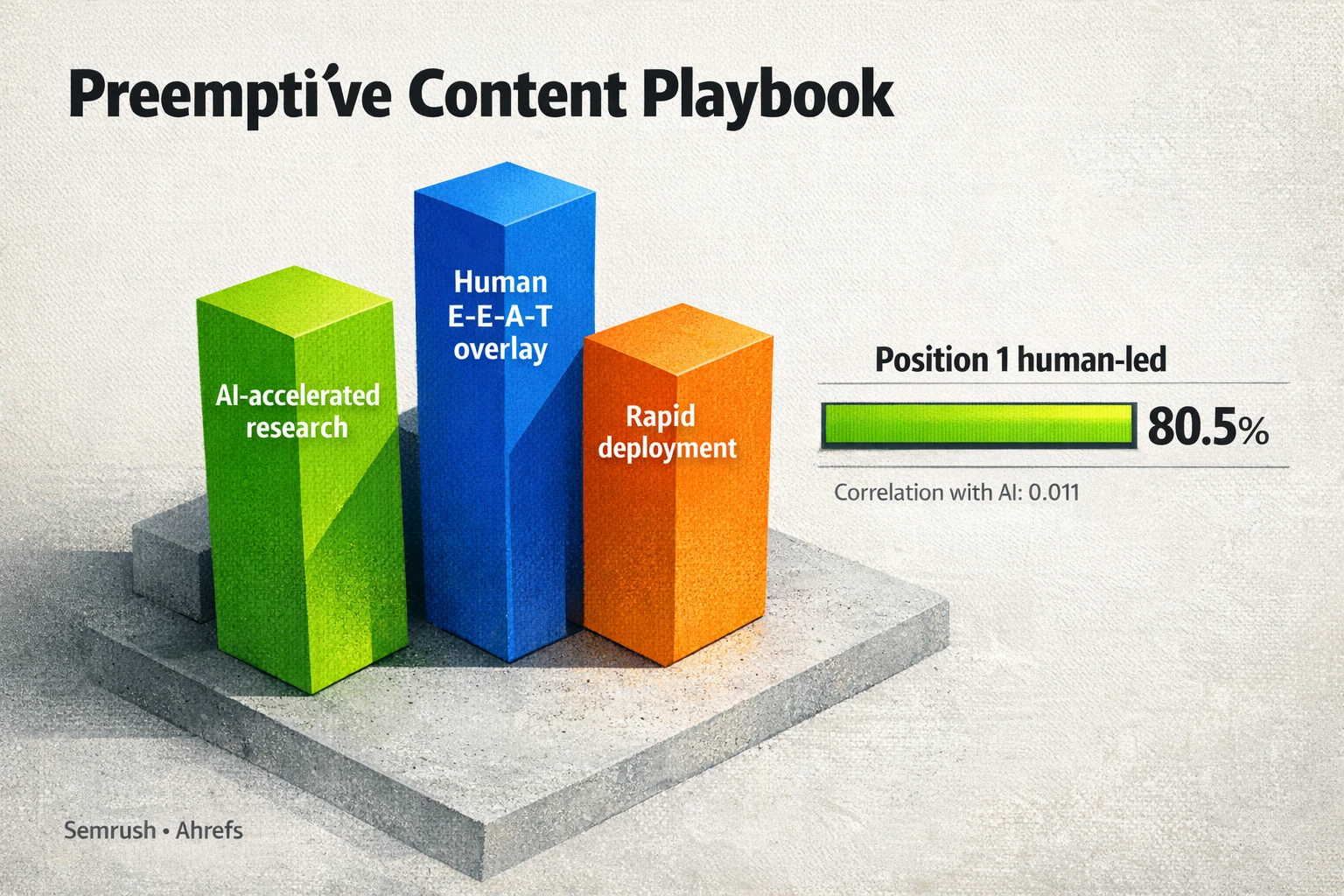
To maintain search quality while scaling output, leading teams implement a three-tier execution model:
- AI Intelligence Gathering: Continuous extraction of competitive entity structures, intent requirements, and ranking factors.
- Human Editorial Direction: Experienced strategists define unique narrative angles, incorporate brand positioning, and ensure factual precision.
- Automated Asset Production: Generation of structured Ranking Asset Packages containing full articles, metadata, optimized schema, and internal link structures.
At pageBody, our production process reflects this exact philosophy. Every piece of content relies on a strict human-in-the-loop workflow. A human strategist provides Perspective Direction, our proprietary research engine AImee compiles deep intelligence and drafts the baseline structure, and a senior editor conducts the final review before publication. This process ensures that every asset offers original perspectives while eliminating AI hallucinations.
To achieve continuous pipeline growth, organizations recognize the unassailable logic of replacing manual drafting with systematic content engines. Our structured approach to content body AI production combines automated competitive intelligence with expert human oversight, delivering publish-ready assets directly to platforms like WordPress, Shopify, and Webflow within 14 days.
Evaluation Framework: Selecting Your AI Search Intelligence Model
When evaluating options for competitive search analysis and execution, decision-makers generally compare three primary models: traditional agencies, DIY software stacks, and productized AI transformation partnerships.
| Evaluation Criteria | Traditional SEO Agencies | DIY AI Tool Stacks | pageBody AI Transformation Agency |
| Primary Focus | Manual strategy and general deliverables | Raw text generation and basic metrics | Automated intelligence and publish-ready packages |
| Speed to Delivery | 60 to 90 days for initial assets | Instant generation, slow editing cycle | Systems operational in 14 days |
| Research Depth | Limited manual competitor reviews | Keyword density checks | 50+ winning pages analyzed per topic |
| Asset Ownership | Proprietary agency lock-in | Subscription-dependent software | Client retains 100% asset ownership |
| Quality Oversight | Variable human effort | Manual user prompts | Human editorial direction with AImee automation |
Traditional agencies often struggle with slow execution timelines and high monthly retainers. DIY tools put the entire operational burden on your internal team, leading to content quality issues and tool fatigue.
pageBody sits directly between these options. As an AI Transformation Agency, we deliver complete operational leverage. Through our productized offers, including Authority Foundation, Authority Acceleration, and Authority Dominance packages, we build custom intelligence systems that analyze competitive landscapes, generate complete Ranking Asset Packages, and publish directly to your CMS under month-to-month terms with zero vendor lock-in.
Frequently Asked Questions
How does AI-driven competitor analysis differ from standard keyword tracking?
Standard keyword tracking tells you where your site ranks for a static list of words. AI-driven competitor analysis continuously evaluates entity relationships, content structural changes, and intent coverage across competing websites, identifying strategic gaps before visibility is lost.
Can AI-generated content achieve top search positions on Google?
Search engines evaluate content based on utility, accuracy, and user intent satisfaction, not whether AI tools assisted in drafting. However, purely unedited AI text struggles to secure top positions because it lacks original perspectives and human expertise. Combining AI intelligence with human editorial direction yields the best results.
How fast can a business deploy an automated SEO monitoring system?
With pageBody, first automation systems go live within 14 days. Our team builds the research blueprints, sets up competitive tracking, and begins delivering publish-ready Ranking Asset Packages tailored to your domain.
What happens to our content assets if we end our contract with pageBody?
You maintain full ownership of every system, blueprint, and content package built during our partnership. We operate on flexible month-to-month terms without proprietary lock-in.
Next Steps for Your Business
To stop reacting to competitor moves and start claiming high-intent search traffic, conduct an internal audit of your current competitive monitoring process. Identify how long it takes your team to spot a competitor's content launch and deploy a counter-strategy. If that window exceeds two weeks, implementing an automated search intelligence workflow will yield immediate ROI.