4 E-E-A-T AI Briefs to Safely Scale Content Velocity by 4.2x
AI Summary
Scaling content with E-E-A-T AI briefs can raise publishing velocity without sacrificing trust—but only when authority is designed before generation, not patched in afterward.
- How Experience, Expertise, Authoritativeness, and Trustworthiness become enforceable fields through SME quotes, proprietary data, bylines, and sourcing.
- Why a verified knowledge-based system and knowledge graph reduce hallucinations by limiting outputs to approved evidence.
- How agentic AI systems can research, validate E-E-A-T markers, and format drafts while human supervisors approve the final package.
For teams facing organic traffic risk from unguided AI, this framework turns faster drafting into a controlled, evidence-led content operation.
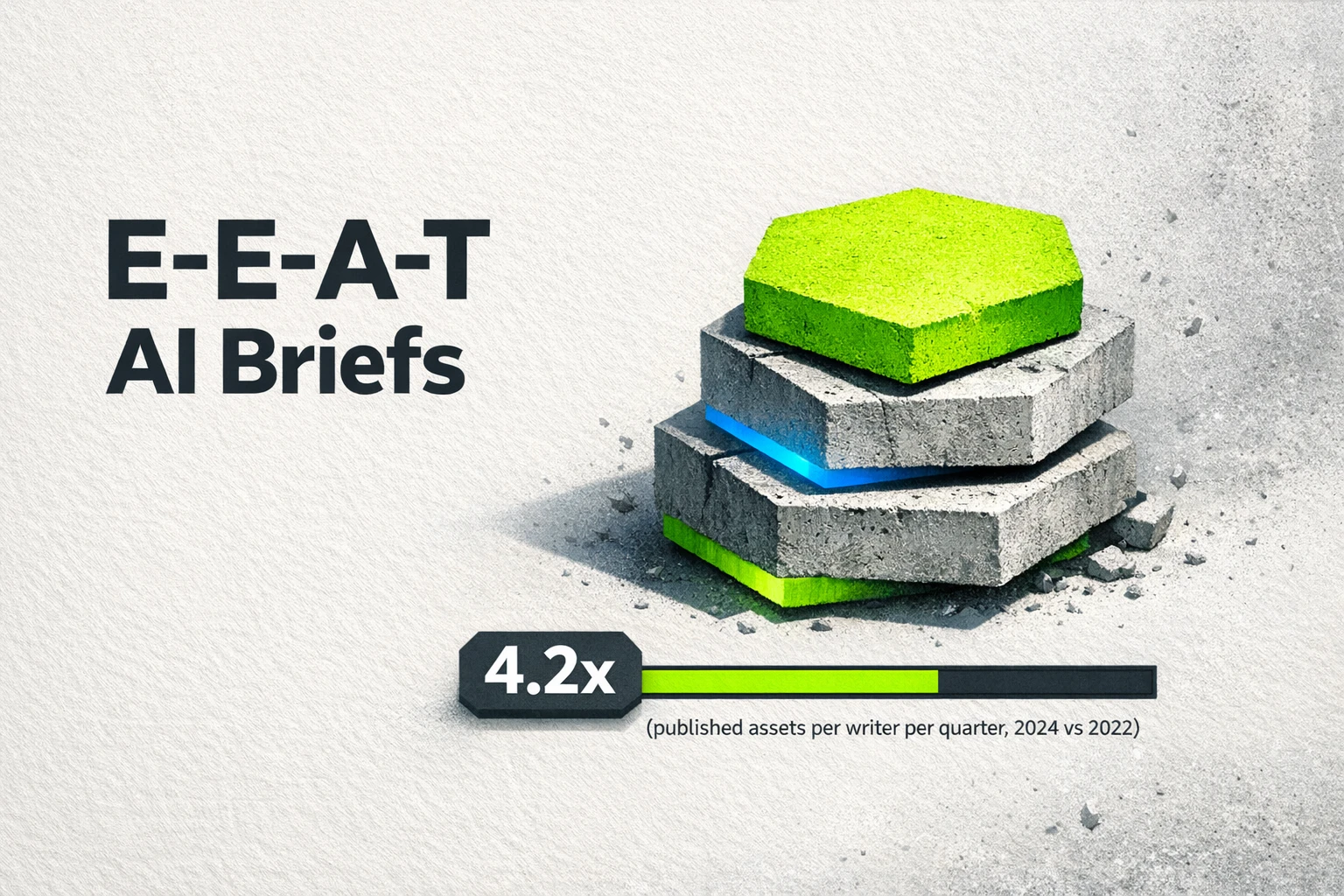
Scaling content output is no longer a competitive advantage. It is a commodity. The real bottleneck for modern marketing teams is scaling trust. Most organizations treat E-E-A-T as a manual checklist they apply after an AI tool generates a draft. They spend hours rewriting generic text to make it sound authoritative. This approach fundamentally breaks the operational leverage of artificial intelligence. You must operationalize trust at the briefing stage. When you embed structured data, proprietary knowledge, and expert attribution directly into your templates, you force the AI to comply with quality standards automatically.
The Risk of Scaling Unguided Content Generation
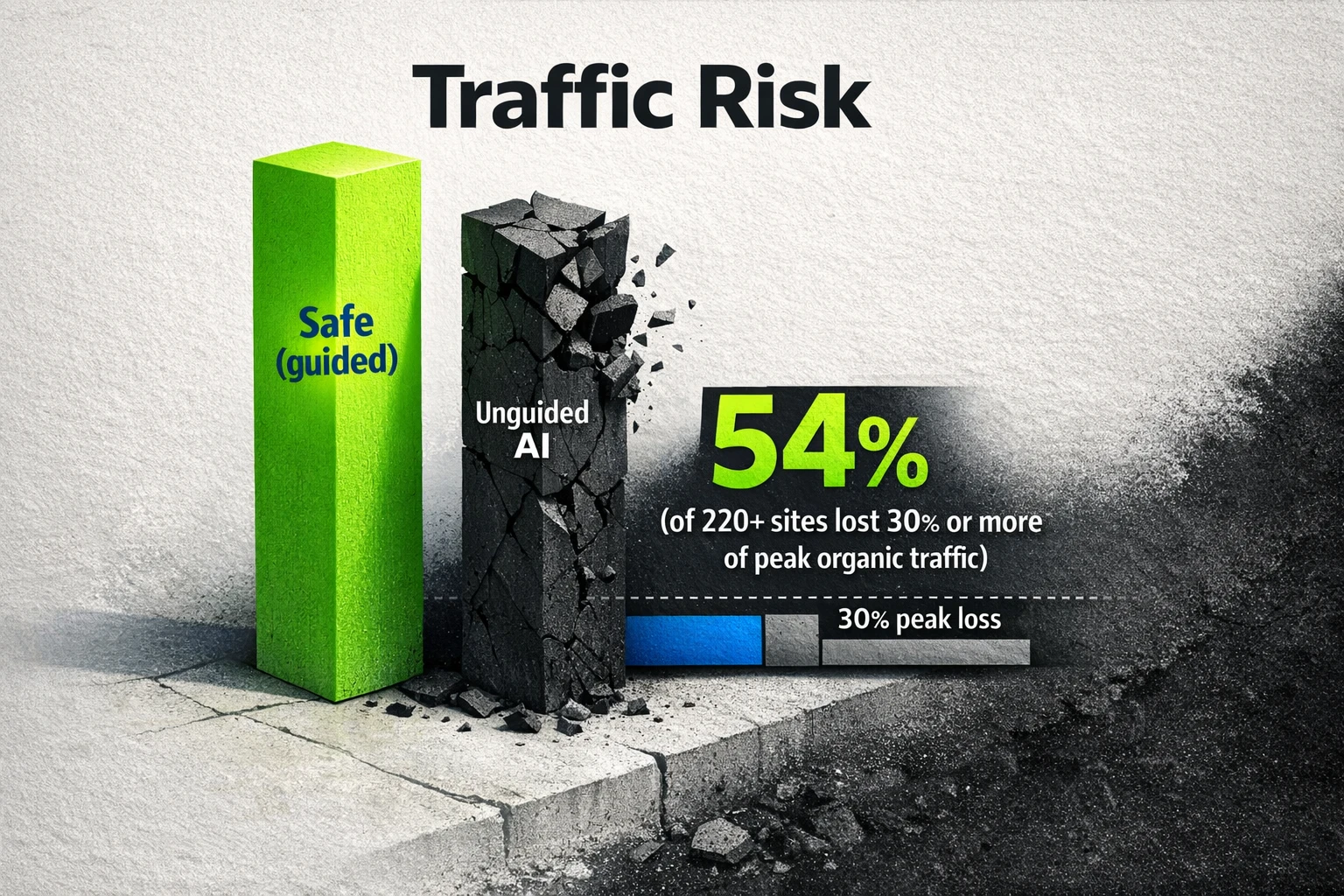
Search engines actively penalize text that lacks unique information gain. Pumping out hundreds of unverified articles creates massive vulnerability for your brand. Scaling without strict editorial guardrails guarantees algorithmic demotion. In an analysis of over 220 domains using AI content platforms, Lily Ray found that 54% lost 30% or more of their peak organic traffic [1].
This proves that publishing speed without authority architecture is a liability. You need a system that protects your traffic while increasing output. Knowing how to measure success and asking am I visible on AI requires a deep understanding of how algorithms assess quality beyond mere word count. A rigid brief protects you from producing the kind of thin content that algorithms target during core updates.
Major Stages of AI Workflow for Content Operations
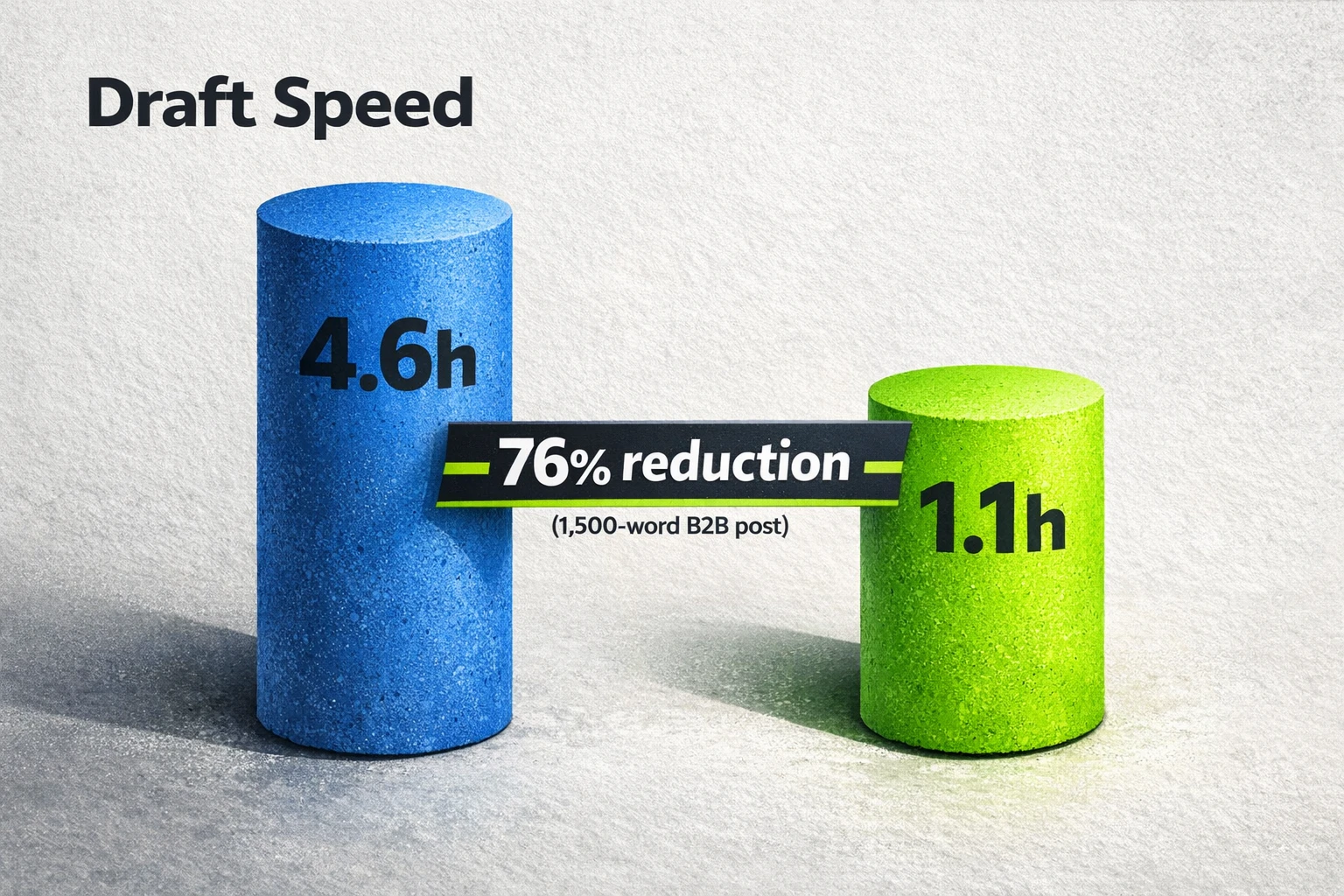
A mature AI operation restructures how teams work before it changes their tech stack. The major stages of AI workflow shift the human effort from writing to researching and briefing. You build the strategy. The machine executes the phrasing. According to The Starr Conspiracy, AI workflows drove a 76% reduction in median time-to-first-draft for a 1,500-word B2B blog post, from 4.6 hours to 1.1 hours [2].
That saved time must be reinvested into competitive intelligence and intent mapping. Digital agency Hallam utilizes tools like ChatGPT to brainstorm persona pain points, feelings, and interests to address audience needs [3]. This upfront context prevents the generator from hallucinating generic advice. You design the AI content structure first to dictate exactly how the final piece must flow.
Anatomy of an Expert Content Brief
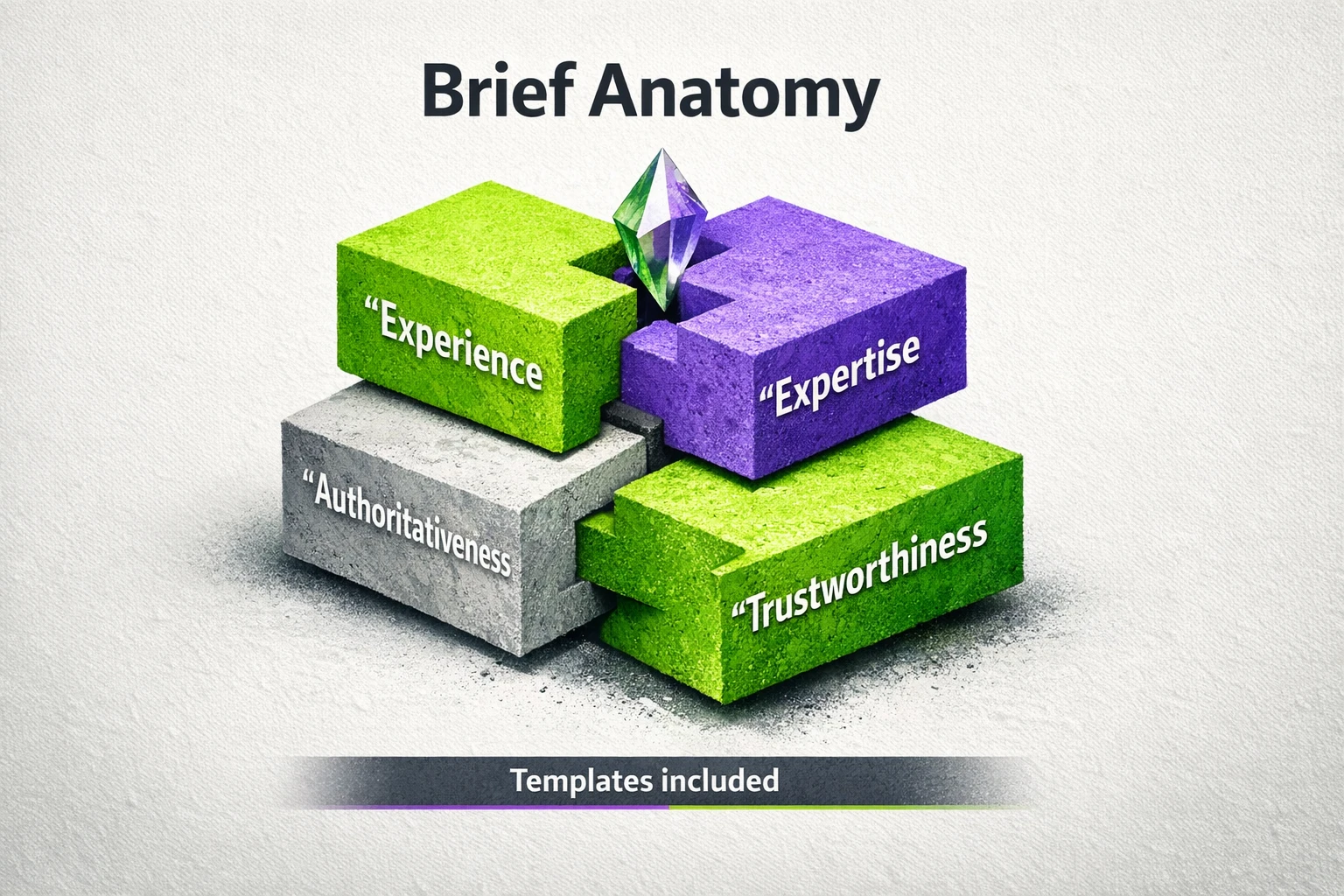
You cannot expect a large language model to guess your industry expertise. A standard E-E-A-T brief requires strict knowledge representation constraints. Google evaluates E-E-A-T signals by looking for first-hand experience, subject matter expertise, credibility through author bylines, and trustworthiness via clear sourcing and background information [4].
Your brief must contain the exact subject matter expert quotes and proprietary data the AI is permitted to use. Do not let the model invent examples. Force it to synthesize the factual evidence you provide. Implementing a 3-phase E-E-A-T blueprint turns raw information into rank-ready assets that readers and algorithms both trust.
Knowledge Based System in AI as the Foundation
Operating a knowledge based system in AI protects your brand from reputational damage. It restricts the generator to a verified proprietary dataset. This solves common issues in knowledge representation in AI by ensuring every output traces back to an approved internal source.
Search algorithms constantly evaluate the authenticity and freshness of your claims. You might wonder why does a static content strategy decay faster in ai search. The answer lies in the algorithm's need for verified entity relationships. When you ground your prompts in a rigid knowledge graph, you eliminate hallucinations and maintain authority over time. The AI becomes a reliable formatter of your truth rather than a risky creative engine.
Agentic AI Systems for Advanced Implementations
Marketing teams are moving past simple chat interfaces into autonomous workflows. What can agentic AI systems do for your publishing pipeline? They can execute deep research tasks, validate E-E-A-T markers against live search results, and format the final output for your specific CMS.
This level of agentic optimization shifts you from reactive publishing to predictive market dominance. You give the agent the business goal. The agent builds the brief, fetches the internal data, and generates the draft based strictly on your rules. The human supervisor simply approves the final package.
Frequently Asked Questions
How do I prevent AI hallucinations in my content?
You build a knowledge based system that forces the language model to pull only from your provided proprietary data and subject matter expert quotes.
Can I rank with purely automated AI content?
Publishing unverified AI content carries massive risk. Search algorithms actively demote pages that lack original information gain or human oversight.
Where does E-E-A-T fit into the AI workflow?
It belongs entirely in the briefing stage. You must architect the trust signals before the AI writes a single word.
How much time does an AI content workflow actually save?
When properly configured with standardized templates, teams see drastic reductions in drafting time. The focus shifts from writing sentences to assembling expert insights.
To stop gambling with your organic traffic, download our E-E-A-T AI Brief templates today and build authority directly into your generation process.
Sources:
- Lily Ray - Research on organic traffic loss
- The Starr Conspiracy - B2B AI production benchmarks
- Moz - Methodology for AI intent mapping
- BrightEdge - Documentation on Google algorithm signals