AI in Web3 and the Metaverse: The Next Frontier of Digital Interaction
AI Summary
AI in Web3 and the Metaverse explores how AI transforms decentralized digital ecosystems, enhancing interaction, ownership, and privacy.
Bottom Line:
This article shows how integrating AI in Web3 and metaverse projects drives immersive, personalized experiences and innovative economic models.
What You'll Learn:
- How AI virtual twins create dynamic, adaptive digital environments
- The roles and benefits of autonomous AI agents in decentralized economies
- Privacy-preserving AI techniques aligned with Web3 data ownership
Best For:
Decision-makers and innovators evaluating AI solutions to build or improve decentralized, intelligent digital platforms.
AI in Web3 and the Metaverse: The Next Frontier of Digital Interaction
You're likely seeing the terms AI, Web3, and Metaverse everywhere. They are often presented as separate, revolutionary technologies. But the real transformation happens where they connect. For decision-makers, the challenge isn't just understanding each concept. It's evaluating how their convergence creates tangible value and navigating the path from speculative hype to strategic implementation.
This is not a high level overview. This is a practical guide to help you assess the powerful new capabilities emerging from this technological trifecta. We will explore how AI is becoming the intelligence layer for the decentralized worlds of tomorrow, creating more dynamic, personalized, and economically complex digital experiences. The Web3 market is projected to reach USD 81.5 billion by 2030, and understanding AI's role is critical to capturing a piece of that growth.
AI-Powered Digital Twins: From Static Replicas to Living Worlds
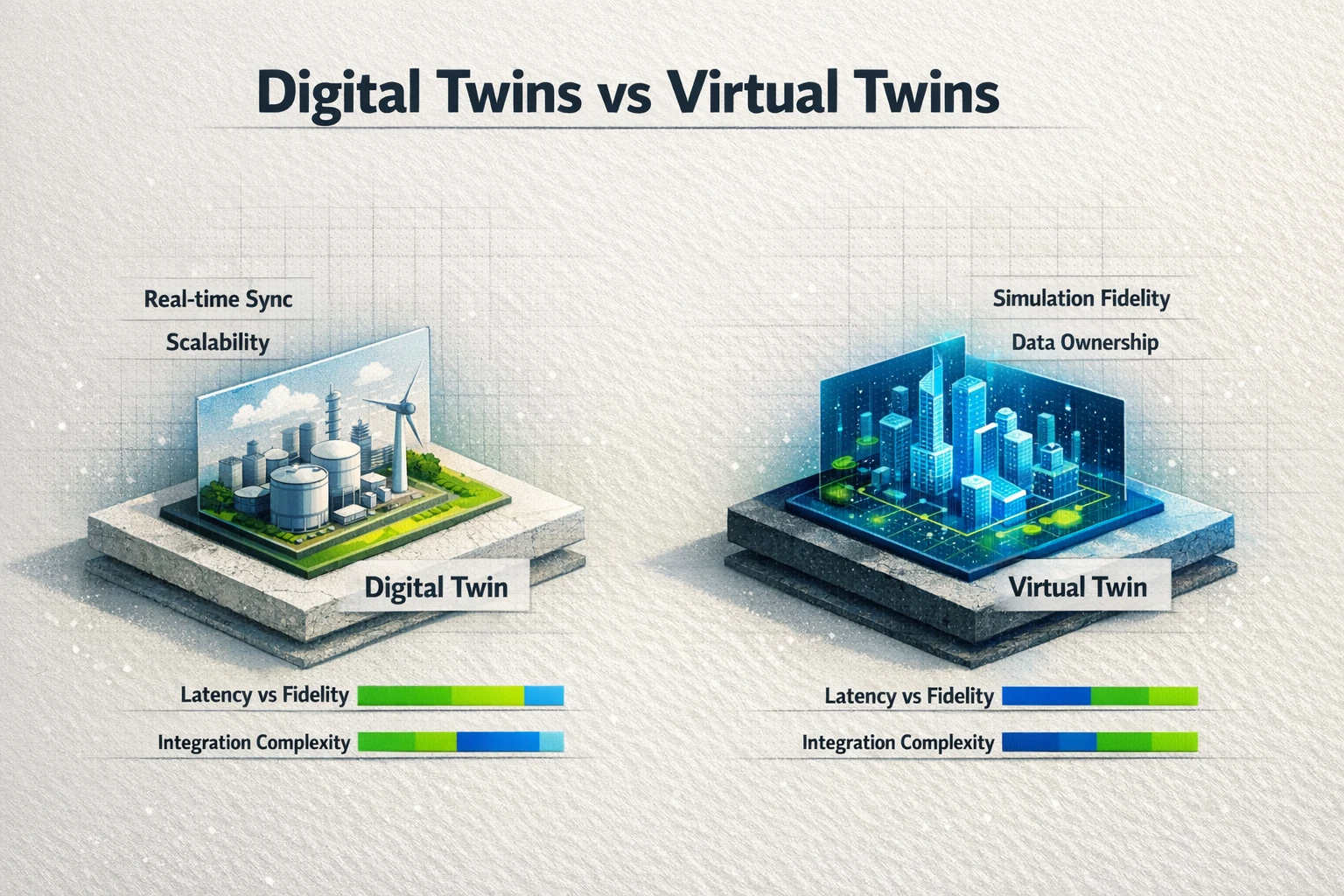
The term "digital twin" has been used for years, primarily in industrial settings to describe a virtual model of a physical object. In the metaverse, however, AI elevates this concept from a simple replica to a dynamic, learning simulation. This is where the distinction between a digital twin and a virtual twin becomes crucial for your strategy.
A digital twin is a one-to-one digital counterpart. A virtual twin, powered by AI, is a fully simulated model that can not only mirror reality but also predict future states, run what if scenarios, and operate autonomously.
In decentralized environments, this has massive implications:
- Hyper-Realistic Experiences: AI can analyze vast datasets to create virtual environments and assets that behave with incredible realism.
- Dynamic Worlds: Instead of static, pre-programmed levels, AI-driven virtual twins can modify the environment in real time based on user interactions, creating unique experiences for every person.
- Player-Owned Assets: In a Web3 context, a player could own a virtual twin of a race car. AI could then use real world or simulated data to improve its performance, directly increasing the asset's value.
When evaluating this technology, consider the fidelity and autonomy your project requires. A simple digital twin might suffice for asset visualization, but a truly immersive and interactive metaverse experience demands the predictive and dynamic power of an AI-enhanced virtual twin.
Autonomous AI Agents: The New Inhabitants of Decentralized Economies
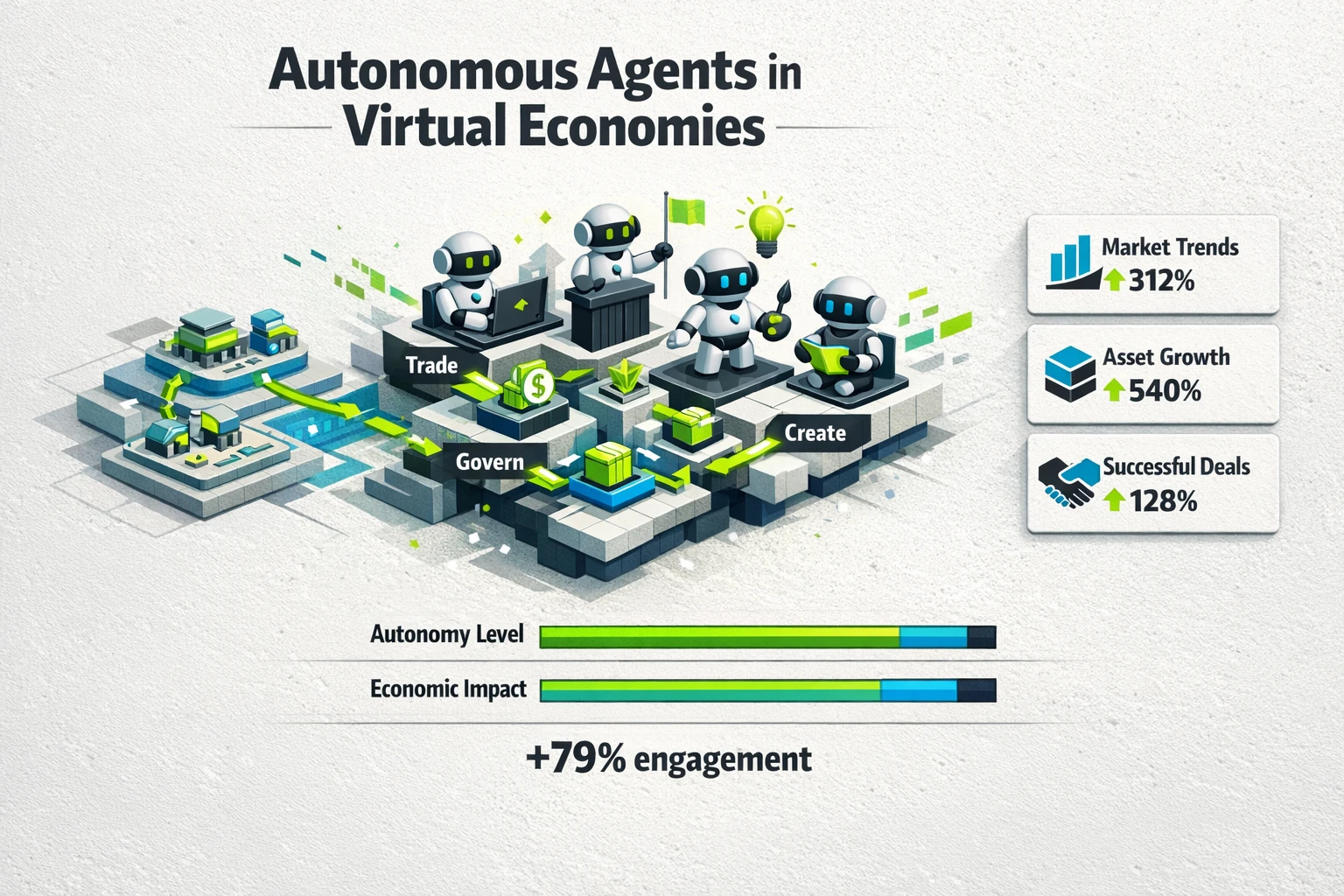
If virtual twins are the environment, autonomous AI agents are its inhabitants. These are not the predictable, scripted Non-Player Characters (NPCs) of older video games. Powered by Large Language Models (LLMs) and Reinforcement Learning (RL), these agents can reason, adapt, and pursue their own goals. Research shows that 99% of gamers believe AI NPCs would enhance gameplay, a clear signal of market demand.
In decentralized ecosystems, the role of these agents expands far beyond gaming:
- Smarter NPCs: Imagine NPCs with persistent memory who remember past interactions with you, form relationships, and offer unique, unscripted quests.
- Economic Participants: In a Web3 metaverse, an AI agent could own its own digital assets, run a virtual shop, provide services to players, and participate in the economy. This creates a living, breathing world that evolves without constant developer intervention.
- DAO and Protocol Management: Agents can be designed to monitor blockchain networks, execute complex smart contract functions, and even propose and vote on governance changes in Decentralized Autonomous Organizations (DAOs). Some systems are becoming so sophisticated they can function as an ai internal linking agent for complex digital knowledge bases.
When planning for AI agents, your key decision points involve their level of autonomy and the economic model they operate within. A reactive agent might simply respond to player actions, while a proactive agent could be creating new content, managing resources, or even competing with players, fundamentally changing the user experience.
Data Ownership and Privacy: Delivering on the Web3 Promise with AI
Traditional AI models rely on massive, centralized datasets. This creates a fundamental conflict with the Web3 ethos of user sovereignty and data ownership. Your customers are increasingly aware of how their data is being used, and a decentralized approach offers a powerful way to build trust.
The integration of AI and Web3 directly addresses this challenge by creating new models for privacy preserving intelligence.
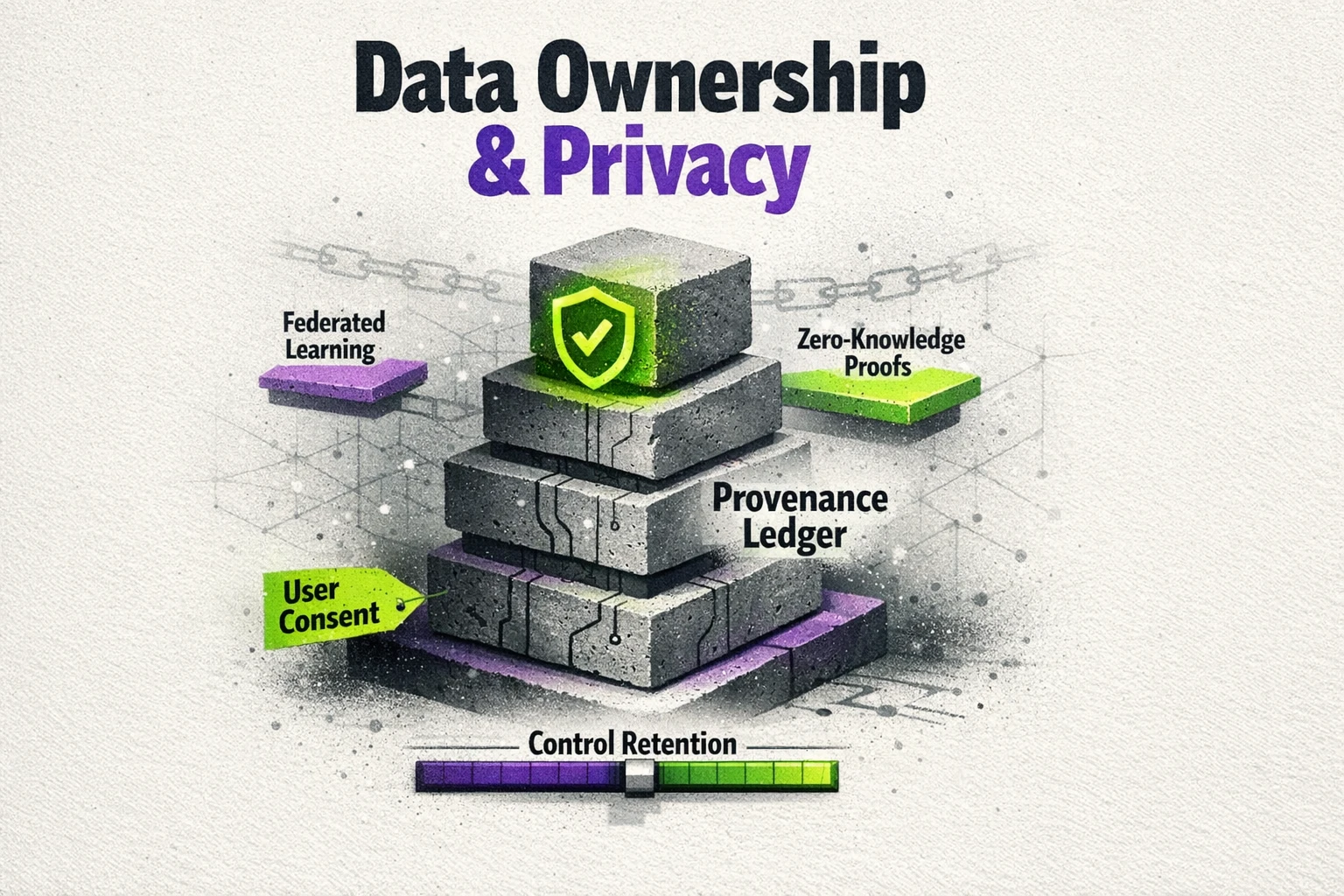
- Federated Learning: Instead of moving user data to a central server for model training, the model is sent to the user's local device. The model learns from the data locally, and only the updated model parameters, not the raw data, are sent back. This protects user privacy by design.
- Zero-Knowledge Proofs: These cryptographic methods allow one party to prove to another that a statement is true, without revealing any information beyond the validity of the statement itself. In AI, this can be used to verify the integrity of a model's output without exposing the underlying data it was trained on.
- Blockchain for Provenance: The blockchain provides an immutable record of data ownership and access permissions. Users can grant or revoke AI access to their data with full transparency, creating a more equitable relationship between users and platforms.
For businesses building in this space, leveraging these techniques is not just a technical choice. It is a core value proposition that differentiates you from Web2 incumbents. It transforms data privacy from a compliance burden into a competitive advantage.
AI-Powered NFTs and Digital Assets: Building the New Creative Economy
AI is radically changing the nature of Non-Fungible Tokens (NFTs) and digital assets, moving them from static collectibles to intelligent, interactive objects. This evolution unlocks new revenue streams and deeper user engagement.
Consider these AI driven transformations:
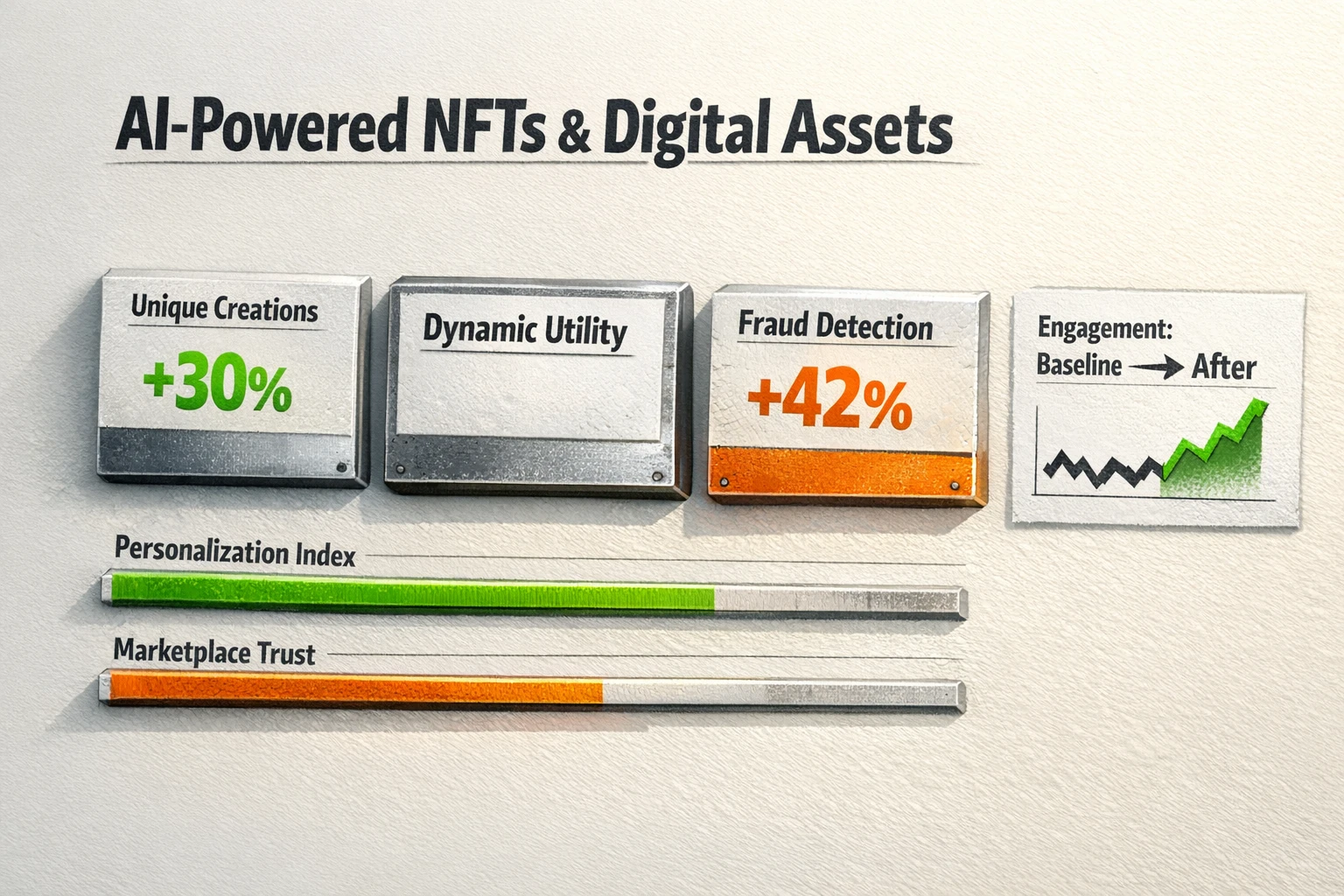
- Generative Art and Content: AI models can create an infinite supply of unique art, music, 3D models, and even game characters, enabling a new wave of creativity and personalization.
- Dynamic NFTs (dNFTs): These are NFTs that can change their properties based on external data or user interaction. An AI could update a player's avatar NFT to reflect their in game achievements or link an NFT's appearance to real world weather data.
- Intelligent Valuation and Fraud Detection: AI can analyze on chain data and market trends to provide more accurate valuations for digital assets. It can also identify patterns associated with wash trading and other fraudulent activities, making marketplaces safer for users.
By integrating AI, digital assets gain utility. They become more than just items to be owned. They become active participants in the virtual world, creating a more dynamic and valuable ecosystem for everyone involved.
Navigating the Future: Challenges and Opportunities on the Decentralized Frontier
Integrating AI into Web3 and the Metaverse is not without challenges. Scalability, interoperability between different blockchain networks, and the high computational cost of running complex AI models are significant hurdles. Furthermore, establishing ethical governance for autonomous agents is a complex problem that the industry is actively working to solve.
However, the opportunities are immense. The convergence of these technologies promises a future with more intelligent, immersive, and equitable digital spaces. From virtual economies run by AI agents to personalized experiences that respect user privacy, the potential is just beginning to be explored. By focusing on practical applications, prioritizing user ownership, and building with a forward-looking perspective, you can position your organization at the forefront of this new digital paradigm.
Frequently Asked Questions
How do I choose between a digital twin and a virtual twin for my project?
The choice depends on your goal. If you need a simple, real-time digital replica for monitoring or visualization, a digital twin is sufficient. If you need to simulate complex scenarios, predict future outcomes, or create a dynamic, interactive environment that learns and adapts, you need an AI-powered virtual twin.
What is the first practical step to integrating AI into a Web3 application?
A good starting point is to identify a process that can be enhanced with predictive analytics or automation. For example, in a decentralized finance (DeFi) application, you could use AI to analyze wallet data to offer personalized yield strategies. In an NFT marketplace, you could implement an AI model for fraud detection. Start with a well-defined problem to demonstrate value quickly.
Are autonomous AI agents a security risk in a decentralized economy?
They can be if not designed properly. The key is to build in robust governance mechanisms and clear operational boundaries. This can include using smart contracts to limit the actions an agent can take, implementing human-in-the-loop oversight for critical decisions, and creating transparent, auditable logs of all agent activities on the blockchain.
How does decentralized AI handle algorithmic bias differently from centralized models?
Decentralized AI offers several mechanisms to combat bias. By training models on diverse, localized data through federated learning, you can reduce the risk of a single, biased dataset skewing the results. Furthermore, using blockchain for data provenance allows for transparent audits of the data used to train a model, making it easier to identify and correct for bias over time.
Sources:
- eSparkinfo Web3 Statistics - Provided market projection data for Web3 and Metaverse growth.
- Inworld AI - Supplied data on gamer sentiment regarding AI NPCs.
- Forbes - Offered high-level context on the business implications of AI in gaming.
- Dassault Systèmes - Provided the foundational distinction between digital and virtual twins.
- 101 Blockchains - Gave an overview of the synergy between AI and Web3 technologies.
- O-mega.ai - Detailed the technical underpinnings of how AI agents learn and operate in virtual worlds.
- Rapid Innovation - Outlined comprehensive use cases for AI within the NFT ecosystem.
- Medium - Decentralized AI - Explained the role and mechanisms of decentralized AI in improving data privacy.