How to Win a Niche Using Predictive AI to Set Your Content Speed
AI Summary
Ever feel like you’re shouting into a void? You create great content, but the internet is already crowded. Breaking into a new niche or trying to become the go-to expert feels like an uphill battle against established giants who publish content constantly. You know you need to be consistent, but how much is enough? Publishing once a week might work in one niche, but in another, you could be invisible.
This is where most content strategies rely on guesswork. You pick a number that feels right and hope for the best. But what if you could replace that guesswork with a precise, data-driven forecast? What if you could know, with a high degree of confidence, the exact pace of content creation required to not just compete, but to rapidly dominate your chosen niche? This is no longer a hypothetical. By using predictive AI, you can transform your content strategy from a shot in the dark into a calculated plan for market leadership.
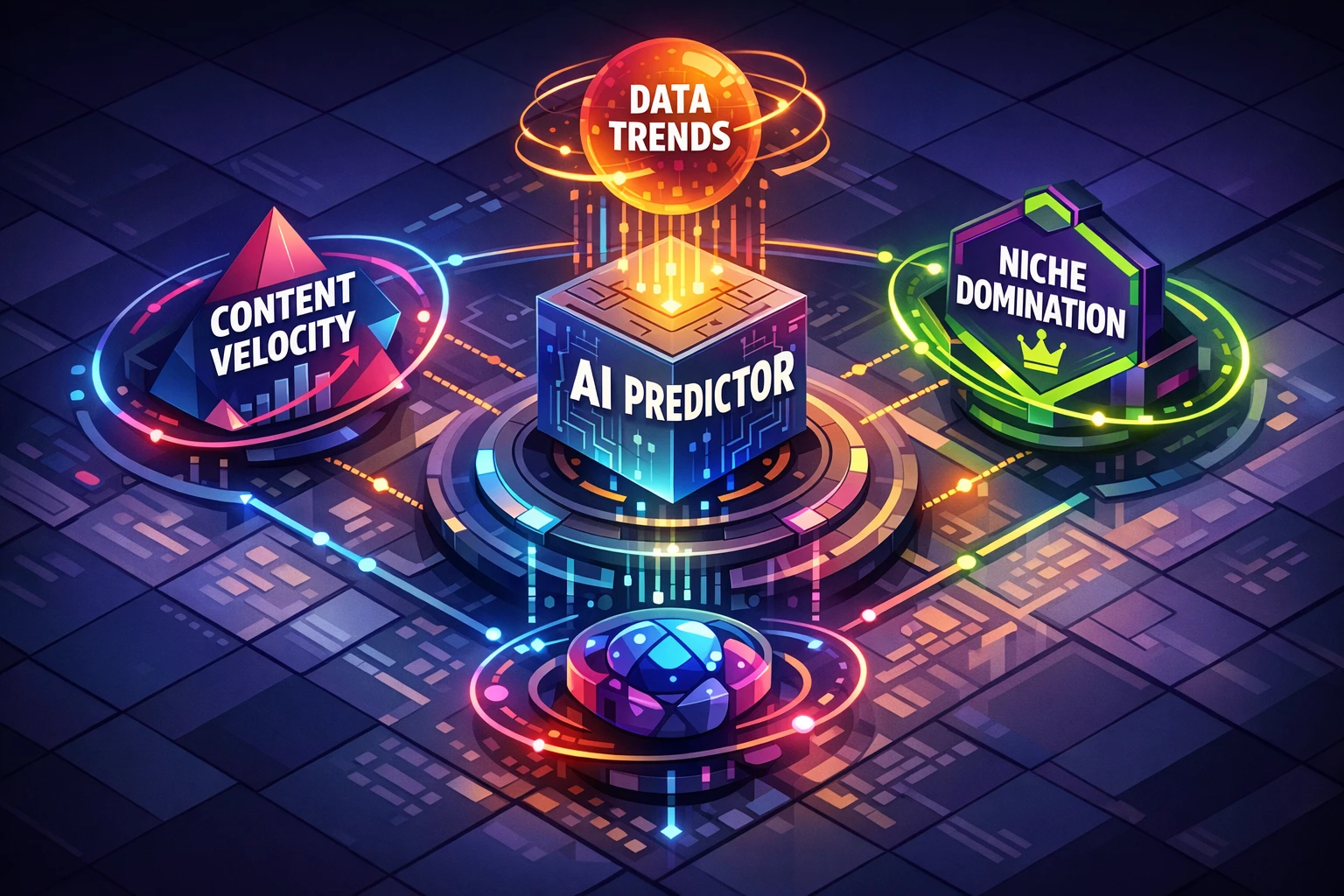
The Core Concepts: A Simple Breakdown
Before we dive into the "how," let's get on the same page with the key ideas. You’ve likely heard these terms before, but their power comes from how they work together.
What is Predictive AI?
Forget the sci-fi robots for a moment. Predictive AI is a technology that analyzes historical and current data to find patterns and forecast future outcomes. Think of it like a super-powered weather forecaster, but for business trends. Instead of predicting rain, it can predict which topics will trend, how competitors will behave, and what your audience will want to read next. It finds the hidden relationships in data that we humans might miss.
What is Content Velocity?
Content velocity is more than just publishing frequency. It's a measure of the strategic speed and momentum of your content engine. It includes three key elements:
- Speed: How often you publish new content.
- Scope: The breadth and depth of the topics you cover.
- Iteration: How frequently you update and refresh existing content to keep it relevant.
A high content velocity means you are consistently and strategically covering your niche from all angles.
What is Niche Domination?
Niche domination means your brand is the first one people think of and find when they have questions about a specific topic. It isn't about being the biggest company. It's about being the most visible, trusted, and authoritative voice in your chosen area. Success is measured by top search rankings, high organic traffic for your core topics, and your content being the benchmark others refer to.

Building Your Predictive Model: The Essential Ingredients
A predictive model is only as smart as the data it learns from. To forecast your ideal content velocity, you need to feed the AI the right information. This isn't about having "perfect" data. It's about having the right data.
Data: The Fuel for Your AI Engine
Your AI needs a comprehensive view of the battlefield. The key data points include:
- Competitor Velocity: How often are your top competitors publishing? What formats are they using? How quickly do they jump on new trends?
- Audience Demand: What questions are your potential customers asking? What are the search volumes for key topics? What conversations are happening on social media and forums?
- Market Trends: Are there emerging sub-topics or technologies in your niche? Is interest in certain areas growing or declining? Tools that analyze search trends over time are crucial here.
- Keyword Saturation: How difficult is it to rank for your target keywords? A highly competitive keyword landscape requires a more aggressive velocity.
- Your Own Performance Data: Which of your articles have performed best? What topics generate the most engagement? Your own history provides a valuable baseline.
An effective AI SEO Strategist combines these inputs to see the full picture, moving beyond simple keyword research into comprehensive market intelligence.
Predictive Models for Content Strategists
You don't need a Ph.D. in data science to understand the concepts. Most predictive models for content fall into a few categories:
- Time-Series Forecasting: This model analyzes data over time to predict future trends. It’s perfect for forecasting when a topic’s popularity will peak or decline, helping you decide when to publish.
- Regression Analysis: This helps you understand the relationship between variables. For example, it could determine the relationship between the number of articles published per month and the growth in organic traffic, helping you find the point of diminishing returns.
- Clustering: This AI technique groups similar items together. For content, it can be used to segment your audience based on their behavior or group related keywords into strategic topic clusters that you need to cover.
These models work together to answer the ultimate question. Based on the competitiveness of the niche and the demand of the audience, what is the optimal content velocity required to win?
From Prediction to Action: Calculating Your Content Velocity
Once the AI model has analyzed the data, it doesn't just give you a magic number. It provides a strategic roadmap. For instance, the model might reveal that to dominate the "AI for small business" niche, you need to:
- Publish two in-depth guides per month on foundational topics.
- Produce one case study every week showcasing real-world success.
- Post three short-form articles or social media updates daily to capture trending conversations.
- Refresh your top five performing articles every quarter.
This isn't just a content calendar. It's a precise, aggressive plan designed for one purpose: rapid market capture. This approach ensures your content is not just created, but that the content tuned for ai and search engines recognizes your momentum and authority.
The "aggressive" part is defined by the model itself. It calculates the velocity needed to surpass the growth rate of current leaders, allowing you to close the authority gap much faster than with traditional methods.
Advanced Strategies: Mastering Dynamic Velocity
The real power of a predictive approach is its ability to adapt. Your market is not static, and your content strategy shouldn't be either.
The AI-Human Collaboration
A common myth is that AI is here to replace human strategists. This couldn't be further from the truth. Predictive AI is a powerful tool, but it lacks human intuition, creativity, and strategic oversight. The AI provides the data-driven forecast, and the human strategist interprets it. You decide which creative angles to take, how to inject your brand's unique voice, and when an emerging cultural trend might override a data point. This collaboration is where the magic happens, and it's essential for developing effective ai seo solutions for small businesses and enterprises alike.
Real-Time Adjustments and Scaling
Your AI model shouldn't be a one-time setup. It should continuously analyze new data and provide feedback.
- Is a new competitor entering the market? The model might recommend a temporary increase in velocity to defend your position.
- Is a new sub-niche emerging? The AI can flag this opportunity, allowing you to be the first to create content and establish authority.
- Is a topic becoming oversaturated? Your model might advise pivoting resources to a different content cluster with higher potential.
This dynamic approach turns your content strategy into a living, breathing system that constantly optimizes for niche domination.

Your Path to Niche Domination Starts Now
The era of guessing at content frequency is over. The digital landscape is too competitive for strategies based on hope. By leveraging predictive AI, you can build a content engine with purpose, precision, and the power to achieve rapid dominance. You can know exactly how fast you need to move to not just join the conversation, but to lead it.
This is more than just creating content. It's about creating a strategic advantage that your competitors won't see coming. It’s time to stop shouting into the void and start building your authority with surgical precision.
Frequently Asked Questions
What is predictive AI in simple terms?
Predictive AI is a type of artificial intelligence that uses existing data to find patterns and make educated guesses, or forecasts, about future events. For content, it can help predict which topics will become popular or how much content you need to publish to rank well in search engines.
Do I need a huge amount of data to start with predictive AI?
No, you don't need perfect or massive datasets to begin. You can start with what you have, such as your website's performance data, basic competitor analysis, and keyword research. The AI models become more accurate over time as they are fed more data.
Is this just about publishing more content faster?
Not at all. It's about publishing smarter. Predictive AI helps you determine the right velocity, which includes speed, topic scope, and content updates. Sometimes, the recommendation might be to focus on refreshing old content or targeting a specific sub-niche, rather than just increasing volume.
Can predictive AI replace my content strategy team?
Absolutely not. Predictive AI is a powerful tool that enhances human expertise. It handles the heavy lifting of data analysis and forecasting, which frees up your team to focus on what they do best: creativity, storytelling, and strategic decision-making. It's a collaboration, not a replacement.
How is this different from traditional keyword research?
Traditional keyword research tells you what people are searching for now. Predictive AI goes a step further by forecasting which keywords and topics will grow in demand, how competitive they will become, and what content velocity is needed to capture that demand before others do. It's the difference between looking at a map and having a GPS that predicts traffic.
---
Sources:
- IBM - Provided foundational definitions and business use cases for predictive AI.
- Salesforce - Offered clear explanations on how predictive AI works and distinguishes it from other AI types.
- Shelf.io - Gave practical insights into applying AI for predictive analytics in a business context.
- NetSuite - Highlighted common challenges in predictive analytics, such as data quality and integration.
- Milvus.io - Detailed common pitfalls in predictive analytics projects, which informed the need for a human-AI collaborative approach.
- Cooler Insights - Explored the specific application of predictive AI within content strategy and marketing.