The Subtle Art of the Offer: How to Turn LinkedIn Authority into Qualified B2B Leads
AI Summary
Turning LinkedIn authority into qualified B2B leads requires mastering the subtle balance between soft and hard offers to build trust while driving conversion. This approach uses the Authority First Framework's 70-15-15 content ratio to strategically place offers that nurture leads at every trust level.
- How soft offers like checklists and webinars deepen engagement without high commitment
- Why hard offers like demos work only after trust and authority are firmly established
- Metrics to measure lead quality beyond clicks including ICP fit and sales readiness
This guidance is perfect for marketers frustrated by engagement without qualified conversations and seeking a reliable way to convert LinkedIn authority into meaningful B2B sales dialogues.
You post insightful content on LinkedIn. You get likes, comments, and the occasional "Great post!" in your DMs. You are building authority. But your pipeline is not growing. The engagement feels good, but it does not translate into qualified conversations with potential buyers.
This is the most common frustration in B2B marketing on LinkedIn. The gap between being seen as an expert and being hired as one feels enormous.
The problem is not your authority. It is your offer. The common advice to just "provide value" misses the critical next step: creating a bridge from education to consideration. This article provides that bridge. The core argument is this: converting authority into leads requires a disciplined approach to making offers, one that carefully balances low-commitment "soft offers" with high-commitment "hard offers." Get this balance right, and you create a natural path for your best followers to become your best clients.
The old playbook of mass connection requests and generic pitches is dead. LinkedIn’s algorithm now rewards authentic engagement and quality content over sheer volume [1]. To succeed, you need a system that builds trust first. One effective model is the "Authority First Framework," which recommends a specific content mix to build credibility before you ever ask for a sale [2].
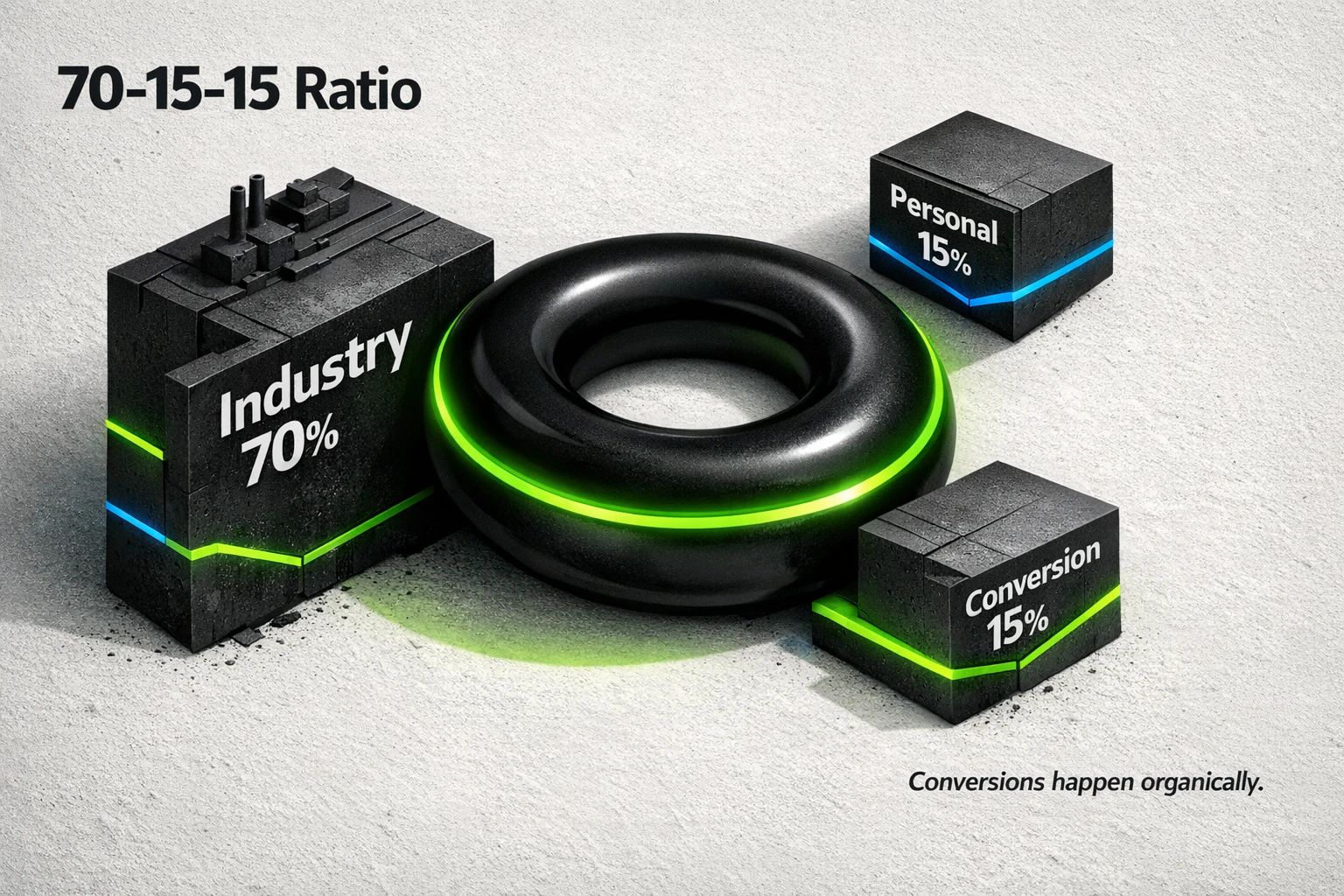
The Authority First Framework uses a 70-15-15 mix—industry, personal, and conversion content—so offers show up in a small slice of your output without undermining authority.
This framework dedicates 70% of your content to industry insights, 15% to personal stories that build connection, and only 15% to conversion-focused content. Your offers live inside that final 15%. This structure ensures you are building trust 85% of the time, earning you the right to make an offer. Understanding this structure is especially vital as newer platform dynamics, like the one some call the 360 brew, continue to prioritize authority-first content to boost engagement.
Deconstructing the Offer: Soft vs. Hard
Not all offers are created equal. Trying to push a "Book a Demo" link on an audience that barely knows you is like proposing on a first date. It is too much, too soon. You need to match your offer to the level of trust you have built. This is where the distinction between soft and hard offers becomes your most powerful tool.
Soft Offers are low-friction, high-value invitations. They ask for attention, not commitment. The goal is to deepen the relationship, provide a tangible piece of your expertise, and identify who in your audience is genuinely interested in your topic.
- Examples: A free checklist, a link to an ungated case study, a template, an invitation to a free webinar, or even just asking a question in your post to start a conversation in the comments.
Hard Offers are direct and ask for a significant commitment of time or resources. They are designed for prospects who have already recognized their problem and see you as a potential solution. These are sales-qualified actions.
- Examples: "Book a consultation," "Request a quote," "Start a free trial," or "Schedule a demo."
The objective is not simply to generate more leads. It is to generate better ones by letting prospects qualify themselves based on the type of offer they engage with. Someone who downloads a checklist is curious. Someone who books a demo is serious.
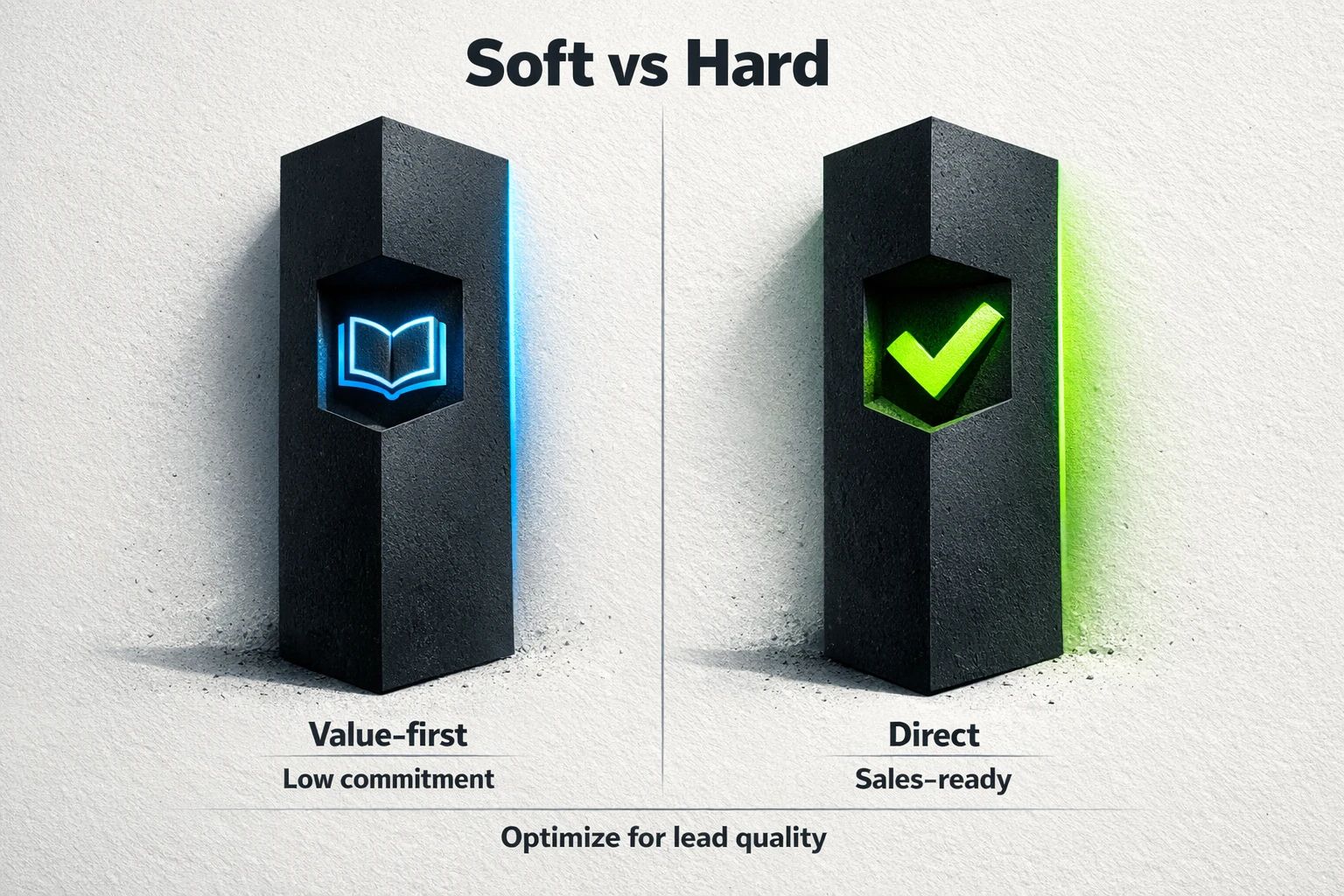
Soft offers lower friction and build engagement depth; hard offers ask for direct commitment when sales readiness is higher. The goal isn’t more leads—it’s better-qualified ones.
The Subtlety Scale: Matching Your Offer to Your Authority
The type of offer you can successfully make is directly proportional to the authority you have built with your audience. Think of it as a sliding scale.
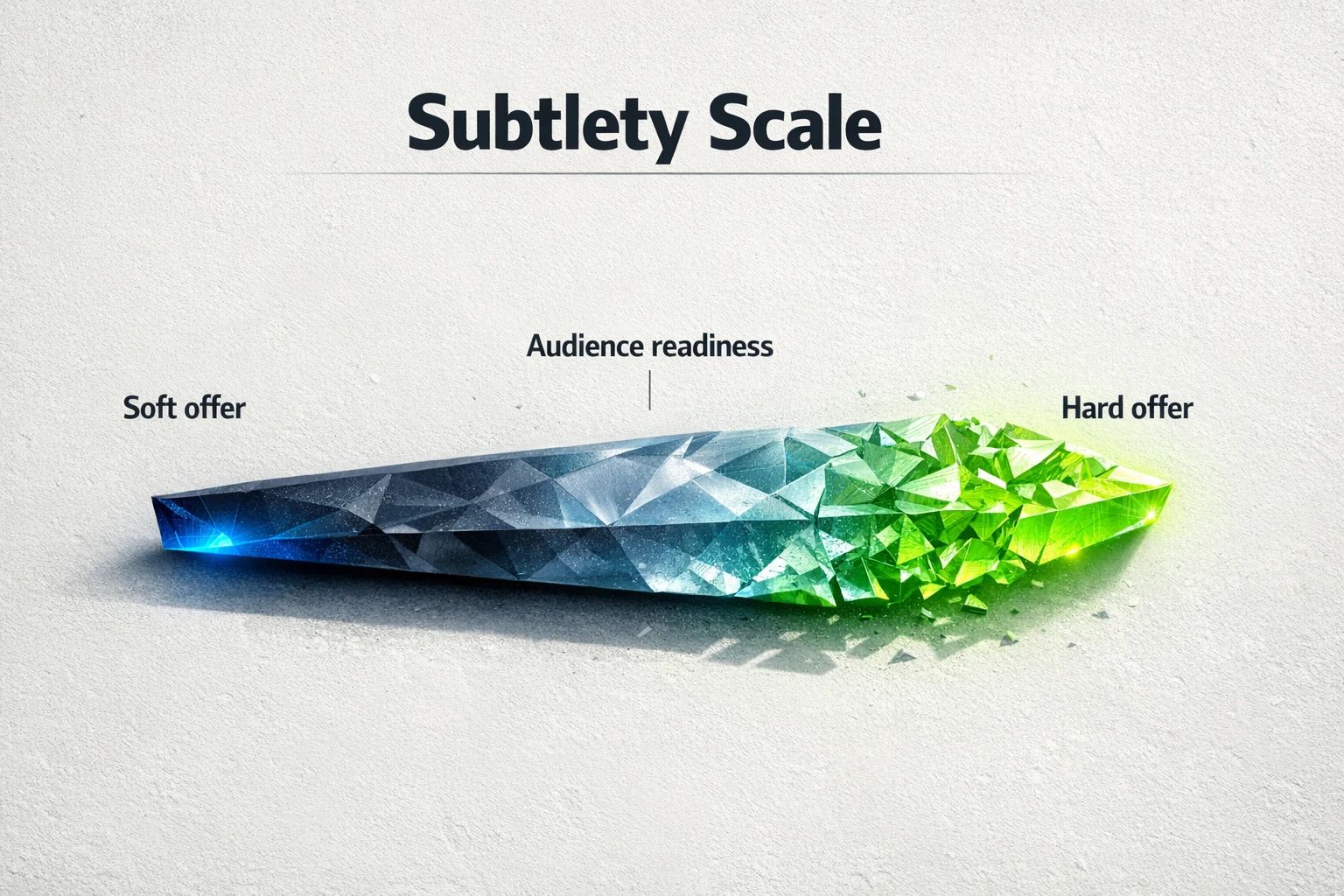
Offer design is a spectrum: the more authority and trust you’ve built, the more direct your offer can be—without breaking the authority-first feel.
When you are new to a topic or your audience is still getting to know you, your offers must be almost exclusively soft. You are in the trust-building phase. Your primary goal is to prove your expertise, not to close a deal. A hard offer at this stage feels jarring and transactional, undermining the very authority you are trying to build.
As you consistently share valuable insights and engage with your audience, your authority grows. Your followers see you as a credible expert. At this point, you have earned the right to make harder offers. Because you have delivered so much value upfront, a direct call to action feels like a natural next step, not an unwelcome sales pitch. This shift is critical because today's B2B decision-makers, a group increasingly composed of Gen Z and Millennials, place more trust in creators and experts than in traditional advertising [3]. Your authority is your currency.
Optimizing for Qualified Leads, Not Just Clicks
The ultimate goal of this strategy is not to maximize downloads or form fills. It is to maximize the number of conversations with people who are a perfect fit for your business. This requires a shift in how you measure success.
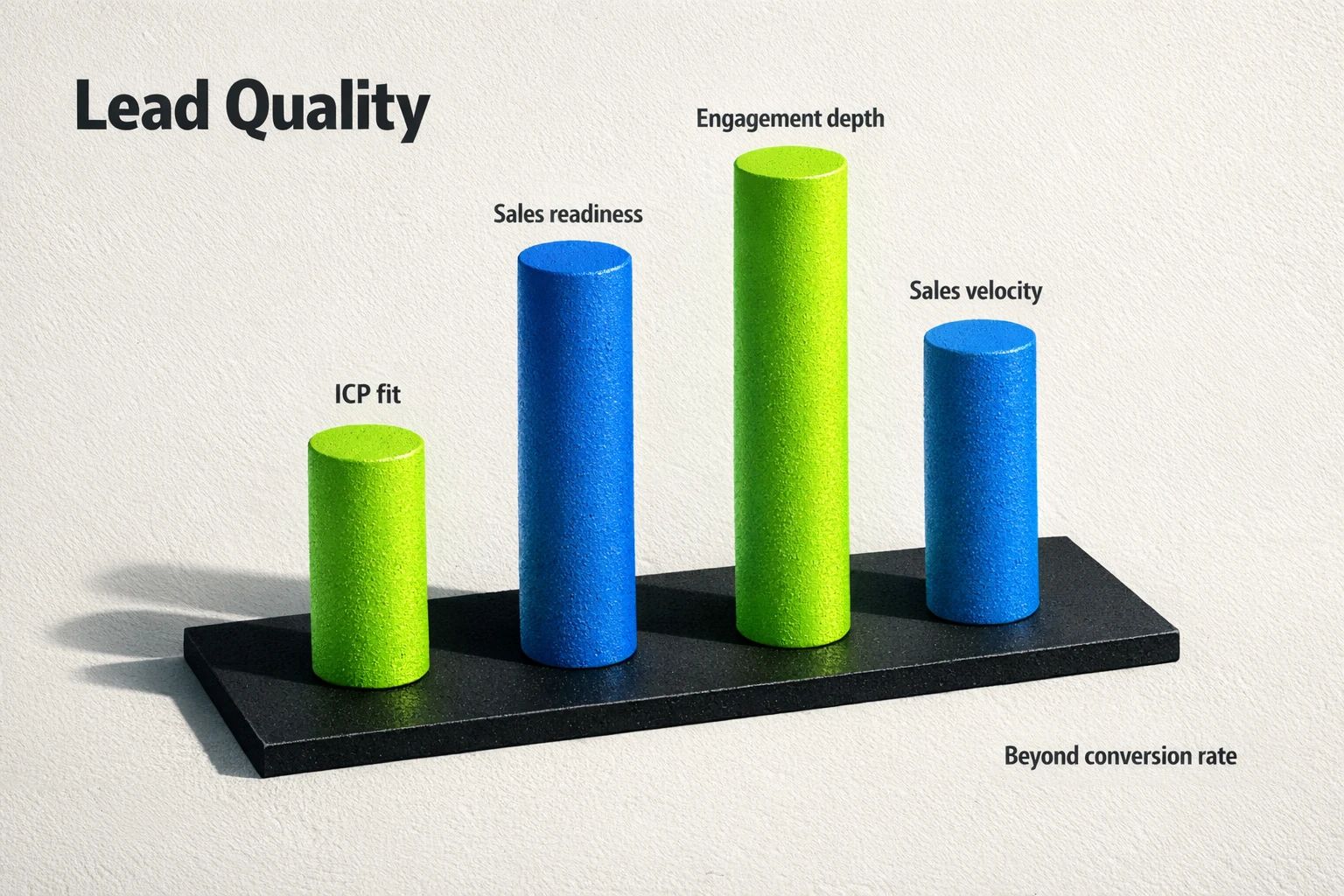
Qualified leads aren’t just conversions. Track ICP fit, sales readiness, engagement depth after the offer, and sales velocity to see whether your LinkedIn offers attract the right buyers.
Instead of just tracking conversion rates, focus on these lead quality metrics:
- ICP Fit: Of the people who engage with your offer, what percentage matches your Ideal Customer Profile? A soft offer can attract a wide audience, but a well-designed one will resonate most strongly with your target buyers.
- Sales Readiness: Does the lead's behavior indicate they are ready for a sales conversation? Someone who engages with a hard offer is signaling high intent.
- Engagement Depth: After someone takes your offer, do they disappear or do they engage further? A qualified lead might reply to your follow-up email or view your pricing page.
- Sales Velocity: For leads that enter the pipeline, how quickly do they move from initial contact to closed deal? High-quality leads, sourced from high-authority content, often close faster because trust is already established.
To improve these metrics, you must be systematic. A/B test your offers. Does a "Free Consultation" (hard) perform better than a "Custom Audit Request" (hard, but more value-focused)? Does a "Strategy Checklist" (soft) generate higher-quality conversations than a "Webinar Replay" (soft)? Track the results not in a spreadsheet of vanity metrics, but in the quality of the conversations that land in your inbox.
Stop separating "content marketing" from "lead generation." On LinkedIn, they are the same discipline. By mastering the subtle art of the offer, you build a reliable system that turns your hard-won authority into your most valuable asset: a steady stream of highly qualified B2B leads.
Your next step is simple. Review your last ten LinkedIn posts. Identify where you could have placed a low-friction soft offer. For the next two weeks, commit to including one relevant soft offer in every other post. Do not focus on the clicks. Focus on the conversations they start.
Frequently Asked Questions
How often should I make an offer on LinkedIn?
Follow the 70-15-15 principle. Only about 15% of your posts should contain a direct, conversion-focused offer. This means roughly one or two posts out of every ten. You can include very light soft offers, like asking a question, more frequently, as this drives engagement.
What is the best soft offer to start with?
A simple, one-page PDF checklist or template is often the most effective starting point. It is easy to create, provides immediate value, and clearly demonstrates your expertise without asking for much in return.
Should I gate my soft offers behind an email signup form?
It depends on your goal. If your primary goal is to build an email list, then yes. If your goal is to reduce friction and maximize engagement on LinkedIn to build authority, provide the resource without a gate. You can ask people to comment on the post to receive the link, which dramatically increases the post's visibility.
My hard offers are not converting. What should I do?
This usually indicates one of two problems. First, you may not have built enough authority yet, so the audience does not trust you enough for a high-commitment step. Focus more on soft offers and building value. Second, your offer itself may not be compelling enough. Instead of "Book a Call," try something with a more tangible outcome, like "Book a 15-Minute Pipeline Analysis."
Sources:
- 100 Pound Social - An overview of shifts in the LinkedIn algorithm and B2B lead generation tactics.
- Via Marketing - This source introduces the Authority First Framework and the 70-15-15 content ratio.
- LinkedIn - Provides expert analysis on B2B marketing trends, including the rising influence of creators with younger decision-makers.