Your LinkedIn Headline Is a 3-Word Test. Are You Passing?
AI Summary
Your LinkedIn headline's first three words determine if your ideal clients recognize you instantly or scroll past. This quick filter uses self-relevance and cognitive fluency to catch attention fast.
- Why placing your ICP's identity or problem first outperforms generic job titles
- How LinkedIn's algorithm weighs your headline for profile visibility
- Common mistakes like vague titles that repel potential clients
Optimize these words to boost connection rates and quality leads. For professionals wanting to turn profile visits into meaningful opportunities.
A potential client lands on your LinkedIn profile. You have three seconds. Their eyes dart from your photo to your name, then to the first few words of your headline. In that single glance, they decide. Are you relevant, or are you just more noise in their feed? This is the invisible gatekeeper of your LinkedIn success. Your entire strategy hinges on whether you pass this initial test.
Most people treat their headline like a resume entry, a simple statement of their job title. This is a mistake. Those first few words are the most powerful signal you can send to attract your Ideal Customer Profile (ICP). Get them right, and you filter for perfect-fit clients before they even click. Get them wrong, and you are invisible to the very people you need to reach.
Why Your First Words Carry All the Weight
Your headline is the most valuable real estate on your profile, and it is not even close. It follows you everywhere on the platform. It shows up in search results, connection requests, comments, and shares. It is your personal billboard. Treating it as an afterthought is like buying a billboard and leaving it blank.
The platform itself tells you where to focus your energy. LinkedIn's algorithm gives your headline three to ten times more weight than your About section when determining your relevance in search [1]. This means a small change to your opening words can have a massive impact on who finds you. The core job of your headline is to both attract and repel. You want to be a magnet for your ICP and a clear "not for you" sign for everyone else. This efficiency is the secret to a high-performing profile.
The Psychology of the First Glance: How Your ICP's Brain Works
To win the 3-second test, you have to understand how people read online. We do not read word for word. We scan. Research shows our eyes often move in an F-pattern, focusing heavily on the top and left side of the page. This means your profile picture and the first few words of your headline receive a disproportionate amount of attention.
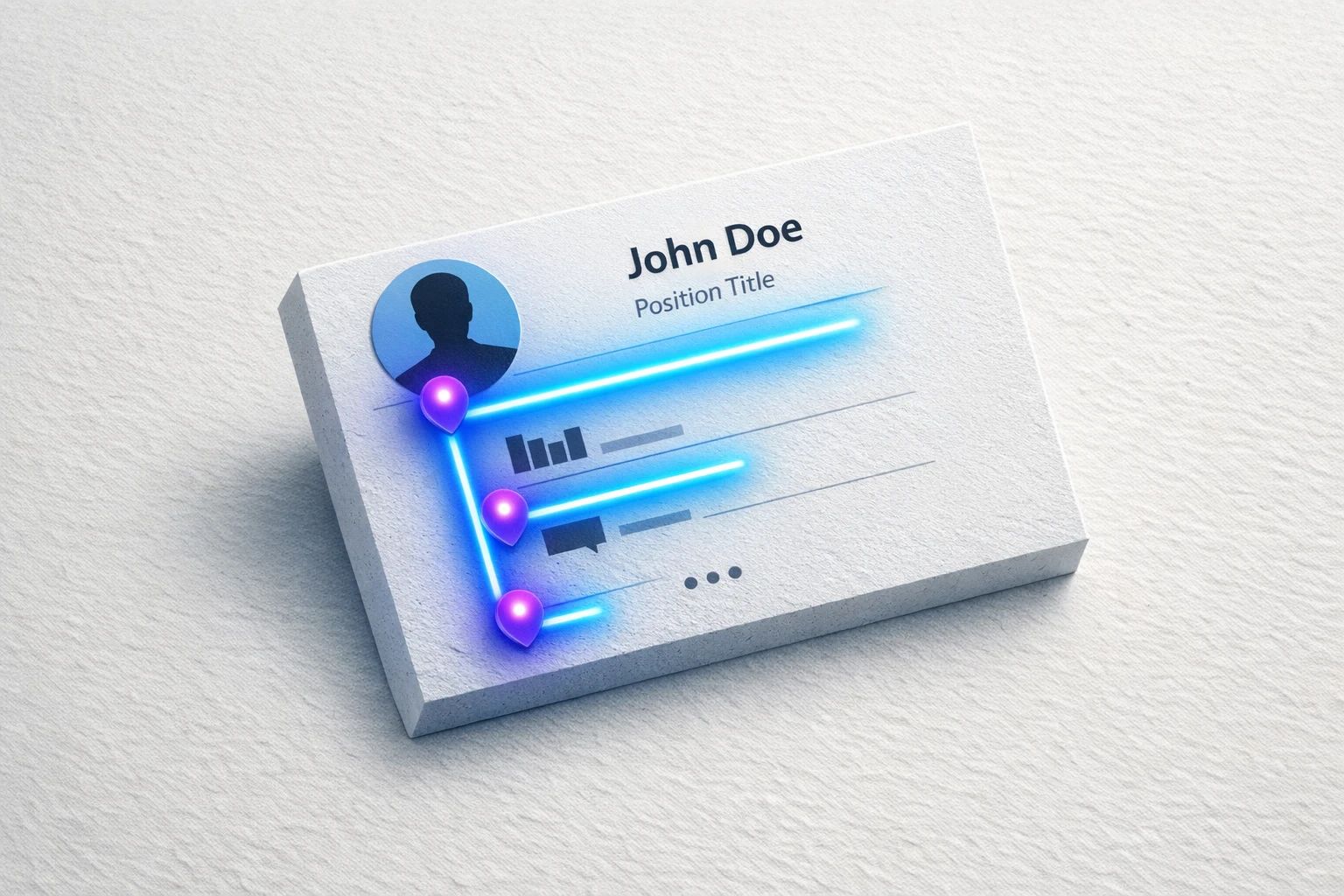
This is where cognitive science comes into play. Two principles are critical. The first is self-relevance. We are biologically wired to pay attention to things that are about us or our problems. The second is cognitive fluency. Our brains prefer information that is simple and easy to process. Your headline must leverage both. The first three words should state your target's identity or problem to trigger that feeling of self-relevance and do it in language they instantly understand [2].
A Simple Framework for Your First 3 Words
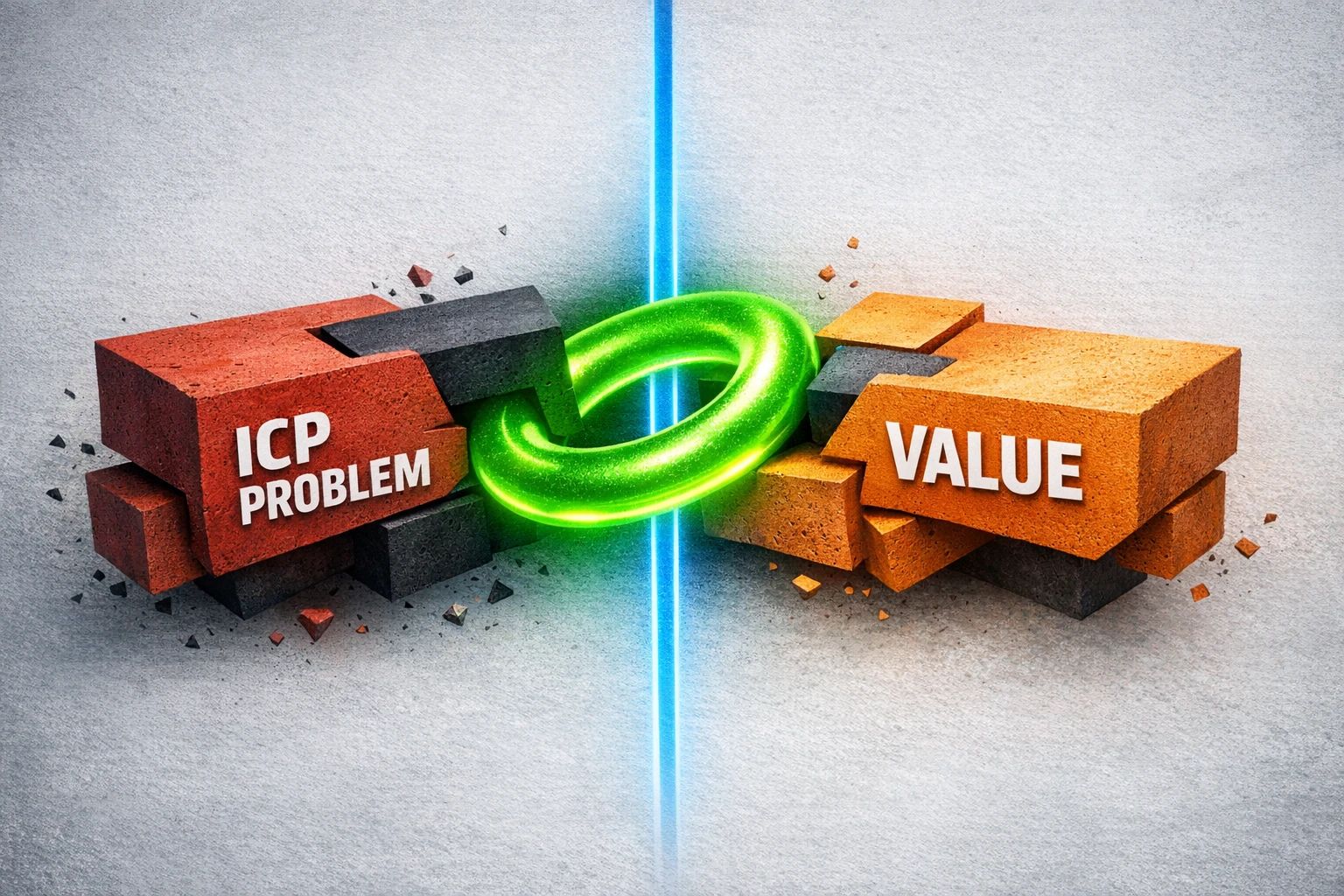
Stop describing your job. Start describing who you help. The goal is to make your ICP feel seen and understood immediately. A generic title like "Marketing Director" fails this test. A specific opener like "Helping B2B Founders..." passes with flying colors.
Here is a simple framework to get you started: [Who You Help] | [What You Do For Them].
Think of it this way.
- Instead of: "Sales and Business Development"
- Try: "Helping SaaS Companies..."
- Instead of: "Founder and CEO at Acme"
- Try: "Fractional CMO for..."
- Instead of: "Content Marketing Specialist"
- Try: "Driving Organic Traffic..."
This process requires you to think like an SEO intelligence agency would. They do not guess which keywords rank. They do deep research to find what customers are actually searching for. You must do the same for your headline. What are the exact words your ideal customer uses to describe their role, their company, and their biggest challenges? Put those words first.
Don't Make These 3-Word Mistakes
The most common headline mistakes happen right at the beginning, sabotaging your profile before it has a chance.
- The Vague Job Title. "Account Executive" or "Project Manager" tells a visitor nothing about the value you provide or who you provide it for. It forces them to do the work of figuring out if you are relevant. They will not.
- The Fluffy Buzzword. Opening with words like "Passionate," "Innovative," or "Results-Driven" is a waste of critical space. Many professionals use vague language like "Passionate about re-imagining employee experience," which fails because it does not match how your ideal clients search for solutions [3].
- The Company-First Opener. "VP of Marketing at XYZ Corp" centers your employer, not your client. Your prospect cares about their problem, not your org chart. Lead with the problem you solve for them.
Connect Your Headline to Real Results
Fixing your first three words is not a vanity project. It is a conversion optimization strategy. When your headline instantly resonates with your ICP, you see a cascade of positive effects. You get more relevant connection requests. Your messages get higher response rates. The sales conversations you have are with better-qualified leads.
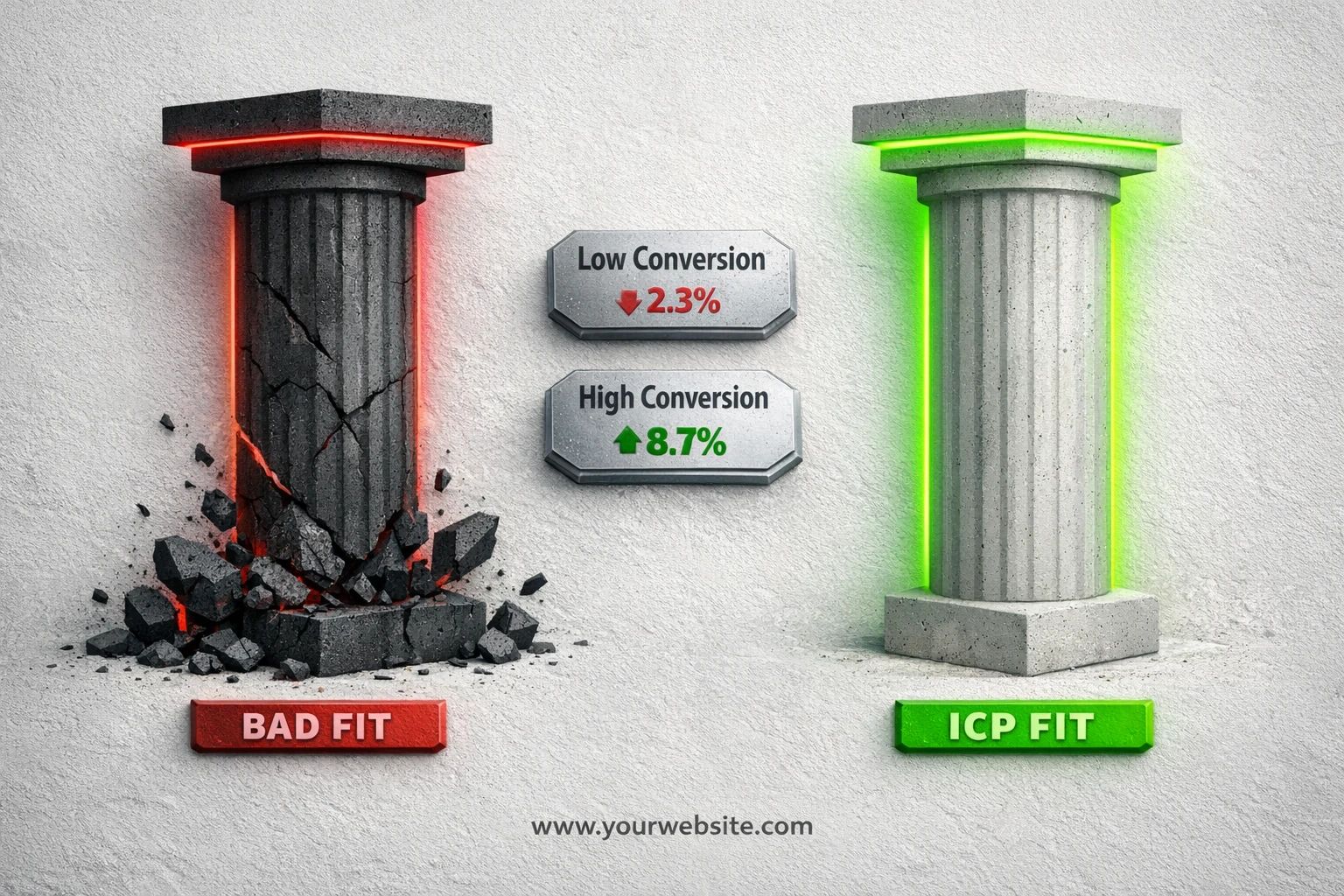
This is not speculation. The data shows that including ICP-aligned messaging can increase profile follow growth by a staggering 52% among senior decision-makers [4]. This happens because you are signaling relevance at every touchpoint, which is exactly what algorithms are designed to reward. A strong headline is the critical first step. Turning that attention into a qualified sales funnel is the goal, and while an AI platform for LinkedIn thought leadership pipeline generation can help you scale that process, it all starts with getting the hook right. Staying on top of how the core platform works, such as understanding the nuances of its engagement logic sometimes called the 360brew algorithm, is essential for making sure your perfectly crafted message gets seen.
Your Next Step: Get Your Headline Scored
You now understand the theory behind a powerful LinkedIn headline. You know why the first three words are a critical filter and how to structure them for instant ICP recognition. But theory is one thing. Practice is another.
It is time to put your own headline to the test. We built a free assessment to analyze your headline's effectiveness in seconds. It provides instant feedback on ICP alignment and conversion potential. Stop guessing if your headline works. Get the data.
See if your first three words are attracting the right clients or making you invisible. Get your free, instant analysis at pagebody.ai/linkedin-assessment.
Frequently Asked Questions
Should I put my job title in my headline?
Yes, but usually not first. Frame it with who you help. For example, instead of "Senior Account Executive," try "Helping Finance Teams Automate | Senior Account Executive." This leads with value to the ICP, then provides your formal role for context.
How often should I change my LinkedIn headline?
Change it whenever your primary value proposition or target audience changes. If those are stable, consider testing a new variation once per quarter to see if you can improve your connection and response rates.
Are emojis in the headline professional?
They can be, if used sparingly and strategically. A single, relevant emoji (like a rocket for a growth-focused role) can break up text and draw the eye. However, it must align with your personal brand and your ICP's expectations. When in doubt, leave it out.
Sources:
- Pursue Networking - Analysis of how LinkedIn's search algorithm weights different profile sections.
- LiGo Social - An exploration of the cognitive principles behind effective LinkedIn headlines.
- The Intuitive Writing School - Insights into common mistakes and psychological aspects of headline writing.
- M1-Project - Data on the impact of ICP-aligned messaging on LinkedIn engagement.