Strategic AI Roadmapping: Navigating Future Business Disruption
AI Summary
Strategic AI Roadmapping is essential for businesses aiming to thrive amidst technological disruption by creating adaptive, value-driven AI strategies.
Bottom Line:
This guide helps you develop a flexible AI roadmap aligned with business goals to gain competitive advantage and longevity.
What You'll Learn:
- How to prioritize AI initiatives based on business impact
- Ways to foster an AI-ready culture for innovation
- Approaches to implement dynamic governance and scalable infrastructure
Best For:
Business leaders and strategists seeking practical guidance to integrate AI successfully and sustainably.
You’ve read the reports and heard the keynotes. The message is clear: every business needs an AI strategy. Yet, the path from acknowledging this reality to building a resilient, effective roadmap is often foggy. Most advice feels too abstract or too tied to a specific technology, leaving you to connect the dots between high-level theory and the practical realities of your business.
The truth is, a static AI strategy document is obsolete the moment it's printed. In a landscape where capabilities evolve quarterly, not yearly, success depends on creating an adaptive framework. It's not about predicting the future with perfect accuracy. It's about building an organization that can pivot, integrate, and thrive amidst constant technological disruption. This guide provides a practical framework for developing that roadmap, moving you from evaluation anxiety to confident implementation.
Why a Static AI Strategy is a Recipe for Obsolescence
Traditional strategic planning, with its five-year outlooks, simply can't keep pace with AI's development. With AI adoption expected to have reached 72% across businesses in 2026, the question is no longer if you should adopt AI, but how you can integrate it in a way that creates a lasting competitive advantage. A rigid plan fails because it can’t account for the rapid emergence of new tools, evolving customer expectations, and shifting regulatory landscapes.
An adaptive AI roadmap, by contrast, is a living document. It's a strategic compass that sets a clear direction while allowing for tactical adjustments as the terrain changes. It prioritizes organizational readiness and continuous learning over a fixed set of technology implementations.
The Four Pillars of an Adaptive AI Roadmap
Building a future-proof AI strategy requires a balanced approach. It’s a common mistake to focus exclusively on technology while neglecting the cultural, ethical, and strategic foundations necessary for success. A truly effective roadmap rests on four interconnected pillars.
Pillar 1: Strategic Alignment Over Technology Chasing
The most effective AI strategies begin with business goals, not technology. Instead of asking "What can we do with generative AI?", a better question is "What are our most significant business challenges or opportunities, and how can AI help us address them?" This approach ensures that every AI initiative is directly tied to measurable outcomes, such as increasing market share, improving customer retention, or creating new revenue streams.
Prioritizing use cases becomes much simpler with this lens. You can map potential AI applications against their potential impact and feasibility, creating a clear path for initial projects that deliver tangible value. This builds momentum and secures stakeholder buy-in for more ambitious, long-term transformations. To do this effectively, you need a solid product ideation framework that helps identify where AI can create transformative value, not just incremental efficiency gains.
Pillar 2: Building an AI-Ready Culture, Not Just an AI-Ready Tech Stack
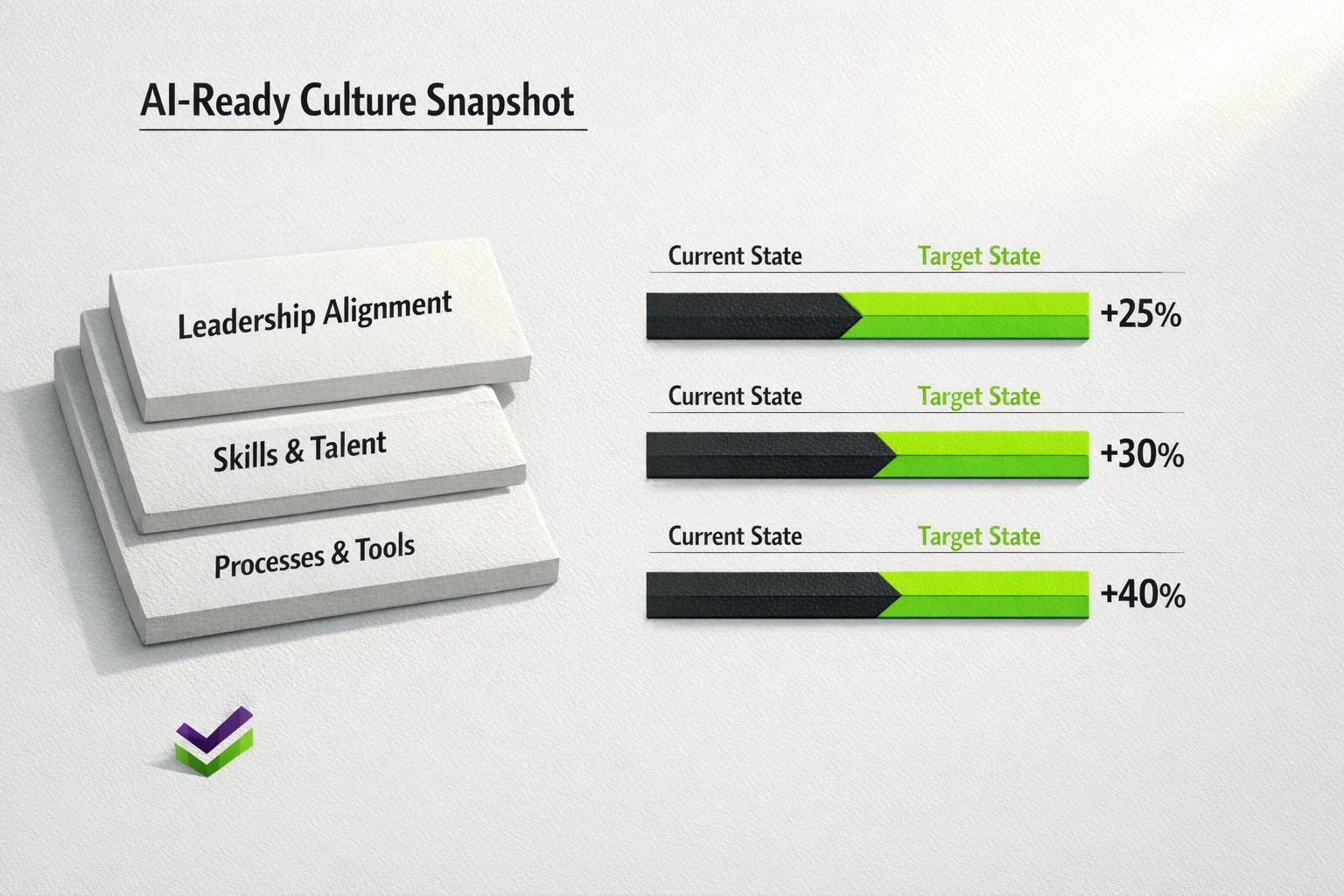
Technology is only an enabler. True transformation happens when your people are empowered to use it effectively. An AI-ready culture fosters curiosity, promotes data literacy across all departments, and provides psychological safety for experimentation. It's about shifting the mindset from viewing AI as a job replacement tool to seeing it as a collaborative partner that augments human capability.
This involves more than just offering training modules. It requires leaders to champion AI, communicate a clear vision for its role in the company's future, and create pathways for employees to develop new skills. Measuring the readiness of your organization is the first step toward building a culture where innovation can flourish.
Pillar 3: Dynamic Governance for a Fast-Moving World
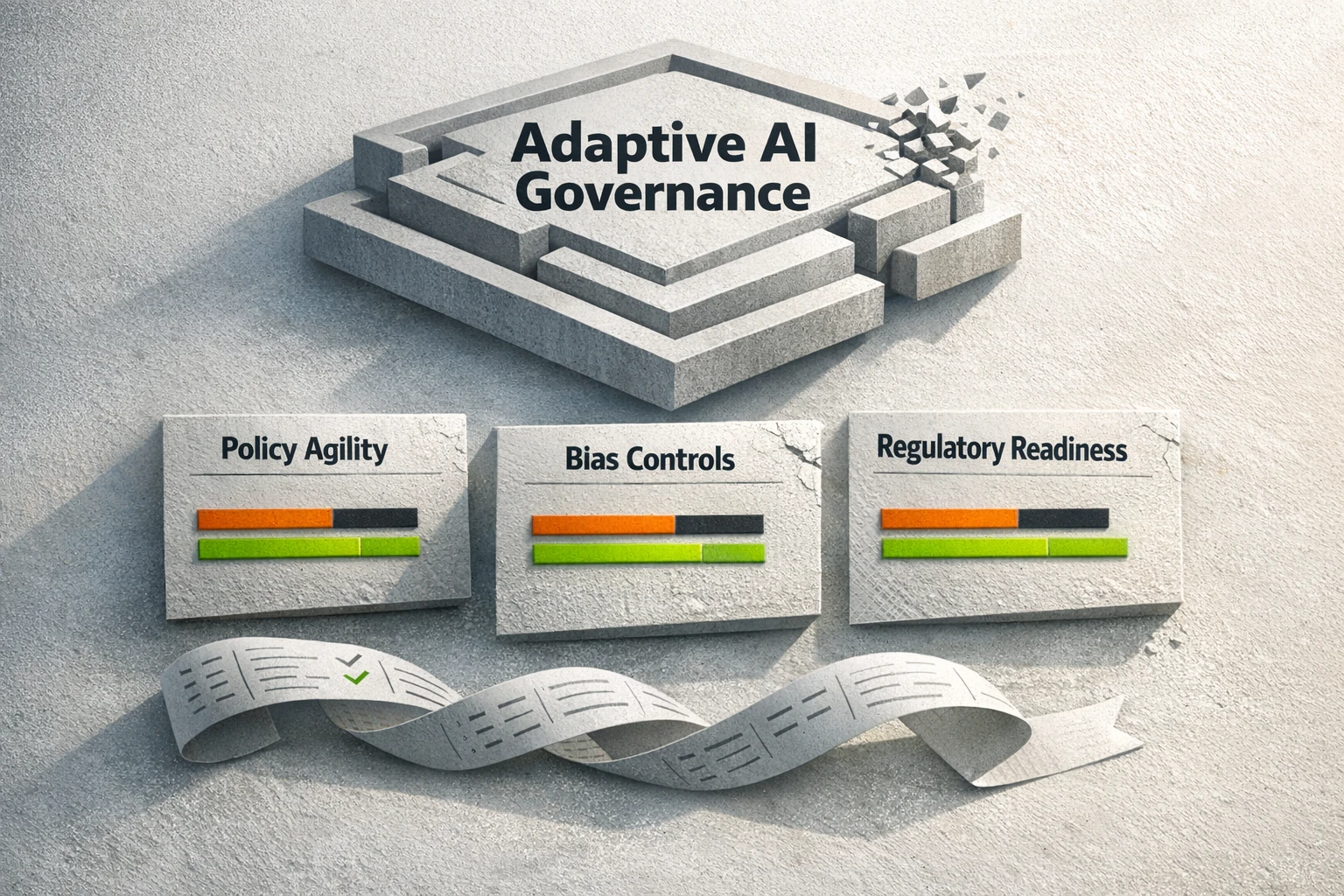
As AI becomes more integrated into core business processes, governance becomes non-negotiable. However, a rigid, bureaucratic approach can stifle the very innovation you're trying to foster. The key is dynamic governance, a framework that embeds ethical considerations, data privacy, and compliance directly into the AI development lifecycle.
This means establishing clear principles for responsible AI, creating oversight committees with cross-functional representation, and building adaptable policies that can evolve with new regulations like the EU AI Act. Proactive risk management is crucial for a successful small business AI implementation, ensuring you navigate potential pitfalls before they become major problems. Your governance model shouldn't be a roadblock. It should be a guardrail that enables you to innovate safely and responsibly.
Pillar 4: Scalable and Sustainable Infrastructure
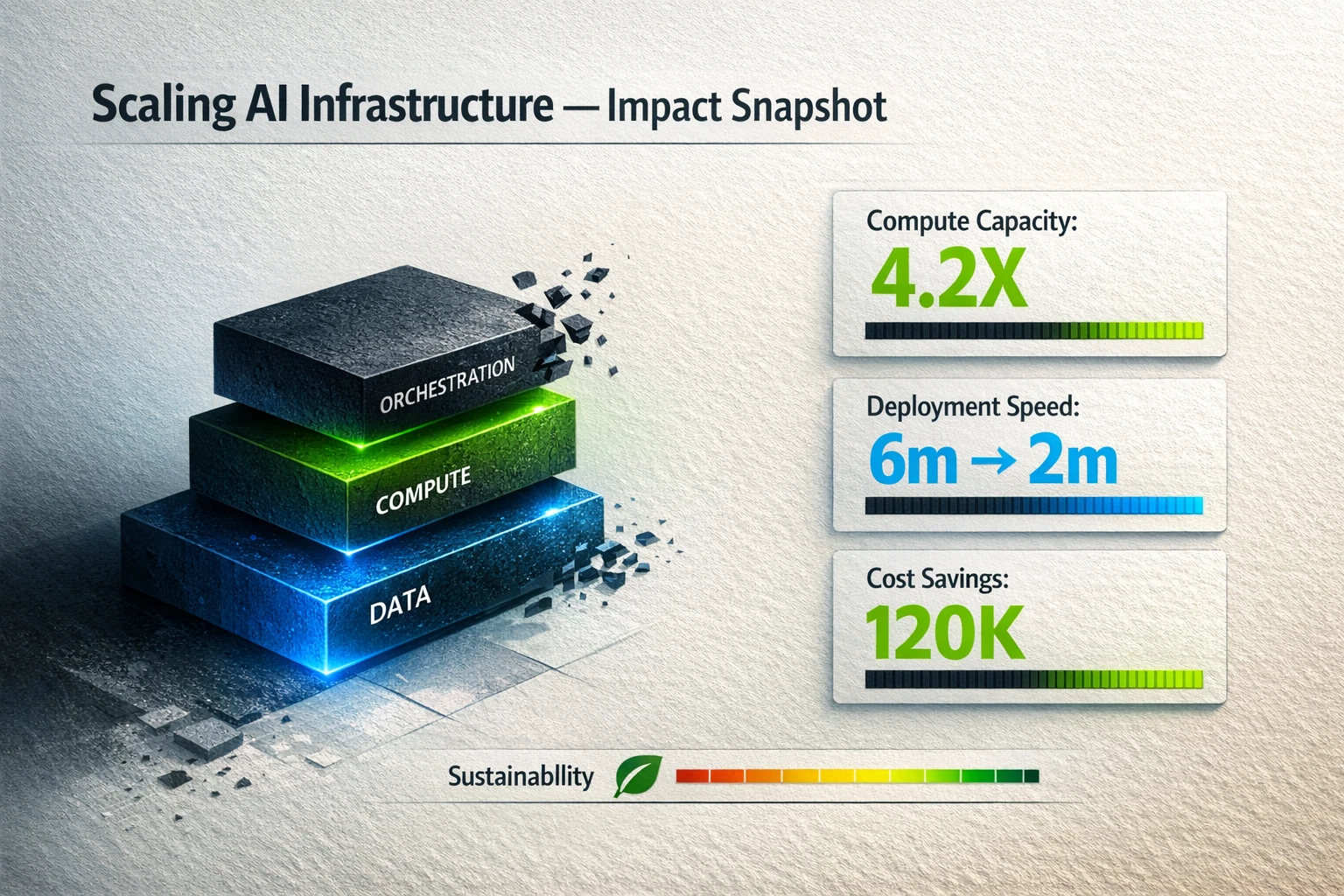
Your AI ambitions are only as good as the infrastructure that supports them. As you move from small-scale experiments to enterprise-wide deployment, your need for data storage, processing power, and specialized tools will grow exponentially. A forward-looking roadmap anticipates these needs, planning for a scalable architecture that can handle future demands without requiring a complete overhaul.
This pillar also increasingly involves sustainability. The energy consumption of large AI models is a significant and growing concern. Your strategy should include plans for cost optimization and energy-efficient operations. This isn't just about corporate responsibility. It's about ensuring the long-term financial viability of your AI initiatives. This is especially true for applications like creating content tuned for AI, where continuous model training can drive up costs if not managed efficiently.
Evaluating AI Partners: Moving Beyond the Feature Checklist
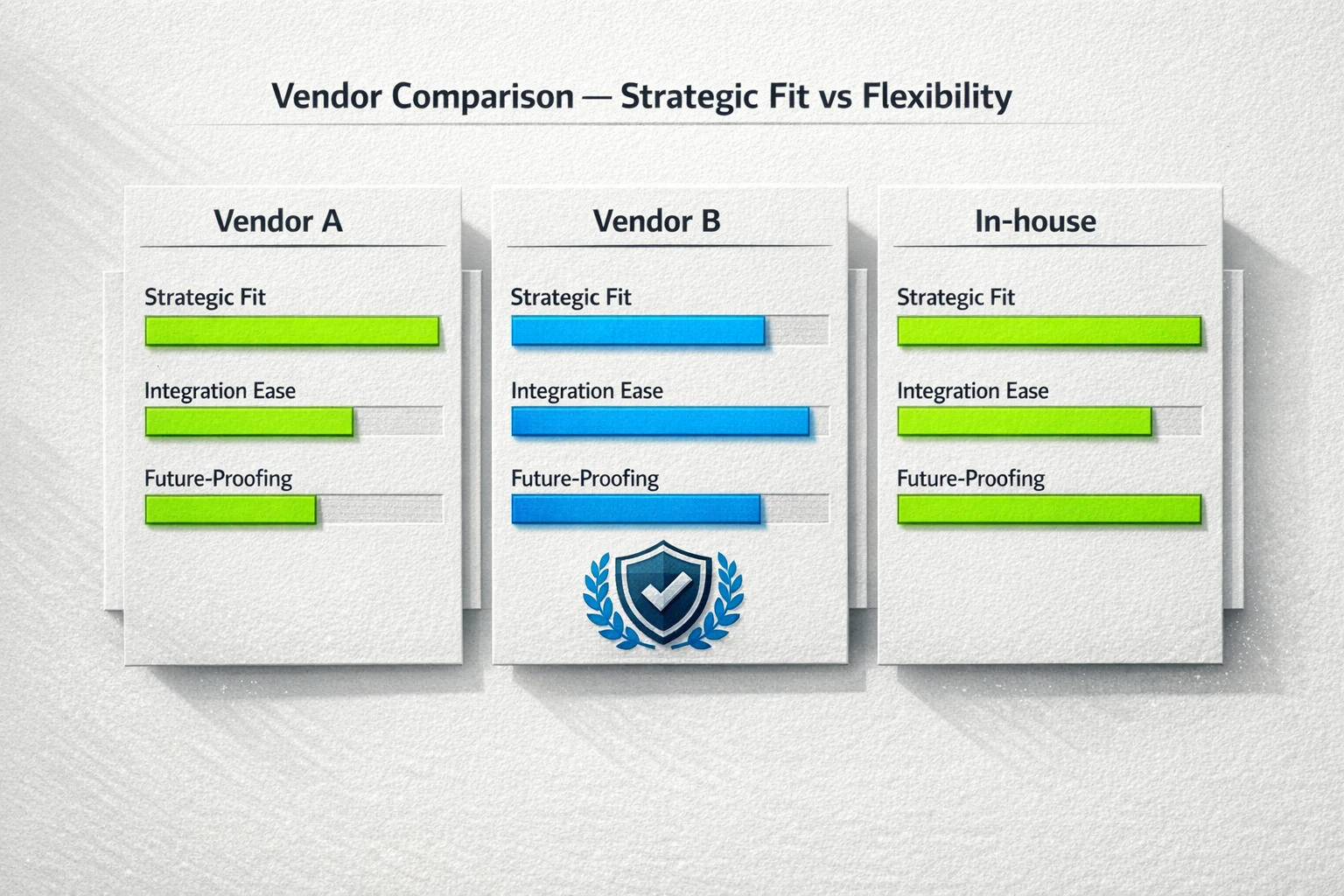
Choosing the right technology and implementation partners is one of the most critical decisions in your AI journey. As you evaluate your options, it's easy to get lost in comparing features. A more strategic approach focuses on three key areas: strategic fit, integration ease, and future-proofing.
- Strategic Fit: Does the partner understand your industry and your specific business challenges? A true partner acts as an advisor, helping you prioritize use cases that deliver the most impact, rather than just selling you their software.
- Integration and Deployment: How quickly can they get you to value? Look for partners who offer rapid deployment and can integrate seamlessly with your existing systems. The goal is to enhance your operations, not to force a costly and disruptive overhaul.
- Future-Proofing: Does their model allow for flexibility? Avoid getting locked into long-term contracts for a single technology. The best partners provide scalable, adaptable solutions and a clear roadmap for how their offerings will evolve to incorporate future AI advancements. We have reached the AI point of no return, and choosing an agile partner is essential for long-term success.
Frequently Asked Questions about AI Roadmapping
How do we start building an AI strategy with limited resources?
Start small and focused. Identify one or two high-impact, low-complexity business processes that are ripe for automation or augmentation. A successful pilot project can demonstrate clear ROI and build the business case for more significant investment. The goal is momentum, not a massive, enterprise-wide launch from day one.
What's the biggest mistake companies make in their AI strategy?
The most common mistake is treating AI as a technology project owned solely by the IT department. Without deep buy-in from business leaders and a focus on solving core business problems, AI initiatives are likely to fail or deliver underwhelming results. It must be a business-led, technology-enabled transformation.
How can we measure the ROI of AI, especially for cultural initiatives?
For process automation, ROI can be measured with traditional metrics like cost savings, time reduction, and error rate improvement. For cultural initiatives like AI literacy, look at leading indicators like adoption rates of new tools, employee engagement surveys, and the number of new AI-driven ideas generated by teams. Over time, these cultural shifts will translate into lagging indicators like improved innovation cycles and higher employee retention.
How often should we update our AI roadmap?
The strategic vision of your roadmap should remain relatively stable, but the tactical plan should be reviewed quarterly. This allows you to assess the progress of current initiatives, re-prioritize based on business needs, and incorporate new technological advancements that have become available. The roadmap is a living document, not a static plan.
How do we choose between building in-house AI capabilities versus partnering with a vendor?
This depends on your core competencies. If AI is central to your product or service, building an in-house team may be essential for long-term competitive advantage. For most businesses, however, AI is an enabler for their core operations. In these cases, partnering with a specialized AI agency or vendor is often faster, more cost-effective, and provides access to deeper expertise without the overhead of hiring a dedicated team.
Your Next Step Toward a Future-Proof AI Strategy
Developing an AI roadmap is a journey, not a destination. The goal is not to have a perfect plan but to start building the organizational muscle for continuous adaptation. Begin by identifying one critical area of your business where AI could deliver significant value. Use that as your pilot project to learn, iterate, and build the foundation for a truly transformative AI strategy. The future isn't waiting, and the most successful organizations will be those who embrace strategic, adaptive change today.
Sources:
- Deloitte - Provided insights on C-suite leadership and aligning AI with core business strategy.
- Microsoft Learn - Offered a practical, step-by-step guide and emphasized data governance.
- Google Cloud - Highlighted the importance of a clear vision and measuring GenAI impact.
- Gartner - Emphasized the need for a dynamic, current strategy and managing strategic risks.
- IBM - Contributed a structured approach focusing on objectives and assessing the current state.
- Harvard Professional Development - Framed the challenge as moving from "hype to impact" for business leaders.