Your B2B LinkedIn Content Is Generic. Here’s the Structure for Real Authority.
AI Summary
Your B2B LinkedIn content often blends into the noise instead of building authority, but structuring 70% of it as expert insights creates real influence and trust. This approach requires mining proprietary insights instead of sharing generic tips and following proven blueprints like PAS deep dives and CSR cases to build clear frameworks.
- How to extract content from client problem mapping and solution reverse-engineering
- Using the Problem-Agitate-Solve and Challenge-Solution-Result frameworks for engagement
- Why a contrarian approach disrupts stale thought leadership and builds trust
For professionals frustrated by low engagement and looking to build B2B authority through meaningful LinkedIn content.
You post consistently. You share industry news, comment on trends, and offer up the occasional "pro tip." But your B2B pipeline is quiet. The engagement feels hollow, a mix of polite likes from colleagues and bot comments. Your content is contributing to the noise, not cutting through it.
The problem isn't your work ethic. It's your architecture. Most B2B professionals treat LinkedIn like a megaphone for broadcasting facts. Real authorities use it to build frameworks that solve problems. They don't just share what they know; they structure how they think. This distinction is the difference between being a participant in your industry and becoming its go-to expert.
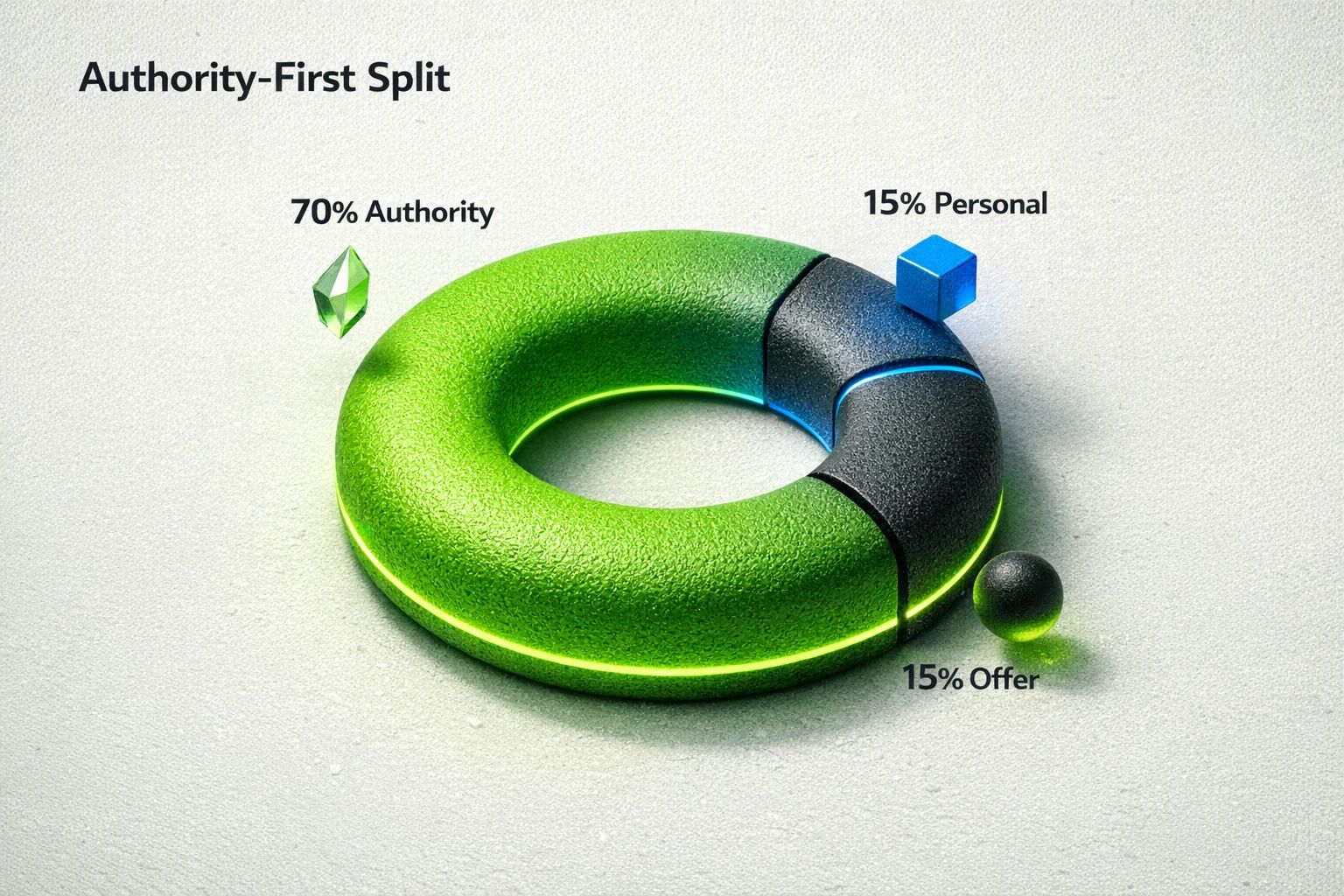
A visual summary of the Authority-First framework: prioritize authority content (70%), supported by personal context (15%) and offer content (15%)—a ratio designed to build expertise-first positioning.
The 70% Rule Is About Mindset, Not Volume
The idea of dedicating 70% of your content to expertise isn't just about filling a quota. It's a strategic decision to build trust before you ask for a sale. This is the core of an "Authority-First" mindset. You commit to being the most valuable source of information for your target audience, consistently and generously. This approach splits your content into a focused ratio: 70% authority, 15% personal insight, and 15% direct offers [1].
This model works because the platform itself has shifted. LinkedIn now favors experts over personal narratives, making a generic top-of-funnel approach less effective for building deep authority [1]. Your audience isn't there to be broadly marketed to. They are there to solve a specific, complex business problem, and they will gravitate to the person who demonstrates they have solved it before.
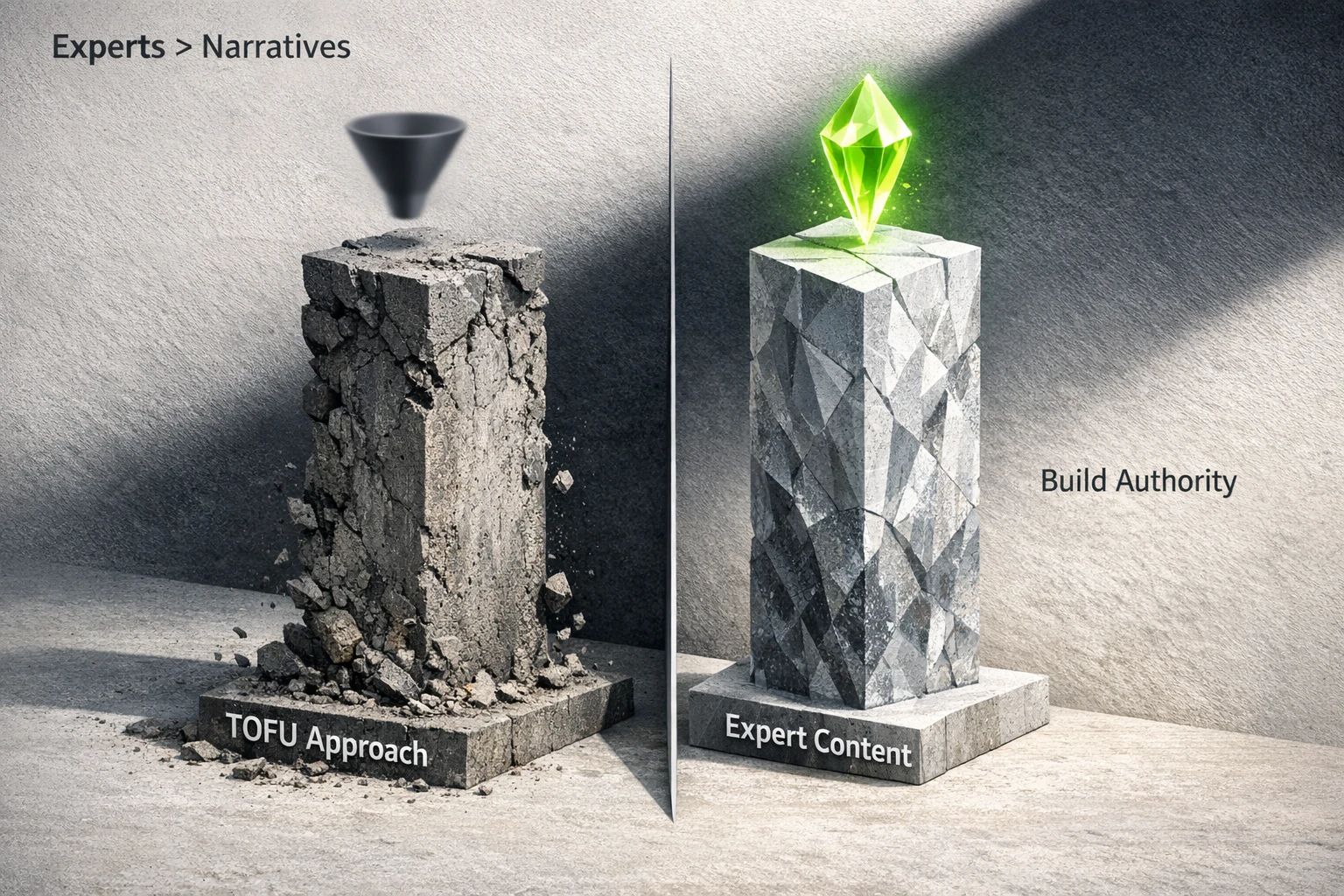
This contrast captures the platform shift: expert-led content strengthens authority, while a generic TOFU mindset can underperform when the goal is B2B expertise and trust.
Stop Sharing "Tips." Start Mining Proprietary Insights.
Generic content shares what is already known. Authority content reveals what is newly discovered. Your unique expertise isn't found by Googling "content ideas for my industry." It's mined directly from the work you do every day. Your client challenges, your internal processes, and your successful outcomes are the raw material for content no one else can create.
Instead of hunting for topics, start extracting them. Your goal is to turn your experience into a repeatable framework. This is how you move from being a service provider to being an industry authority. There are three primary sources for these proprietary insights.
- Map Client Problems: Document the top five questions your clients actually ask, not the ones you think they should. What are the recurring, non-obvious struggles they face right before they hire you?
- Reverse-Engineer Solutions: Take a successful client project and break down your exact process. What were the steps? What was the critical insight that unlocked the solution? That process is a piece of intellectual property.
- Apply Your Lens to Trends: Don't just report on an industry trend. Interpret it. Explain what the trend means for your specific niche based on your direct experience.
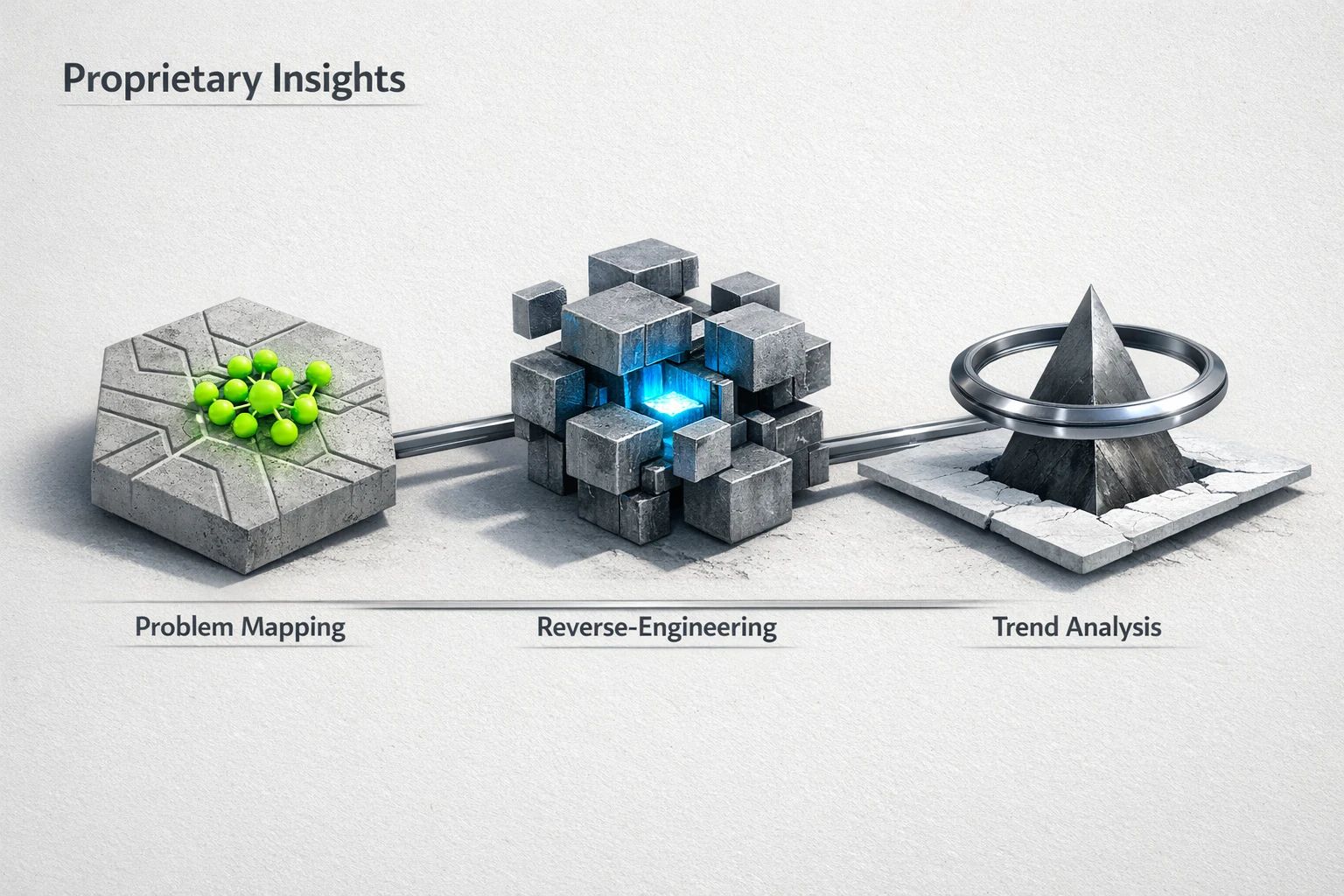
A practical way to move beyond generic thought leadership: extract insights from client problems, reverse-engineer successful solutions, then interpret market trends through your own lens.
Three Blueprints to Structure Your Expertise Content
Once you have your proprietary insights, you need a structure to deliver them with clarity and impact. An idea without a blueprint often becomes a rambling, unfocused post. These three frameworks translate complex expertise into content that solves problems and builds trust.

These three blueprints help turn expertise into clear, problem-solving posts: PAS for depth, CSR + Data for credible case narratives, and Contrarian Blueprint for fresh perspectives.
Blueprint 1: The Problem-Agitate-Solve (PAS) Deep Dive
This classic marketing framework is perfect for demonstrating a deep understanding of your client's world.
- Problem: State the specific, nuanced version of your client's problem. Don't say "lead generation is hard." Say "Your team gets demo requests, but 90% are from non-buyers who waste your sales reps' time."
- Agitate: Detail the hidden, second-order costs of this problem. This isn't just wasted time; it's sales team burnout, inflated customer acquisition costs, and a C-suite that questions marketing's ROI.
- Solve: Present your perspective or framework as the solution. This is where you introduce your unique methodology for solving this exact problem, showing the path to a better outcome.
Blueprint 2: The Challenge-Solution-Result (CSR) with Data
This blueprint is your engine for building credibility. It’s a mini-case study that proves you don't just talk; you deliver.
- Challenge: Clearly state the business obstacle. "A B2B SaaS client was struggling with a 6-month sales cycle for enterprise deals."
- Solution: Detail the specific action you took, based on your proprietary insight. "We implemented a 3-part content series targeted at the CFO persona, addressing their specific budget objections."
- Result: Share the quantifiable outcome. "This reduced the average sales cycle to 4 months and increased close rates by 15% in two quarters."
Blueprint 3: The Contrarian's Blueprint
This structure is for establishing true thought leadership. It involves taking a commonly held belief in your industry and challenging it with a fresh, evidence-based perspective.
- State the Common Wisdom: "Everyone believes you need to post on LinkedIn daily to stay relevant."
- Dismantle with Logic: "But daily posting often leads to low-quality, generic content that hurts your authority more than it helps. The platform's algorithm has evolved beyond simple frequency." If you want to understand these shifts better, learning about the 360brew algorithm can reveal how to build B2B authority and drive engagement that produces inbound leads.
- Present a New Model: "A better approach is to post three high-value, problem-solving pieces of content per week, each structured around a proprietary insight."
Activating Your Authority: Beyond Likes and Comments
Creating authority content is only half the battle. The ultimate goal is to generate business. This requires a strategic approach to engagement and distribution. After all, data shows that 40% of B2B marketers identify LinkedIn as their most effective channel for generating leads [2].
Your call to action should evolve beyond "like and comment." Ask a diagnostic question that encourages prospects to self-identify. Instead of "What do you think?" ask, "Which of these three pipeline mistakes is costing you the most right now?" The responses in the comments and DMs are not just engagement; they are market intelligence.
Finally, think beyond the platform itself. Your best insights deserve a wider audience. To make that happen, you must master effective distribution tactics for offsite mentions, which can help you break down what works for others and boost your own content's authority and reach. The goal is to make your LinkedIn profile the core of your authority, but not its container.
FAQ: Structuring B2B Expertise Content
Why is my "expert" content getting no engagement?
Most likely, it's sharing well-known facts, not actionable frameworks. It teaches "what" (e.g., "SEO is important") instead of "how" (e.g., "Here is a 3-step process to find keywords your competitors miss"). True engagement comes from content that helps the reader solve a problem, not just learn a fact.
How long should my LinkedIn posts be?
Clarity is more important than length. Some ideas are best explained in a short, punchy post, while others require a more detailed breakdown. The audience on LinkedIn is there to learn and improve their business; they are far less likely to be scared off by long-form text than users on other platforms [2]. If every sentence delivers value, the length becomes irrelevant.
Do I need a big research budget to create data-backed content?
No. Start with your own "small data." This includes client results, improvements in your internal processes, or even a simple survey of ten customers. A post that says, "We cut our client's onboarding time by 50% using this checklist" is incredibly powerful. The credibility comes from the specific, verifiable proof, not the size of the study.
The next time you sit down to create content, don't ask "What should I post about?" Instead, find one recurring client problem you have solved. Map out the PAS blueprint for it on a private document. That is your next piece of authority content.
Sources:
- Postdrips - A breakdown of the Authority-First content model for LinkedIn.
- Redefine Your Marketing - Analysis of LinkedIn's role in B2B marketing and audience behavior.