End AI Chaos. Human-in-the-Loop AI Content Workflows Win
AI Summary
Human-in-the-loop AI content workflows can end AI chaos, but only when people intervene at moments of leverage rather than rewrite every draft from scratch. The winning model treats AI as a fast drafting assistant and humans as owners of expertise, accuracy, voice, and narrative quality.
- The four-stage production pipeline from human-led briefing through generation, confidence-based review, and final publication.
- How subject matter experts, prompt engineers, fact checkers, and editorial directors divide responsibility without duplicating effort.
- Governance rubrics, review thresholds, and SLAs that reduce brand drift while preserving AI's speed advantage.
For teams overwhelmed by generic drafts, inconsistent quality, or unclear accountability, this framework turns AI content production into a measurable operating system.
You bought an AI tool expecting a content revolution. Instead you got workflow chaos. The drafting process is incredibly fast but the editing phase takes forever. Generic AI writing creates massive bottlenecks because it requires total rewrites to meet your brand standards. Teams treat AI as an autonomous writer rather than a high speed drafting assistant. This structural mistake leads to generic output and frustrated editors. The solution is not better prompting. The solution is an engineered pipeline that inserts human expertise at exact moments of leverage.
The End of Autonomous AI Generation
AI cannot build topical authority on its own. It predicts word patterns based on existing data. It does not understand your distinct market position or your unique insights. When you let an AI write independently without strict editorial parameters the output drifts away from your core messaging. This creates a massive quality control issue for marketing leaders who refuse to publish generic thought leadership. The data confirms this drift. AI-drafted sentences flagged as off-voice on the first generation hit a 22% average brand voice deviation rate across surveyed B2B teams [1].
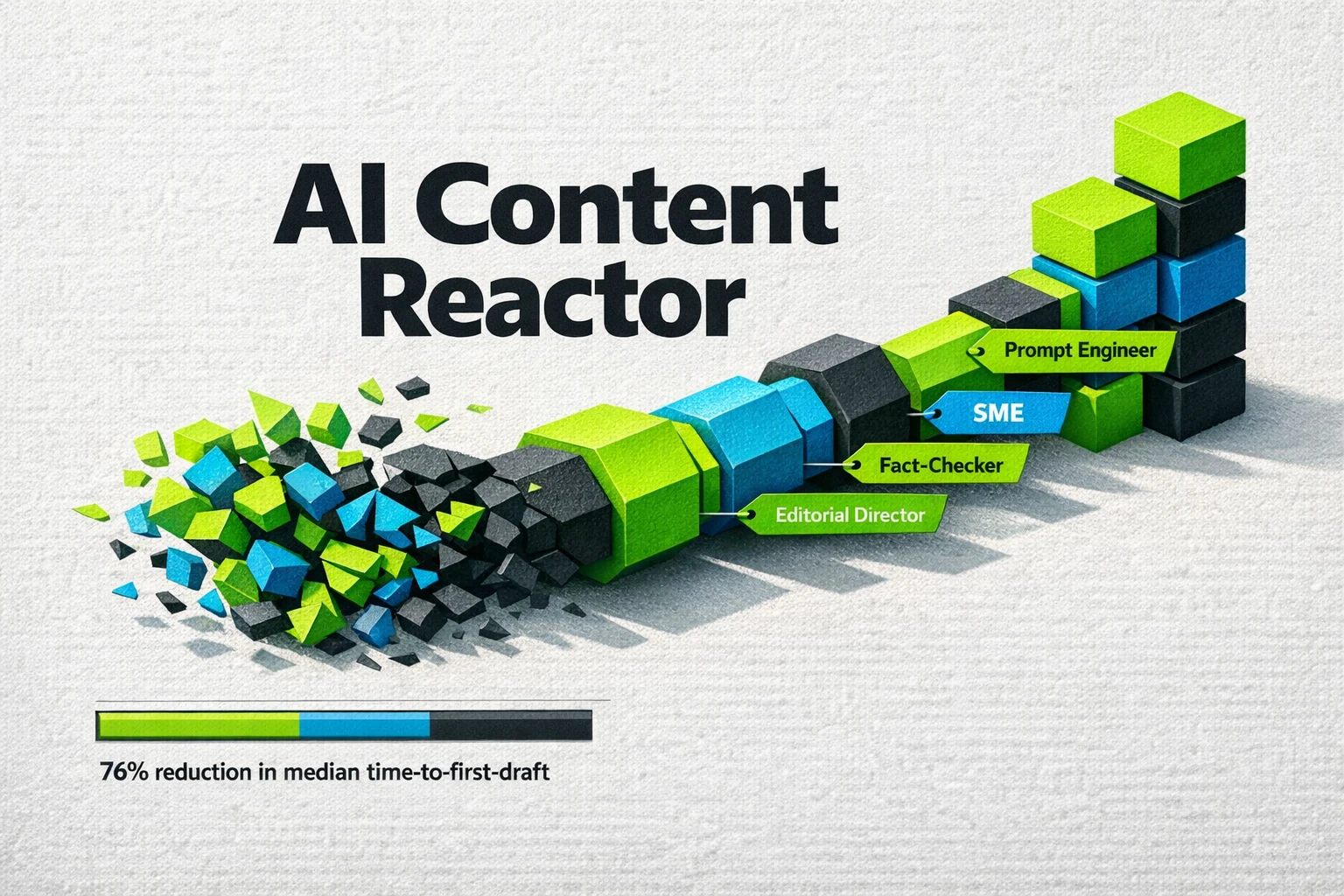
Defining Core Roles in the AI Content Reactor
You cannot just pass an AI draft to a random reviewer and expect high quality results. You need a structured editorial hierarchy where every person understands their specific review criteria.
Subject Matter Expert
Your experts own the domain truth. They do not edit grammar or fix transitions. They verify technical accuracy and provide the initial unique insight before the AI even begins writing.
Prompt Engineer
This role serves as your AI operator. They translate the expert insight into context-rich instructions for the large language model. Structuring the content body AI generates requires strict editorial parameters to prevent generic filler.
Fact Checker
AI models hallucinate facts. Your fact checker serves as the mandatory compliance safety net. They verify statistics, quotes, and product claims against trusted internal databases.
Editorial Director
This person owns the narrative flow and emotional resonance. They are the final gatekeeper who ensures the piece sounds like a trusted advisor rather than a robot.
The Four Stages of Orchestrated Production
Building a reliable pipeline requires defining exactly when the AI stops and the human steps in. We call this the orchestration phase.
Stage One Ideation and Briefing
Humans dictate the parameters. Subject matter experts and strategists define the angle, the target audience, and the core argument. The AI does nothing during this phase.
Stage Two Generation
The AI executes the detailed brief. Your human team defines the direction and the machine handles the heavy lifting of sentence construction. The speed gains at this stage are undeniable when the input is tightly controlled. The Starr Conspiracy found a 76% reduction in median time-to-first-draft for a 1,500-word B2B blog post, dropping from 4.6 hours to 1.1 hours with AI assistance [1].
Stage Three Confidence Based Review
This phase establishes robust human in the loop AI quality assurance protocols. You set specific thresholds for human intervention.
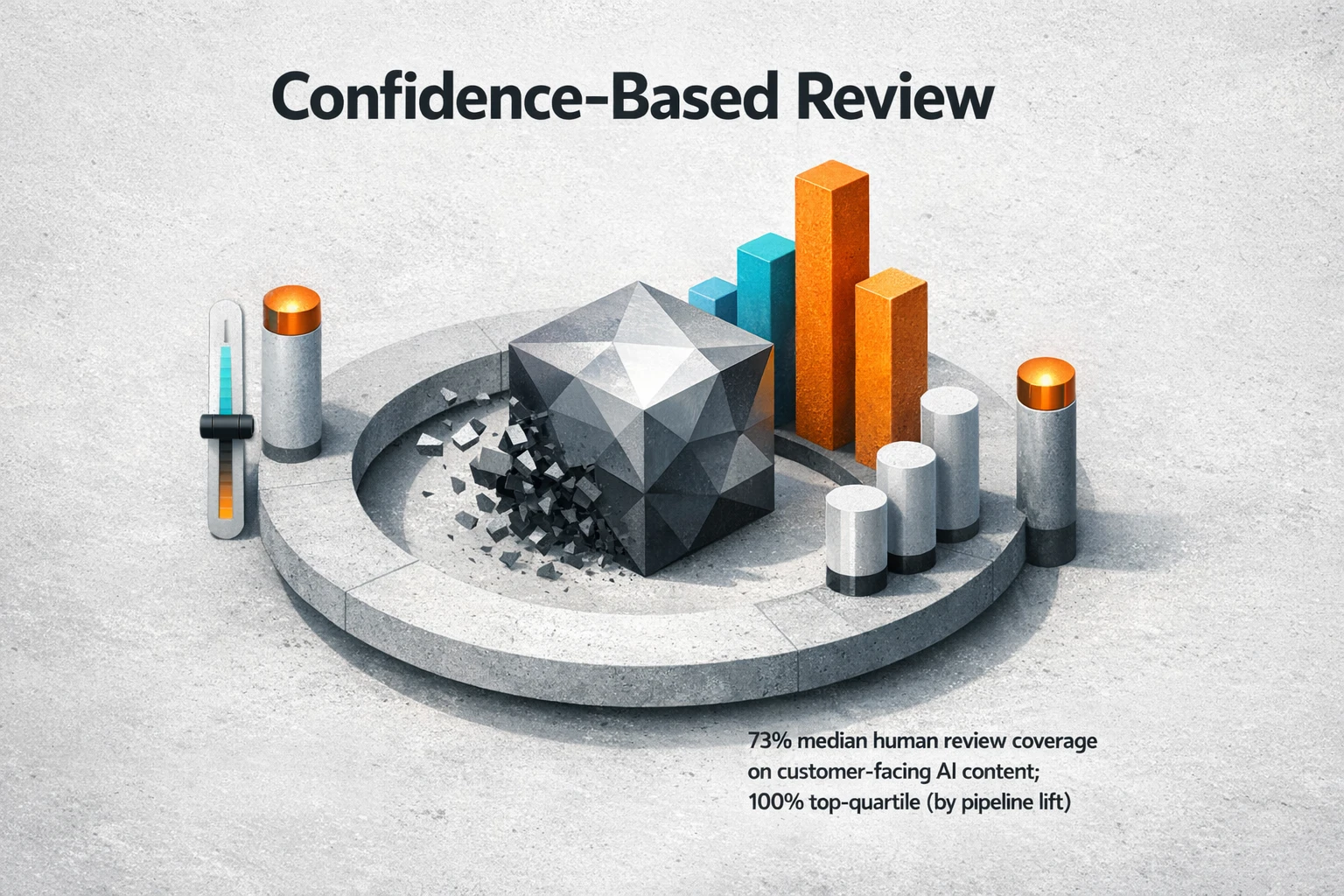
If the AI encounters a topic outside its core training it triggers an SLA-driven human review. Leading organizations do not leave this to chance. Top-quartile B2B marketing teams, defined as the top 25% by pipeline lift, reported 100% human review coverage on their customer-facing AI content [1].
Stage Four Polish and Publish
The editorial director applies the final human touch. They inject the emotional resonance and conversational transitions that AI struggles to replicate.
Building Governance Guardrails That Scale
You need standardized rubrics to prevent subjective editing. Reviewers must score drafts on factual accuracy, differentiation, and brand alignment rather than personal preference. A checklist ensures every piece of content meets the same rigorous standards before publication.
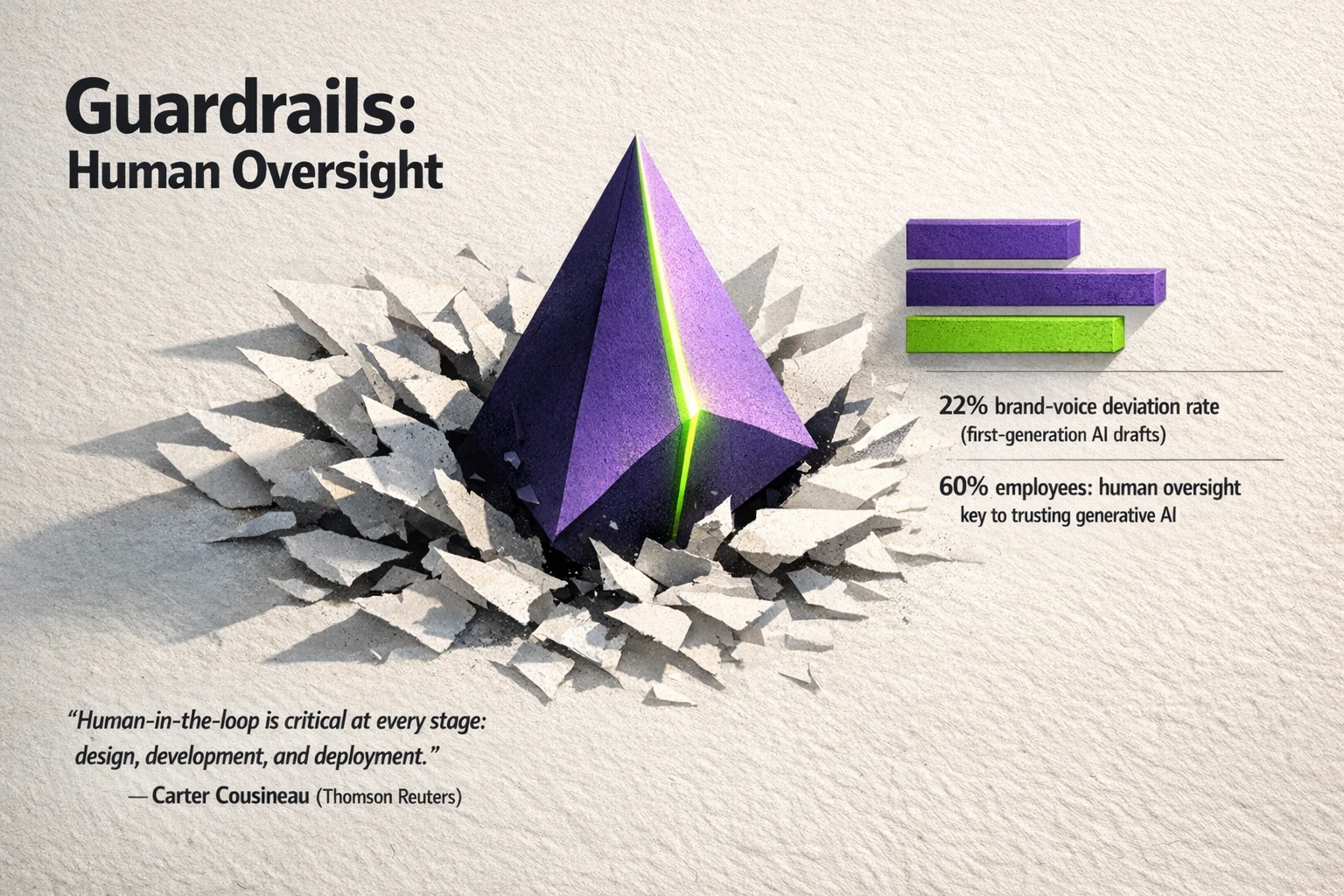
Your team needs these guardrails to trust the system. Employees are naturally skeptical of automated systems that lack clear oversight mechanisms. A transparent review process reassures your staff that quality remains the top priority. When asked how to establish generative AI as a trusted technology, 60% of employees identified human oversight as a key element to successfully using it in their role [2].
Implementing these structured checklists directly solves how to maintain accountability for AI-driven brand decisions across teams and regions. It removes ambiguity and replaces it with a measurable standard.
Moving From Chaos to Operational Leverage
Properly integrating AI into human workflows transforms your team from bottlenecked editors into high leverage directors. It eliminates the frustration of rewriting poor drafts and protects your brand reputation. This operational leverage directly improves your overall AI brand page performance by ensuring every published asset meets a high standard of authority.
Evaluate your current process today. Map out exactly where your experts intervene and where your AI operates independently. Fix the bottlenecks by assigning clear review roles and strict quality thresholds before you generate another draft.
FAQ
What is a human in the loop content workflow?
It is a structured production process where human experts intervene at specific, predefined stages of AI content generation to verify accuracy and brand alignment.
Why does AI content require human review?
AI models predict word patterns but lack genuine subject matter expertise. Human review prevents factual hallucinations and ensures the final output matches your unique brand voice.
Who should review AI generated content?
The review process requires a combination of subject matter experts for technical accuracy, fact checkers for compliance, and an editorial director for narrative flow.
How does this impact production speed?
While human review adds a step to the process, the overall system remains significantly faster because the AI accelerates the initial drafting phase.
Sources:
- The Starr Conspiracy - B2B AI content production benchmark data
- Salesforce - Generative AI employee trust statistics