AI Competitor Analysis: Your Guide for Niche & Regulated Markets
AI Summary
AI competitor analysis in niche and regulated markets reveals not just competitor content, but the critical need for precision and compliance that generic tools miss. Specialized AI combined with human expertise uncovers subtle niche terminology, regulatory risks, and messaging strategy to build trusted authority.
- How niche language like specialized lexicon and audience nuance differentiates expert content.
- The importance of compliance flags for unsubstantiated claims and data privacy safeguards.
- Workflow best practices including explainable AI outputs and human-in-the-loop validation.
This is essential for businesses navigating complex rules who need safe, expert-driven competitive insights without risking legal or reputational damage.
Your competitors are publishing content. Fast. But in your specialized or regulated market, speed is not the only game. A generic competitor analysis, the kind you can get from a simple AI prompt, is worse than useless. It is dangerous.
It misses the niche terminology that signals expertise to your audience. It overlooks the compliance landmines that can trigger legal action. In finance, healthcare, or specialized B2B tech, analyzing competitor content requires a different level of intelligence. You need AI that understands nuance and respects rules, combined with human expertise that can make the final call. This guide shows you how to build that advantage.
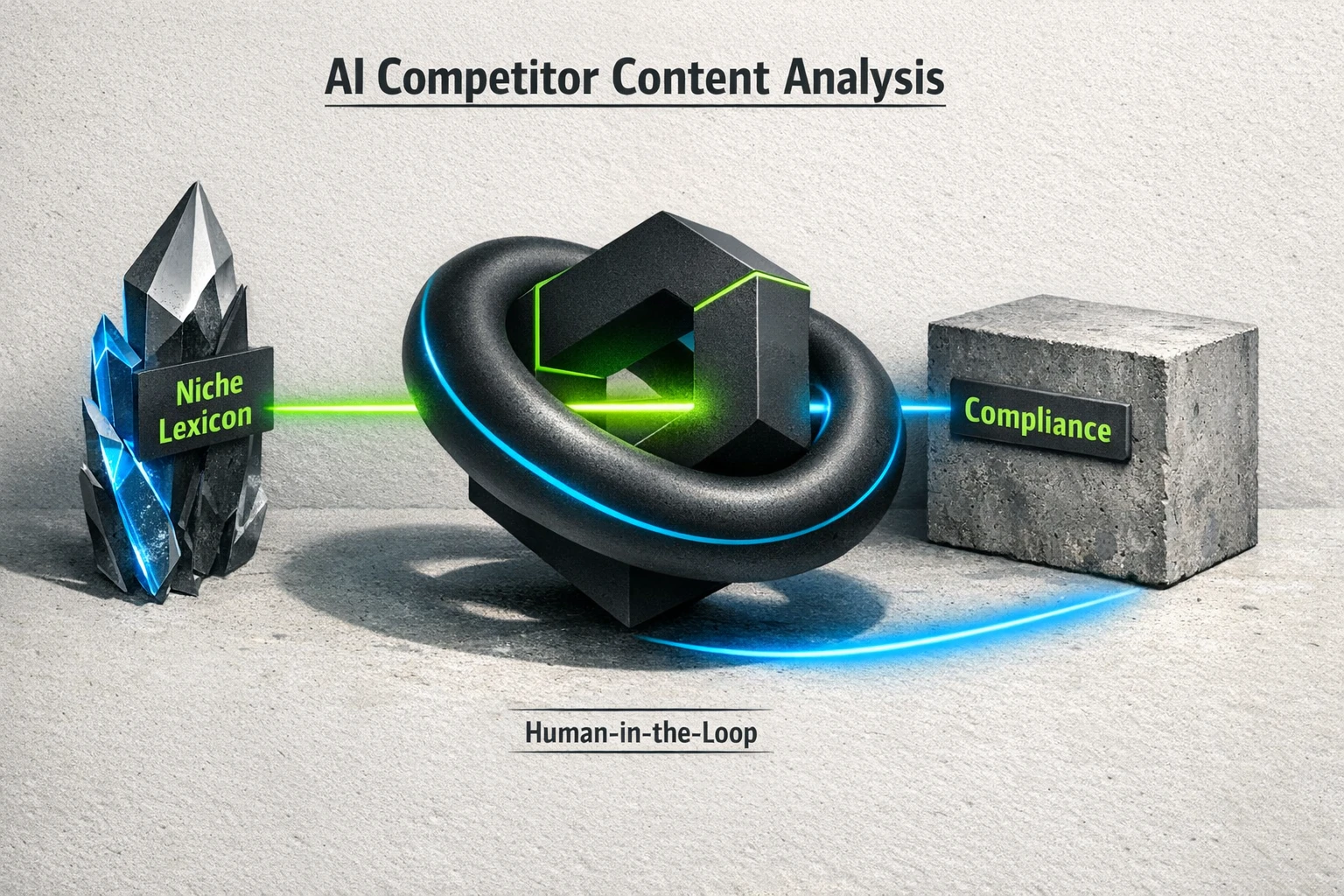
The Twin Challenges: Niche Nuance and Regulatory Risk
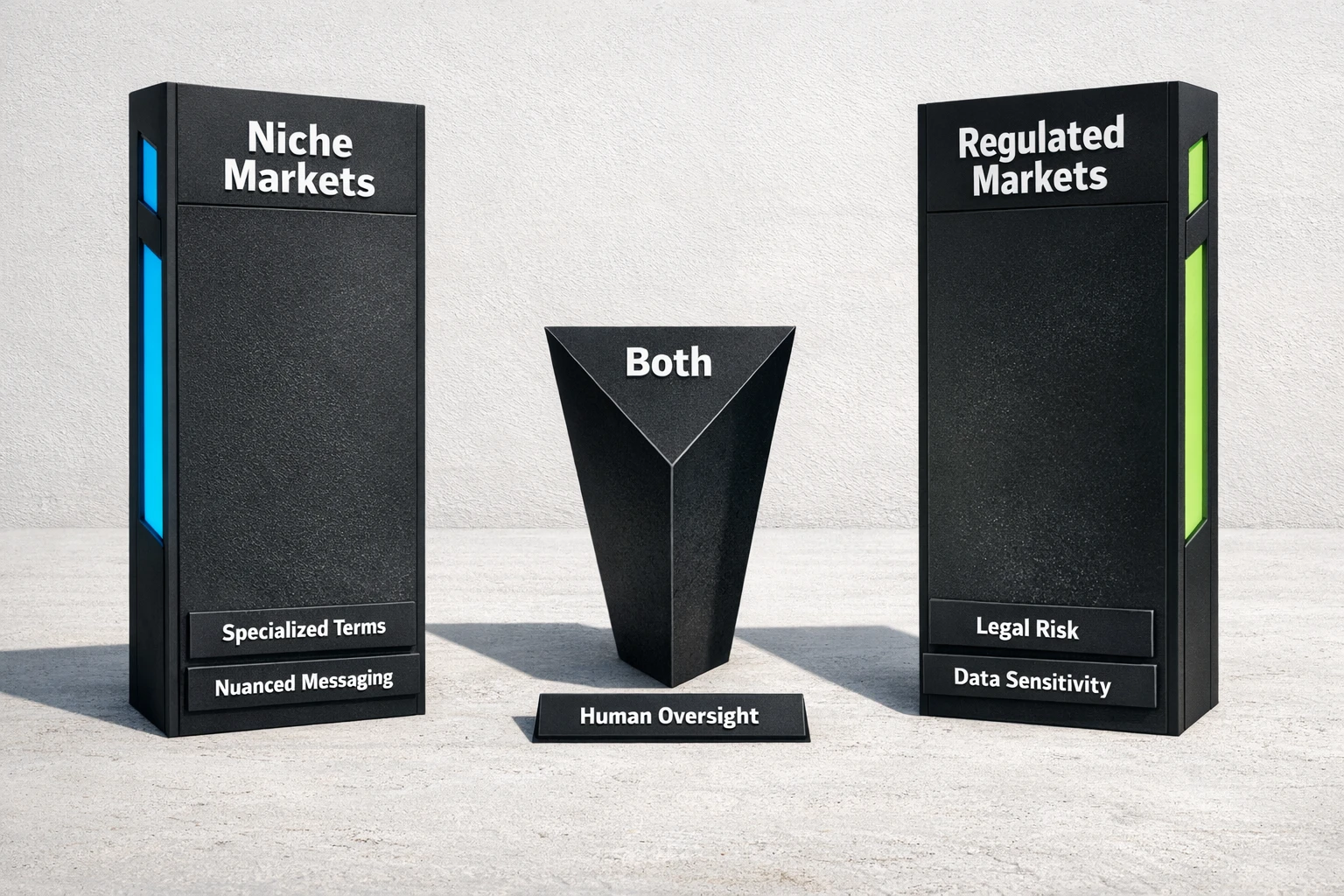
Standard AI tools treat all content the same. They see keywords and topics. They do not see context or consequences. In your world, that is a critical failure. Your analysis must account for two distinct but overlapping challenges.
Niche Markets are About Precision
In a niche market, language is a key differentiator. Your audience can spot an outsider instantly. An AI analysis must go beyond surface-level topics to understand:
- Specialized Lexicon: Does your competitor use industry-specific terminology correctly? Do they understand the subtle differences between "risk mitigation" and "risk avoidance" in an insurance context?
- Audience Nuance: Are they addressing the specific pain points of a senior compliance officer versus a junior analyst? The messaging for each is fundamentally different.
- Implicit Messaging: What are they signaling between the lines? Sophisticated B2B buyers read content not just for information, but to assess the creator's depth of expertise.
Regulated Markets are About Compliance
In finance, law, or healthcare, every word is weighed against a mountain of regulations. A single non-compliant claim can lead to fines, sanctions, and severe reputational damage. An AI analysis must act as a first-line defense, flagging potential issues like:
- Unsubstantiated Claims: Is a competitor promising "guaranteed returns" or "risk-free" outcomes?
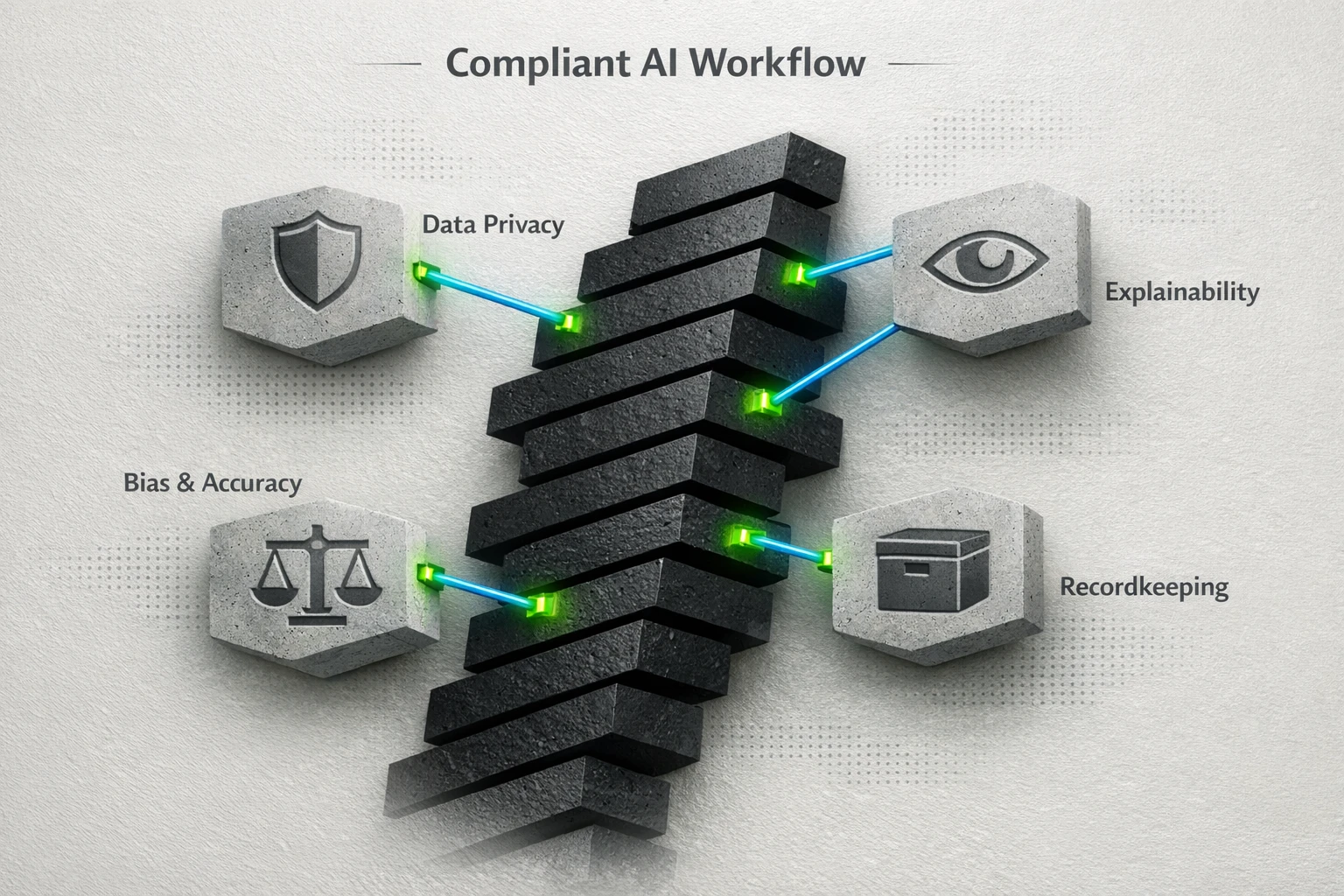
- Data Privacy: Does their content respect rules around nonpublic personal information? Be aware that AI tools routinely store user data and, in some cases, train on it to improve performance [1].
- Recordkeeping: Regulated industries have strict rules. For example, financial advisors must maintain extensive records of all client communications and documents supporting investment advice [1]. Your analysis process must be just as rigorous.
A Better Workflow: AI Analysis That is Compliant and Smart
A powerful analysis process in a regulated market is not just about speed. It is about building a system that is safe, explainable, and audit-ready. Your workflow should prioritize safeguards over shortcuts.
Phase 1: Decoding Niche Competitors
Before you can check for compliance, you must understand intent. Start by using AI to deconstruct your competitors' content strategy at a deep level.
First, identify their core themes and messaging pillars. Use AI to analyze their entire content library, looking for recurring concepts, value propositions, and customer pain points. This reveals what they want to be known for. Then, map their content to different stages of the buyer's journey. Are they strong on top-of-funnel educational content but weak on decision-stage comparisons? That is your opportunity. An effective ai niche predictor can even help you forecast the content velocity required to capture that ground.
Phase 2: Navigating Regulation with AI
With a clear picture of your competitor's strategy, you can now apply a compliance lens. This is where AI transforms from a marketing tool into a risk management asset.
Use AI to scan competitor content for specific keywords and phrases that are red flags in your industry. For example, a system can be trained to flag any medical content that mentions "off-label use" or financial content that uses promissory language. This systematic approach is crucial for maintaining e-e-a-t compliance and protecting your brand from association with risky messaging.
This process is becoming standard practice. Already, 36 percent of companies report using AI in their compliance and investigations processes [2].
From Insight to Action
The goal of this analysis is not a static report. It is a dynamic competitive strategy. AI provides the scale to analyze the market, but your human experts provide the critical judgment. A global consumer healthcare company found that this combination was transformative, allowing them to generate regulatory reports in hours instead of weeks [3]. The key to their success was that putting human expertise at the heart of the process was essential to ensure optimal results [3].
This human-in-the-loop system allows you to build a content strategy that is both ambitious and safe. You can confidently tackle complex topics, knowing your process can identify and mitigate risks before publication. This is how you build true top ai search presentation authority in a market where trust is everything.
Success is no longer just about ranking for keywords. It is about becoming the most trusted, compliant, and insightful voice in your niche. To achieve this, you need a new set of metrics and tools for analyzing expert content impact on ai brand authority that prove your content is shaping the conversation.
Common Mistakes to Avoid
- Using Generic Prompts: Asking a standard AI model to "analyze my competitor's blog" will give you a generic summary. You must provide specific context about your industry, regulations, and audience.
- Ignoring Data Provenance: Where did the AI get its information? In a regulated market, you must be able to trace insights back to their source for auditing purposes.
- Forgetting the Human-in-the-Loop: AI is a powerful analyst, not the final decision-maker. Your legal, compliance, and subject matter experts must always validate AI-generated findings.
- Setting It and Forgetting It: The regulatory landscape and competitor strategies change constantly. Your analysis must be an ongoing process, not a one-time project.
Frequently Asked Questions
What is AI for competitor content analysis?
It is the use of artificial intelligence to systematically analyze competitor content at scale. Unlike manual reviews, AI can process hundreds of articles, web pages, and social posts to identify patterns in messaging, keywords, compliance risks, and strategic positioning.
Can I just use ChatGPT for this?
While general tools like ChatGPT can provide basic summaries, they lack the specific training required for niche and regulated industries. They do not understand specific compliance rules or specialized terminology, and using them with sensitive data creates privacy risks. Effective analysis requires more specialized systems.
What are the biggest compliance risks when using AI?
The top risks include data privacy violations from feeding sensitive information into models, accuracy issues where AI hallucinates or misinterprets data, and a lack of audit trails. Without a proper system, you cannot prove to regulators that your process is sound.
How does this help me rank higher on Google?
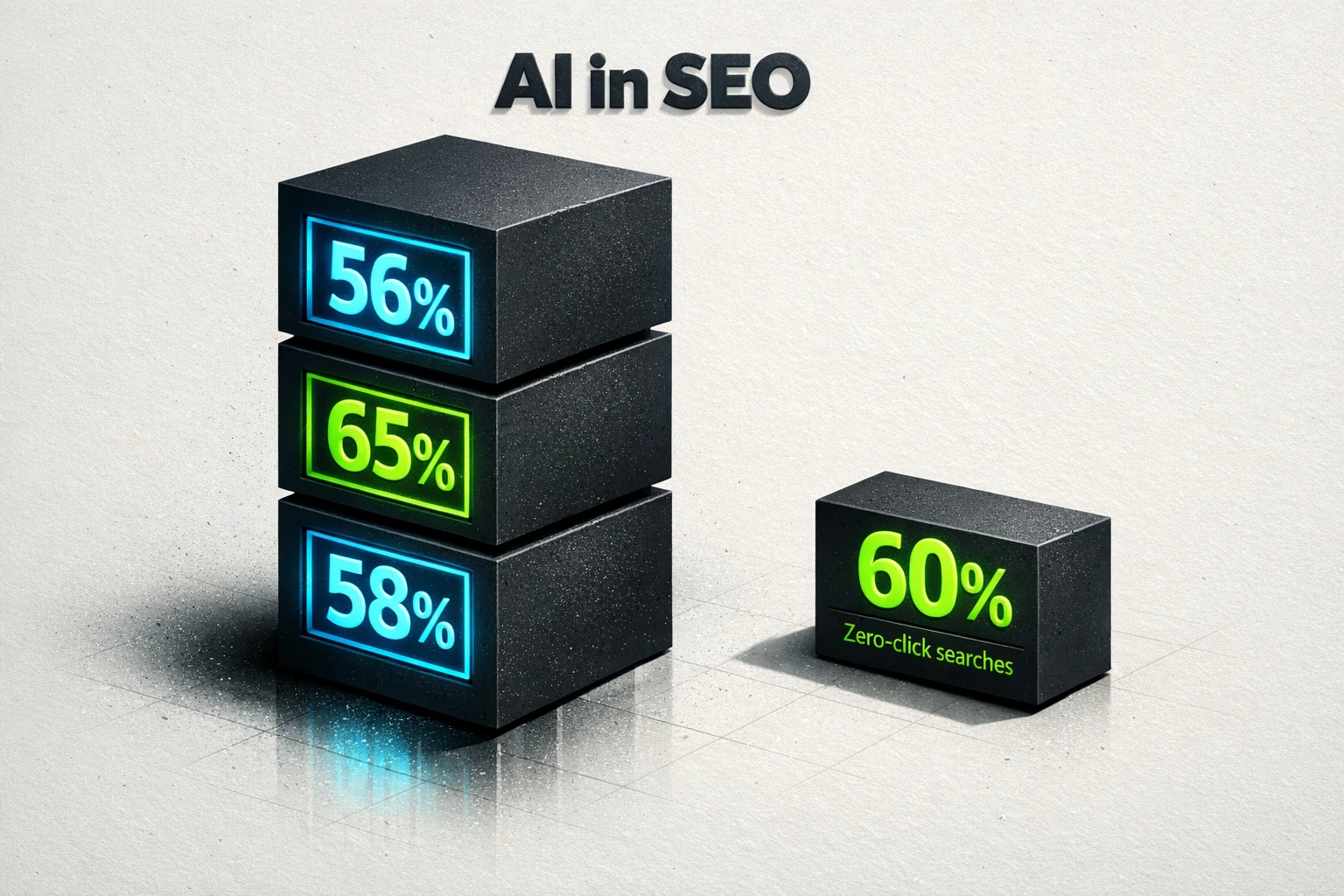
Google's algorithms increasingly reward expertise, authoritativeness, and trustworthiness. By creating content that is precise, compliant, and deeply relevant to a niche audience, you are building powerful authority signals. AI Overviews now appear in about 58% of question-based queries, meaning your goal is to become the cited, trusted source inside AI answers, not just a link on a page [4].
Sources:
- Kitces.com - Provides an in-depth analysis of compliance risks and best practices for AI use in the financial advisory industry.
- White & Case LLP - Offers a global survey on AI adoption trends and challenges within corporate compliance and legal functions.
- Genpact - Presents a case study on implementing a generative AI solution for regulatory compliance at a global healthcare company.
- Wellows - Details a step-by-step guide for using AI in SEO competitor analysis, including statistics on AI adoption and search trends.